
Home Blog Page 18

Boostika targets everyday cash flow gaps for Equity customers

By mid-morning, Albert Njeru’s small hardware shop is already busy. Njeru, a trader in Kamakis, Ruiru, Kiambu County, is accustomed to handling bulk orders from contractors and individual builders from nearby construction sites.

A regular customer walks in and places an order for 70 bags of cement. Njeru checks his stock and quickly realizes he does not have enough to fulfil the order.

He immediately calls his supplier to arrange for another delivery, only to face another problem: he does not have enough cash in his account to pay for the consignment.

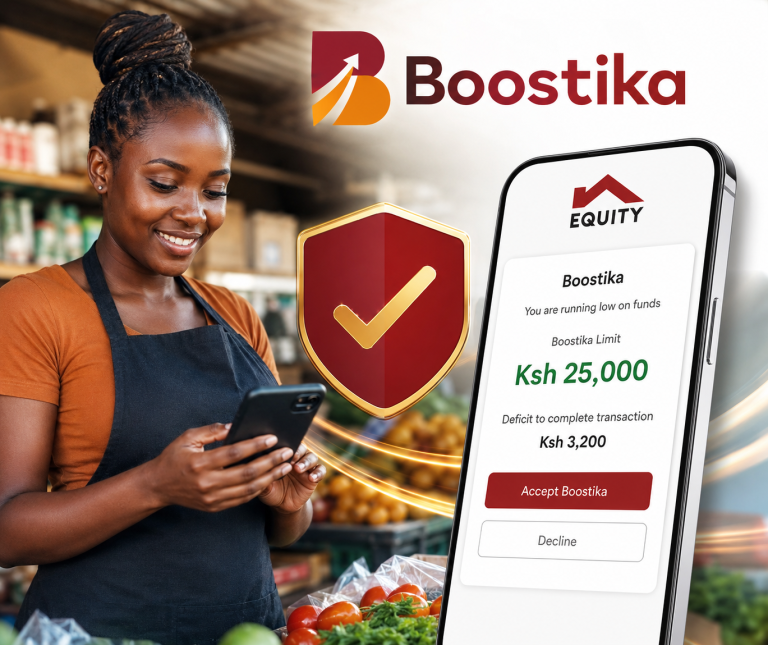
Then, a Boostika prompt appears on his screen, showing the amount he is eligible to borrow and the exact deficit needed to complete the transaction.

Njeru accepts the facility and the payment goes through, allowing his business to keep moving. That is the practical role of Boostika, an Equity Bank loan solution designed to help customers complete transactions when they temporarily run short of funds.

Available through *247#, Equitel and the Equity Mobile App, the facility provides between Sh100 and Sh100,000, depending on your approved loan limit.

How does Boostika work?

Boostika is designed to work within the payment process rather than requiring you to leave the transaction and make a separate loan application.

The facility allows you to complete an eligible transaction when you run short of funds. This includes sending money to a mobile wallet or bank account, paying for goods and services through the One Equity Till, or buying airtime.

Whenever a customer with insufficient funds initiates a transaction, they receive a prompt showing the amount needed to complete the transaction and the Boostika loan limit available to them.

Borrowers are then required to accept the facility and its terms and conditions, after which an SMS notification confirms the transaction.

The facility ranges from Sh100 to Sh100,000, depending on your individual loan limit. It is unsecured and is repayable within 30 days.

Key to note is that Boostika is not cash that you can withdraw for other purposes. It is specifically intended to bridge the gap when you are making an eligible transaction and your available funds fall short.

Access, repayment and eligibility

To qualify, you must be an Equity Bank customer with an active account for at least six months, a good repayment history and an existing loan limit. You must also be making the transaction through *247#, Equitel or the Equity Mobile App.

The facility can be accessed repeatedly as long as you have an available loan limit. Your limit is reviewed monthly, with the amount potentially increasing or decreasing depending on your account activity, transaction patterns and repayment behaviour.

Boostika is repayable within 30 days. Repayment can be made through an automatic sweep from your operating account, or you can make a partial or full payment through the available Equity channels.

You can check your loan limit through *247# by selecting Borrow, then Check Loan Limit and Eazzy Loan. On the Equity Mobile App, go to Borrow, Get Loan, Apply Now and Check Loan Limit. Equitel users can select My Money, Eazzy Loan and Loan Limit.

Outstanding balances can similarly be checked through *247#, the Equity Mobile App or Equitel.

The facility attracts a 5 per cent processing fee, 1 per cent insurance and excise duty equivalent to 20 per cent of the processing fee, alongside interest of 18 per cent per annum.

For customers who have a dormant account, activation is required at an Equity branch before accessing the service.

Boostika is unsecured, and its core appeal lies in matching the amount borrowed to the immediate shortfall. Rather than taking a larger loan than necessary, you can borrow only what you need to complete the transaction at that moment.

If a transaction made using Boostika is sent to the wrong number or paid to the wrong till, a reversal request can be lodged through Equity Bank’s customer-care channels. The bank can be reached on 0763 000 000 or through [email protected].
Also Read: Airtel Africa becomes the first operator in Africa to commercially launch Starlink mobile in DRC

Airtel Africa becomes the first operator in Africa to commercially launch Starlink mobile in DRC

0

Airtel Africa and Starlink have launched satellite-to-mobile service in the Democratic Republic of the Congo (DRC), marking the first commercial deployment in Africa. The service enables Airtel customers with compatible smartphones to access connectivity in non-terrestrial areas wherever they can see the sky.

Direct Satellite Connectivity Without Special Equipment

Starlink, the world’s largest satellite-to-mobile constellation with 650 launched satellites, enables light-data apps, including WhatsApp messaging, as well as SMS. Customers do not require specialised equipment or a separate device to access the service.

From Successful Testing to Commercial Rollout

The launch follows the strategic partnership announced by Airtel Africa and Starlink in December 2025 and the successful testing of Starlink Mobile data and messaging services in Kenya in March 2026. DRC is the first Airtel Africa market – and the first country in Africa – where the service has progressed to commercial deployment.

Device Requirements and Eligibility

To use the service, customers must have a compatible LTE Android smartphone, an active Airtel DRC data bundle or data roaming switched on. In the future, the service will also be supported on Apple devices.

Starlink in Kenya easy installation process, packages, monthly fees

Leadership Perspectives

“The first-ever commercial launch of Starlink Mobile in Africa is a significant milestone for Airtel Africa through our partnership with SpaceX. By combining Airtel’s terrestrial network with Starlink’s satellite technology, we are extending essential connectivity beyond the limits of conventional mobile infrastructure. The DRC is leading this important development, and the experience gained here will support the progressive expansion of the service across our markets, subject to country-specific regulatory approvals.”

— Sunil Taldar, CEO of Airtel Africa

“The commercial launch of Starlink Mobile is an important step in extending essential connectivity across the DRC. Our country’s size and geography mean that many people live, work and travel beyond the reach of conventional mobile infrastructure. This service provides an additional layer of connectivity, helping customers remain reachable, informed and connected even in areas where terrestrial coverage is unavailable.”

— Theirry Diasnoma, Managing Director of Airtel DRC

Bridging the Connectivity Gap for Remote Communities

The service is expected to be particularly valuable to people and organisations operating in remote areas, including transport and logistics operators, humanitarian organisations, health workers, farmers, mining operations and communities beyond the reach of existing terrestrial networks. It will also support access to essential communications during emergencies, natural disasters and temporary terrestrial network disruptions.

Safaricom asks CA to kick Elon Musk’s Starlink satellite internet out of Kenya

Trial Access and Subscription Pricing

Eligible customers can register through the MyAirtel App to receive free trial access to the service for an introductory 30-day period. Customers travelling to DRC and joining Airtel DRC can also register for the trial after activating an eligible service and downloading the MyAirtel App.

Following the introductory period, customers will continue accessing Starlink Mobile through eligible Airtel data bundles.

Looking Ahead

Airtel Africa and Starlink continue developing the service, with additional capabilities expected to be introduced as the technology evolves and the necessary regulatory approvals are secured.

The launch further reinforces Airtel Africa’s position as a pioneering telecommunications operator with a strong record of bringing first-of-its-kind innovations to Africa and demonstrates its continued focus on using technology to address the continent’s connectivity and digital-security needs.

Airtel Africa becomes the first operator in Africa to commercially launch Starlink mobile in DRC
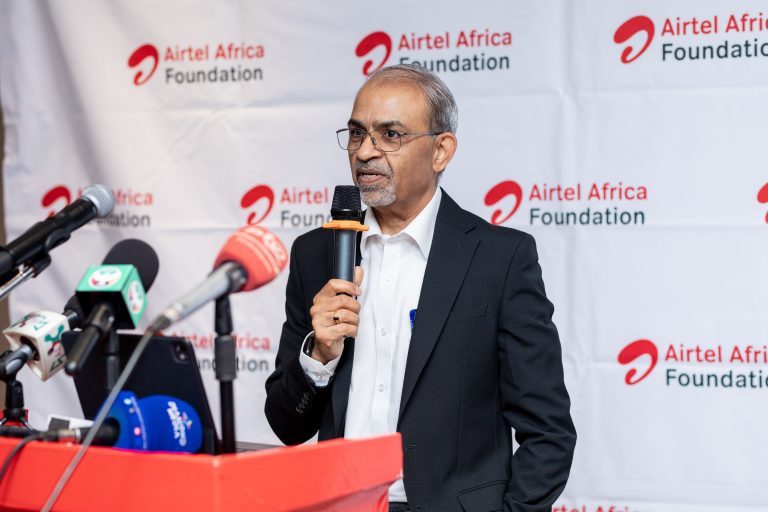
Airtel Africa CEO, Sunil Taldar

Kabras Sugar reclaim Dala 7s title as SportPesa 7s race opens up

0

Kabras Sugar produced a strong second-half comeback in Kisumu to beat Menengai Oilers 19-5 and claim the Dala 7s title, moving top of the 2026 SportPesa National Sevens Circuit standings after two legs. The victory came in the second leg of the 2026 SportPesa National 7s circuit. Having watched KCB lift the trophy at their expense, the Sugar Millers returned determined. Their success moved them into first place in the overall standings.

Fans following this year’s SportPesa National 7s Circuit are witnessing dramatic rugby. Menengai Oilers led 5-0 at half-time, but Kabras responded strongly after the restart. Derrick Ashihundu, Rayvon Ambale and Fredrick Wangila all contributed tries during the turnaround. Ambale converted his own score, while Michael Lukusi added the conversion following Wangila’s effort.

Kabras complete a memorable comeback

The second half belonged firmly to Kabras as they transformed a narrow deficit into victory. Derrick Ashihundu brought the scores level before youngster Rayvon Ambale crossed and converted his own effort. Fredrick Wangila then extended the advantage, with Michael Lukusi adding the conversion to widen the gap between the finalists. The sequence showed their ability to respond under pressure.

Captain Mathias Osimbo described the success as a reward for perseverance following their defeat in Nakuru. His side had reached the previous leg’s final but fallen short, making the Kisumu triumph particularly satisfying. Supporters looking for Kabras Sugar rugby news have another memorable chapter after the team’s return to the summit. The result confirmed their status as serious contenders for the crown.

Kabras’ comeback, KCB’s setback, Mwamba’s progress and the rise of new challengers show how competitive this circuit has become. Every leg is producing fresh storylines, and that is exactly what makes the SportPesa National 7s Circuit exciting for players, clubs and fans,” said SportPesa Kenya Head of PR, Willis Ojwang.

SportPesa six-legged 2026 national 7s circuit kicks off in style

Mwamba edge Harlequins in extra-time drama

Kenya Harlequins had earlier made headlines by eliminating defending series champions KCB. Their push for a podium finish was halted by Mwamba 7s in a dramatic third-place encounter. The sides finished regulation time at 17-17, forcing extra time before captain Shaquel Bosire produced the decisive moment. Mwamba won 22-27 after extra time and claimed third position.

The outcome capped a productive weekend for Mwamba, whose women’s team also reached the top step. Mwamba Ladies defeated local rivals Kenya Harlequins 10-7 in the Division One women’s final after a last-minute try. That success delivered back-to-back Dala 7s titles and KES 100,000 in prize money. The club therefore left Kisumu celebrating achievements across both men’s and women’s competitions.

KCB face setback after Prinsloo success

KCB entered Kisumu with confidence after an impressive Prinsloo campaign that saw the bankers sweep aside their opponents. Their momentum failed to transfer smoothly into the second leg as MMUST held them to a tense 19-19 draw during the pool stage. The result warned that their Nakuru form might not guarantee another deep run. That concern became reality when Kenya Harlequins delivered the tournament’s major upset in the quarter-finals.

The defending champions were denied the chance to retain their Dala crown and settled for fifth position. KCB recovered some pride by defeating Strathmore 24-17 in their classification match. Their exit gives the team plenty to consider. Meanwhile, the result has opened the title race and strengthened Kabras‘ position at the top.

How APIs are powering the next generation of online casino businesses

SportPesa circuit enters an exciting new phase

SportPesa Head of Public Relations Willis Ojwang praised the competitiveness witnessed throughout the Kisumu weekend. He highlighted the physical matches, unpredictable results and determination shown by teams challenging the established order. His comments pointed particularly to Harlequins and MMUST as examples of sides narrowing the gap against traditional front-runners. With two legs completed, the field promises an intriguing series.

The SportPesa rugby promotion battle at Impala Club also produced drama, with Catholic Monks defeating Stallions 20-14 in the Division 2 final. Catholic Monks earned promotion to Division 1 and KES 70,000, while Stallions received KES 30,000 as runners-up. Attention now shifts towards Nairobi for the third leg, the Kabeberi Memorial Sevens, scheduled for 15–16 August at Impala Club. The next outing gives contenders another chance to challenge the standings.

Conclusion

Kabras Sugar’s Dala 7s triumph changed the 2026 SportPesa National 7s Circuit after two legs. Their recovery from a 5-0 deficit demonstrated resilience, while Mwamba’s men’s and women’s achievements added colour. KCB’s early elimination showed that previous success offers no guarantee, keeping the championship race open. Kabras now sit at the summit with momentum on their side.

As the series heads into its one-week break, Kabras will carry their lead into the Kabeberi Memorial Sevens. KCB will be eager to respond, while Harlequins, MMUST, Mwamba and other challengers have shown they can disrupt the established hierarchy. Catholic Monks’ promotion adds another storyline to the circuit. The next chapter in Nairobi on 15–16 August will reveal whether Kabras can protect their advantage.

Cybersecurity: common apps hackers are using to exploit Kenyan institutions

0

Kenyan institutions are facing a growing cybersecurity threat, but the biggest danger may not lie in sophisticated new attack methods.

Instead, outdated software, weak security practices and failure to address known vulnerabilities continue to provide attackers with easy entry points.

This is according to the latest ESET Threat Report, which examines changes in the global threat landscape since December 2025 using data from ESET telemetry and analysis by its threat detection and research teams.

The report highlights the growing role of artificial intelligence (AI) in cybercrime, both as a target for attackers and as a tool for developing and executing attacks. ESET analysed about 900,000 AI skills and identified more than 3,000 that were outright malicious.

For Kenya, however, the report presents a more familiar picture. The cyber threats affecting local organisations largely mirror those seen internationally, with attackers relying on established techniques that continue to work because basic security measures are often left unattended.

“The threats facing Kenya are the same around the world, and email remains one of the most reliable ways of getting ransomware into the organisation,” says Allan Juma, Lead Cyber Security Engineer at ESET.

Email remains a major entry point

Malicious email attachments continue to play a significant role in cyber attacks globally and in Kenya.

According to the report, scripts accounted for 46.2 per cent of malicious email attachments, followed by Microsoft Office documents at 14.4 per cent, PDFs at 11.9 per cent and archive files at 9.7 per cent.

The continued popularity of these methods is largely explained by their effectiveness. Attackers can disguise malicious files as legitimate documents, invoices or other routine business communications, increasing the chances that employees will open them.

Another growing threat is QR code phishing, commonly known as “quishing”. Globally, about 11 per cent of detected phishing emails during the reporting period contained QR codes.

“QR codes have been adopted everywhere and are a convenience that attackers are counting on,” says Tony Anscombe, Chief Security Evangelist at ESET. “Many people still scan a QR code without stopping to consider where it leads.”

In Kenya, ESET telemetry recorded a 145 per cent increase in quishing between the second half of 2025 and the first half of 2026.

Kenya’s share of quishing activity remains below that of some major markets, including North America, where it accounted for 12.4 per cent of phishing emails. This suggests the technique still has significant room to expand locally.

Old vulnerabilities continue to expose systems

Perhaps the most significant lesson for Kenyan organisations comes from the continued exploitation of vulnerabilities that have been known for years.

Attempts to exploit CVE-2017-0199, a vulnerability affecting outdated Microsoft Office installations, more than doubled in Kenya between the second half of 2025 and the first half of 2026.

The vulnerability can allow malicious code to execute when a victim opens a specially crafted document. It is also among the frequently detected vulnerabilities globally and has reportedly been incorporated into commercially available attack frameworks such as GhostX.

The same concern extends to remote desktop infrastructure. Some systems remain exposed to the public internet, with certain endpoints running versions of Windows that are no longer supported and lacking basic security hardening.

“The key takeaway is to do the basics,” says Juma. “Patch your endpoints, protect them at a minimum standard, and stop using default ports and passwords. Too much of what we are seeing comes down to organisations not doing the fundamentals.”

Infostealers and fake ransomware attacks add to risks

Kenyan organisations are also seeing an increase in malware designed to steal sensitive information or deliver additional malicious programs.

ESET telemetry recorded a significant rise in Aotera, an infostealer and dropper that has become the fourth most frequently detected malware family in Kenya.

Aotera can be used to deliver other malware, including AgentTesla, Formbook, PureLogs, PhantomStealer and Vidar. Globally, AgentTesla and Formbook were the two most commonly detected infostealer families in the report, accounting for 12.1 per cent and 10.2 per cent respectively.

The findings also reveal another worrying trend: some Kenyan organisations are making payments in response to alleged ransomware attacks when no genuine ransomware is actually present.

Juma urged organisations to understand how ransomware operates and establish whether an attack is genuine before taking action.

“Organisations need to understand what ransomware is and how to verify a genuine attack before they respond to one,” he says.

The report recommends strengthening the basic cybercrime prevention measures such as regular patching, strong passwords, secure configurations, endpoint protection, controlled remote access and employee awareness to eliminate many of the weaknesses attackers continue to exploit.

Also Read: When disruption becomes opportunity for scammers

Sh1.4m per acre: Expert reveals avocado farming potential earnings per season

0

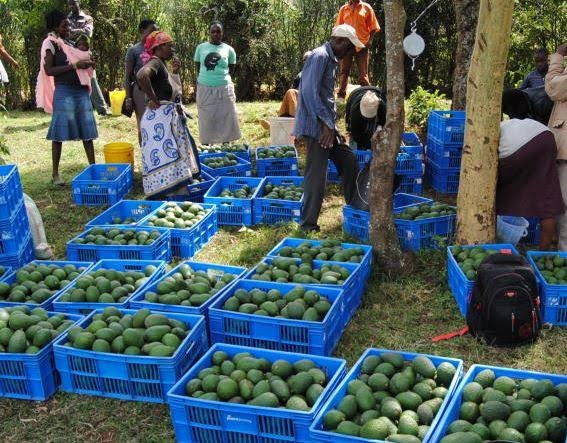
Avocado farming is emerging as one of Kenya’s most lucrative agribusiness ventures, attracting a growing number of young people seeking income from agriculture.

Often described as Kenya’s “green gold”, the crop offers farmers opportunities to earn substantial returns from both local and export markets.

According to avocado farmer and agripreneur Elijah Sawe, an acre of well-managed avocado trees can generate up to Sh1.428 million a year under favourable market and production conditions.

Sawe, the co-founder of Sakifarm in Nakuru, shared the insights on August 7 during a Co-op Bank Youth Forum that focused on opportunities in avocado farming.

He explained that the earning potential of an avocado farm depends on several factors, including the variety planted, tree spacing, availability of water, fertiliser use, general farm management and the timing of sales.

He said farmers can plant between 100 and 120 avocado trees per acre, depending on the spacing used.

“With 5 by 7 metres, you will do about 119 to 120 trees per acre. If you do 7 by 7 metres, you will do about 100 trees per acre,” Sawe said.

Proper spacing, he added, is important because it gives the trees sufficient room to develop while making activities such as spraying, pruning, fertiliser application and harvesting easier.

For new farmers, the initial investment in seedlings can be relatively manageable compared with the potential long-term returns. Sawe recommends the use of certified grafted seedlings, which cost about Sh200 each.

At 100 trees per acre, a farmer would therefore spend approximately Sh20,000 on seedlings alone, although the total establishment cost rises after factoring in water, fertiliser, labour, land preparation and other maintenance expenses.

“Avocado is very needy in terms of fertiliser and water,” Sawe said.

The crop’s income potential becomes more apparent once the trees reach maturity. Sawe estimates that a mature tree can produce about 300 fruits, equivalent to approximately 60 kilogrammes.

With 100 productive trees on an acre, this could translate into about 6,000kg of avocados under good growing conditions.

At a price of Sh100 per kilogramme, such a harvest would generate about Sh600,000 in gross revenue before production and marketing costs.

However, Sawe noted that avocado earnings can rise significantly when farmers take advantage of periods of higher market prices.

He said prices can be around Sh80 per kilogramme between February and May before rising to approximately Sh100 in August. In September, prices can move above Sh120 per kilogramme.

Between September and January, farmers can fetch about Sh150 per kilogramme, with prices reaching as high as Sh200 during favourable market periods.

It is this variation in prices, coupled with production volumes, that creates the potential for a farmer to earn more than Sh1 million from an acre in a good year.

For example, at Sh150 per kilogramme, a 6,000kg harvest would have a gross value of Sh900,000. At Sh200 per kilogramme, the same volume would be worth Sh1.2 million.

Higher production or more favourable prices could push annual gross earnings towards the Sh1.428 million figure cited by Sawe.

The figures, however, represent potential gross revenue rather than guaranteed profit. Farmers still have to meet expenses associated with fertiliser, water, labour, pest and disease management, harvesting, transportation and marketing.

Sawe also urged farmers to pay close attention to marketing rather than concentrating solely on production.

He advised growers to join savings and cooperative societies to strengthen their bargaining position and improve access to markets.

“Unit into saccos to get better bargaining power,” he advised.

Collective marketing can allow farmers to consolidate their produce, negotiate with buyers from a stronger position and potentially reduce some of the challenges associated with selling small quantities individually.

Beyond growing the fruit, Sawe sees opportunities for young people across the wider avocado value chain.

He said the business extends from seedling production and nursery management to aggregation, processing, packaging, transportation and export.

This means young entrepreneurs do not necessarily have to own an avocado farm to benefit from the growing industry.

They can instead identify opportunities in supplying inputs, providing farm services, aggregating produce or supporting the movement of avocados to domestic and international markets.

Also Read: Farmer questions Hass Avocado boom as oversupply and market access concerns mount

4,949 Wings to Fly and Elimu Scholars equipped with leadership, life skills and career readiness

0

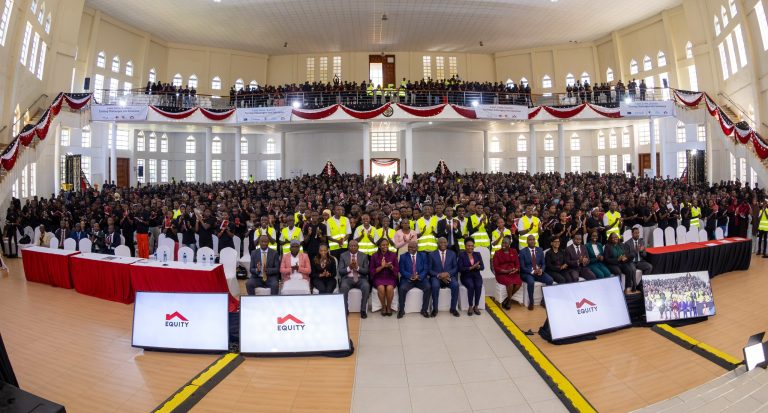
A total of 4,949 Wings to Fly and Elimu Scholarship scholars were equipped with leadership, life skills and career readiness through the Equity Group Foundation (EGF) 17th Annual Education and Leadership Congress, held across four venues in Dadaab, Kakuma and Nairobi from 10th to 14th August 2026.

The Congress brought together 1,996 Wings to Fly scholars currently in Form 3 and Form 4 and 2,953 Form 3 refugee scholars under the Elimu Scholarship Program.

Equipping Scholars to Lead and Solve Problems

Held under the theme, “Lead, Solve, Sustain: Turning Challenges into Solutions,” the 2026 Education and Leadership Development Congress was designed to inspire scholars to embrace creativity, think critically and develop innovative solutions to real-world challenges. The program equipped scholars with knowledge, tools and strategies to become ethical leaders and agents of positive change.

Through plenary sessions, the Congress explored value systems and ethical leadership, with a focus on promoting responsible and ethical behaviour among scholars. Participants also learned from the personal experiences and insights of successful leaders from government, academia, the nonprofit sector and industry.

EU and Equity Group Foundation partner to send 100 Kenyan scholars annually to European Universities

Mentorship, Leadership and Life Skills

During the Congress, scholars participated in mentorship, leadership development and life skills sessions designed to strengthen academic excellence, resilience, ethical leadership and community service.

They also engaged with representatives from the Ministry of Education, the Kenya Universities and Colleges Central Placement Service (KUCCPS), gender champions, industry leaders, professionals and alumni of the two scholarship programs, who shared practical guidance on education pathways and career preparation.

Preparing Scholars for University and Careers

Key sessions focused on helping scholars confidently navigate the national education system while strengthening mental resilience, self-awareness and identity.

Scholars also explored how to thrive beyond displacement, embraced diversity and inclusion, and gained practical guidance on university readiness and campus life.

Powerful testimonies from accomplished alumni brought the lessons to life, challenging participants to pursue excellence and step forward as values-driven leaders in their communities.

Dr James Mwangi: Scholars Must Use Technology to Create Solutions

4,949 Wings to Fly and Elimu Scholars equipped with leadership, life skills and career readiness
Equity Group Foundation Executive Chairman, and Group Managing Director and CEO, Dr James Mwangi addresses Wings to Fly, and Elimu beneficiaries during the 16th Annual Education and Leadership Congress held at Alliance Girls High School.

Speaking to the scholars, Dr James Mwangi, Equity Group Foundation Executive Chairman and Managing Director & CEO of Equity Group Holdings Plc, said:

“At Equity Group Foundation, we are truly excited to have supported this cohort of more than 60,000 scholars. Our goal is to give every scholar an equal opportunity to realise their potential, regardless of their circumstances. For 17 years, it has been a journey of great fulfilment, walking alongside scholars and witnessing their growth and transformation. As science and technology reshape the world, we are encouraging our scholars to embrace these opportunities, develop relevant skills and use technology not simply to consume, but to create solutions to the challenges facing their communities and the continent. An opportunity can open a door, but it is the choices you make, the skills you develop and the problems you choose to solve that ultimately determine what you do with that opportunity.”

He added:

“Our responsibility is not only to prepare scholars to succeed, but to inspire them to lead with integrity, solve problems with courage and creativity, and sustain the impact they create. We want every scholar to leave their school, community and country better than they found them.”

Equity Scholars Secure Global University Admissions

The 2026 Education and Leadership Congress comes barely a week after 121 Equity Leaders Program (ELP) scholars from Kenya, Uganda, Rwanda and the Democratic Republic of the Congo (DRC) secured admissions to leading global universities, each with comprehensive financial scholarships valued at KShs. 2,791,962,093 (USD 21,643,117) for the four-year duration of their studies.

Inside Charlene Ruto’s rental business: How much does she make?

0

Real estate is one of the key sectors in which President William Ruto’s family has invested, with residential property providing a steady stream of rental income.

Among the properties linked to the family is Osere Flats, a residential development along Magadi Road in Ongata Rongai, Kajiado County.

The seven-storey complex comprises spacious two-bedroom apartments, featuring modern finishes, balconies, a paved compound and enhanced security. Shops on the ground floor also serve residents and the surrounding community.

The development has been linked to First Daughter Charlene Ruto through Matiny Limited, a company in which she has held a directorship alongside Rael Chebet Kimetto, who has been associated with First Lady Rachel Ruto.

Public records from 2018 shed light on the scale of the rental business at the estate. They showed that Matiny Limited had leased 98 units at Osere Flats to the National Police Service, generating about Sh20.3 million annually.

Under the arrangement, the monthly rent for each apartment worked out to approximately Sh17,262. Over the three-year period from 2015 to 2018, the company received about Sh61 million from the lease.

The records also linked another company, Legend Management Limited, to the management of additional units at Osere Flats.

The firm, which has also been associated with the Ruto family and operations at Weston Hotel, managed 72 apartments under a lease running from December 2017 to December 2020.

That agreement generated approximately Sh16 million annually, equivalent to about Sh222,222 per unit per year or roughly Sh18,519 a month for each apartment.

Combined, the two arrangements covered more than 170 units occupied by police officers, making Osere Flats a significant source of rental income before the government moved to reduce its reliance on mass private housing leases for junior officers.

Charlene’s growing business interests

Charlene’s association with real estate forms part of a wider portfolio of business interests spanning property, hospitality and agriculture.

In 2018, she was appointed Director of Branding and Public Relations at Weston Hotel, a three-star establishment located along Lang’ata Road in Nairobi, owned by President Ruto.

Charlene is also listed as a shareholder in Weston Hotel Limited, the company operating the hotel, with 10,013 shares attributed to her.

Her interests in the property sector extend to Matiny Limited, a real estate company associated with her and her mother, First Lady Rachel Ruto. Available records indicate that Charlene holds one share in the company, while Rachel Ruto holds six shares.

Beyond property and hospitality

Charlene has also ventured beyond traditional real estate and hospitality investments.

She has previously been associated with agricultural initiatives, including interests in farming and beekeeping, reflecting the broader diversification of her business activities.

Also Read: Your mortgage was approved. So why don’t you have your home yet?

Safaricom rolls out PATA MORE campaign across Western and Nyanza Regions

0

Following its national launch, Safaricom today rolled out the PATA MORE campaign across the Greater Western and Nyanza regions. The regional launch was held at Misori Beach in Usenge, Siaya County, bringing together customers, partners, and local stakeholders to celebrate the campaign’s expansion.

PATA MORE is designed to give customers and businesses greater value from the connectivity products and digital services they use every day. Built around the promise of more value, more convenience, and more freedom, the campaign introduces enhanced offers across data, M-PESA, devices, fibre, and business solutions.

Customers will now enjoy 250MB for KES 20, valid for 24 hours, up from 150MB; 1.5GB for KES 99, valid for 24 hours, up from 1GB; and 21.5GB on the KES 1,000 monthly data bundle, more than double the previous allocation of 10GB.

Safaricom rolls out PATA MORE campaign across Western and Nyanza Regions

For M-PESA customers and merchants, PATA MORE enhances everyday payments through Pochi la Biashara. Under Pochi Kadogo, customers can now make Pochi transactions of up to KES 200 free of charge, up from KES 100. For the next 90 days, transaction fees for amounts above KES 200 will be capped at KES 50. Customers will also enjoy faster and more convenient payments through Scan and Tap to Pay.

Safaricom rolls out 9 new mobile number prefixes

The campaign further strengthens support for small businesses by increasing the Lipa na M-PESA Buy Goods Kadogo threshold from KES 200 to KES 500, enabling merchants to retain more of their earnings as more customers embrace digital payments.

Customers looking to upgrade their devices will benefit from bundled value that includes data, voice services, and device insurance, making it easier to stay connected while protecting their smartphones. This includes the Neon Ultra 2, available from KES 55 per day with device insurance included.

Safaricom rolls out PATA MORE campaign across Western and Nyanza Regions

Drivers and riders subscribed to Bundle Ya Dereva/Boda will enjoy packages that combine connectivity with work-enabling tools, including complimentary access to ride-hailing applications, Google Maps, and Tuunza Mapato insurance. vinnd businesses get more from every interaction.

For a full list of products, benefits, and pricing, please refer to the accompanying media kit.

Potato farming: How farmers can protect yields during flowering

0

Potato farming has long been one of the most profitable agribusinesses for farmers in Kenya, offering opportunities for both small-scale and commercial growers.

The crop has a ready market in many parts of the country because potatoes are widely consumed in homes, hotels, restaurants and food-processing industries.

However, profitability depends not only on planting the crop but also on how well farmers manage it through the various stages of growth.

Proper moisture management, disease control, soil fertility and careful handling of the plants can make the difference between a bumper harvest of quality tubers and a poor return from the farm.

For farmers whose Irish potato crops are currently flowering, agriculture experts say this is one of the most critical stages of production.

What a farmer does during flowering can significantly influence the size, quality and marketability of the potatoes harvested later.

According to Nakuru-based agriculture expert iMaDe FARMs, flowering marks a major transition in the potato plant’s growth cycle.

At this stage, the crop begins directing more of its energy towards the development and enlargement of underground tubers.

Poor management can therefore interfere with tuber formation and ultimately result in reduced yields and lower-quality potatoes.

The expert has identified five key measures farmers should take when their potato crops reach the flowering stage.

Maintain adequate soil moisture

Farmers should ensure their potato fields have a consistent supply of moisture during flowering and tuber development.

Water shortages can interfere with tuber growth, resulting in small, cracked or irregularly shaped potatoes. Where rainfall is inadequate, farmers should irrigate as necessary once the soil begins to dry.

However, experts cautions against excessive watering, noting that the soil should remain moist without becoming waterlogged.

Earth up the plants

Farmers are also advised to heap loose soil around the base of potato plants, a practice commonly known as earthing up or hilling.

The practice covers developing tubers and shields them from direct exposure to sunlight. Potatoes exposed to sunlight can turn green, making them unsafe for consumption because of the accumulation of potentially harmful compounds.

Earthing up also creates additional space in the soil for tubers to develop and can support better crop growth.

Avoid excessive nitrogen

Farmers should be cautious about applying high-nitrogen fertilisers such as urea and CAN during flowering unless their use has been recommended following a soil test.

According to iMADe FARMs, excessive nitrogen at this stage can encourage the plant to produce more leaves instead of directing its energy towards tuber development.

Where fertiliser application is necessary, farmers can consider formulations with higher potassium levels, as potassium supports tuber bulking and can contribute to improved tuber quality.

Monitor crops for late blight

Flowering can also coincide with conditions favourable for late blight, particularly where the weather is wet and humid.

Farmers are advised to inspect their crops regularly, paying particular attention to lower leaves for signs such as dark, water-soaked lesions.

Where late blight is a known risk, farmers should use recommended fungicides preventively and follow proper application guidelines.

Severely infected plants should also be removed where appropriate to help minimise the spread of the disease.

Protect the root zone

Farmers should avoid deep cultivation near potato plants during this stage because underground tubers and stems are vulnerable to physical damage.

Weeds should be removed carefully without disturbing the developing underground parts of the plant. Damage to the root zone can interfere with tuber development and reduce the eventual harvest.

With potatoes already entering the crucial flowering and tuber-development stage, farmers are being urged to pay close attention to their fields.

As iMADe FARMs notes, the care given to the crop at this point can have a direct bearing on the quantity and quality of potatoes eventually taken to market.

“The decisions you make now will largely determine whether you harvest large, marketable tubers or small, poor-quality potatoes,” he states.

Also Read: The profitable dairy breed more farmers should embrace

Five ways Emirates is helping customers travel with greater confidence

From free date changes to industry-first comprehensive travel insurance, Emirates continues to give customers greater flexibility and more choice, as well as the ability to tailor their travel plans for more peace of mind, from booking to the moment they arrive at their destination.

Here are the latest measures at a glance:

1. Unlimited free date changes to Dubai

From 10 August 2026, customers travelling to Dubai can change their travel dates as many times as they need, free of charge, across every type of fare. Unlimited, free of charge changes run across Saver all the way through to Flex fares in Economy, and for Special, Saver and Flex fares in Business Class.

Economy Flex Plus, Premium Economy, Business Flex Plus, and First Class fares continue to remain fully flexible.

2. Refunds, at a fraction of the cost

Emirates has also substantially reduced refund fees on flights to Dubai to US$50 on Saver fares and US$25 on Flex fares in Economy. In Business Class, refund fees will be US$50 on Special and Saver fares and US$25 on Flex fares. Together with unlimited free date changes to Dubai, this latest measure means customers can adjust or step away from a booking with minimal penalties, whatever their circumstances.

High fares, thin margins: The structural cost burden facing African airlines

3. A free date change anywhere across the network

Customers travelling anywhere on the Emirates network receive one free date change on tickets booked from 2 April 2026, including journeys connecting through Dubai. Customers can also hold a fare for 24 hours at no charge while they finalise their plans.

4. Comprehensive Travel Cover

Emirates’ Comprehensive Travel Cover is an industry-first insurance product covering a range of scenarios, including added conflict cover with reimbursement of medical expenses up to US$25,000 and a free trip extension of up to 30 days. The cover is not restricted by government travel advice. Customers are also covered for trip cancellation, baggage delay and loss, in addition to unlimited worldwide medical expenses and emergency evacuation.

Available at an accessible premium and across 27 countries, the cover can be purchased at the time of booking on emirates.com or added to an existing booking through Manage Booking.

Where flights are disrupted, Emirates will support with accommodation directly for impacted customers. Where onward connections on other airlines are affected, or Emirates services are unavailable, customers are rebooked to their destination at no additional cost, including where cancellations are caused by airspace disruptions.

5. More flexibility and savings for Emirates Skywards members

Emirates Skywards members can get more from their journeys, with greater flexibility, more opportunities to progress their tier and additional savings when using their Miles.

Until 31 August 2026, members can benefit from:

  • 20% fewer Tier Miles required to reach Silver, Gold and Platinum status.
  • 20% bonus Tier Miles on Emirates and flydubai flights.
  • More savings with Cash+Miles, with a special rate of 2,000 Miles = USD 30, instead of the usual USD 15, when using Miles towards Emirates or flydubai flights, excess baggage, lounge access and seat selection.