Home Blog Page 44

HELB lists loan requirements for 2025 candidates ahead of portal opening

0

Students who sat the 2025 Kenya Certificate of Secondary Education (KCSE) examinations and are awaiting placement into universities and colleges have been advised to begin preparing the documents required for Higher Education Loans Board (HELB) funding applications.

In a notice issued on Wednesday, HELB encouraged prospective applicants to organise the necessary information and supporting documents in advance to ensure a smooth application process when the online loan portal opens in July.

Among the key requirements are a valid email address and an active mobile phone number. Applicants will also need to provide their KCPE and KCSE index numbers, alongside the respective years they sat the examinations.

To complete the application, students will be required to upload a recent passport-size photograph in either JPEG, JPG or PNG format. A copy of a National Identity Card or Maisha Card will also be mandatory.

For applicants who are still minors, HELB stated that a birth certificate in PDF format must be submitted during the application process.

The board further directed students who received sponsorship support while in secondary school to have copies of their sponsorship letters ready for upload.

As part of the verification process, applicants will also be required to provide their parents’ National Identity Card numbers and registered mobile phone contacts. Students whose parents are deceased must submit copies of the relevant death certificates in PDF format.

HELB also requires applicants to furnish details of two guarantors, including their National ID numbers and registered mobile phone numbers. The board noted that parents may serve as guarantors.

The notice comes ahead of the official loan portal opening in the second week of July. According to HELB Chief Executive Officer Geoffrey Monari, the portal will begin immediately after the Kenya Universities and Colleges Central Placement Service (KUCCPS) finalizes placements.

“I want to assure all students, parents and stakeholders that they should be able to apply for their loans online when we open. We are just waiting for KUCCPS to complete their placement so that we can open, most probably by the second week of July,” Monari said during an interview on KBC.

In the 2026/27 budget, the government allocated HELB Sh56.3 billion, representing a Sh14.8 billion increase from the previous allocation of Sh41.5 billion.

The allocation is aimed at expanding access to higher education financing, supporting more students from vulnerable backgrounds, and easing the burden of tuition and upkeep costs for learners in universities and technical institutions across the country.

Also Read: Details of new TSC promotion reforms for all teachers in Kenya

Cotton farming gains momentum in Yatta as farmers receive pesticides to curb losses

0

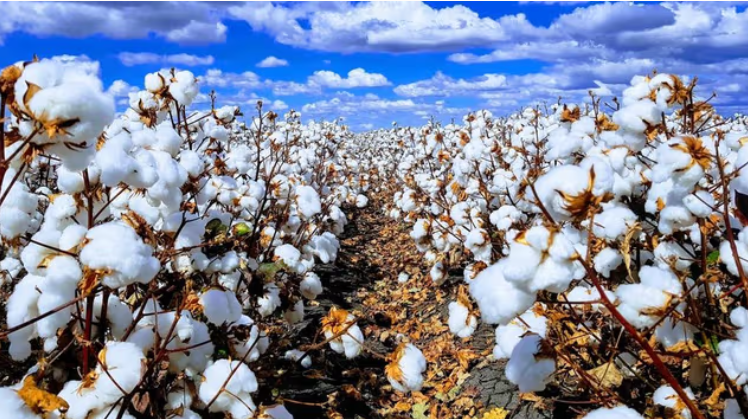
Efforts to revive cotton farming in Machakos County are gathering pace following the distribution of pest-control equipment and agricultural chemicals to more than 1,000 growers in Yatta Sub-county.

The intervention, implemented through the Agriculture and Food Authority (AFA), aims to strengthen cotton production in one of Kenya’s semi-arid regions, where farmers are increasingly turning to climate-resilient crops to cope with unpredictable weather conditions.

Beneficiaries drawn from Ndalani, Kisiiki, Kiwanzani, Nthungululu, Mbembani, Kivingoni and Kakongo farming clusters received pesticides alongside modern motorised spraying equipment designed to improve crop protection and reduce production expenses.

The support comes at a time when cotton is regaining prominence as a viable cash crop in Yatta. Farmers have increasingly embraced the crop because of its ability to perform well under limited rainfall conditions while offering reliable returns.

Local farmers say the introduction of generator-powered sprayers is expected to significantly improve pest management, one of the key challenges affecting cotton yields. The machines are also projected to reduce labour requirements and improve operational efficiency on farms.

While welcoming the government’s intervention, growers have called for sustained support through affordable farm inputs, strengthened extension services and access to modern agricultural technologies.

They argue that continued investment in the sector will help maintain the momentum achieved in recent years and further improve household incomes.

Farmers have also raised concerns about poor seed performance experienced during the previous planting season. According to growers, low germination rates from distributed seed varieties resulted in reduced crop establishment and financial losses for many households.

They are now urging authorities to ensure the timely availability of Bt cotton seed ahead of the next planting season, noting that quality seed can improve productivity, lower production costs and enhance resistance to pests.

“We are appealing to the government to provide Bt cotton seeds before the October planting season. Quality seed will increase yields, reduce production costs and protect farmers from unnecessary losses,” Daniel Nzioki, a farmer said.

The renewed interest in cotton farming reflects broader changes taking place across Kenya’s arid and semi-arid regions, where farmers are increasingly prioritising drought-tolerant crops such as cotton and sunflower.

Improved market opportunities, government support programmes and greater awareness of the crop’s commercial potential have contributed to rising adoption rates.

The Government has approved the commercial cultivation of BT cotton, which is resistant to the destructive African Bollworm.

According to sources, BT cotton yields 2,500 kilos per acre under good management. With a kilo retailing at Sh72, this translates to gross earnings of Sh180,000 per acre.

To maximise earnings, farmers are encouraged to use certified seed varieties, conduct timely pest and disease control, and maintain proper crop husbandry throughout the growing season.

Also Read: Brookside Dairy announces Sh255 million payout to farmers

Watch live matches through SportyTV as new 24/7 sports channel joins DStv and GOtv

0

Live sport will be more accessible than ever as SportyTV is added to DStv and GOtv bouquets in Kenya as well as Nigeria and Ghana. The 24/7 sports channel will deliver around 750 live sporting events every year on DStv Access and GOtv Value, one of the most affordable ways to watch live sport alongside local and international entertainment, kids’ content and streaming – all in one package.

SportyTV combines world-class football, basketball and combat sports with nonstop news, analysis, highlights and exclusive behind-the-scenes access. The channel adds a new layer of sports coverage to DStv’s existing sports lineup and will also be available on GOtv.

“SportyTV is a strong addition to the DStv Access and GOtv Value content offering across Africa. Bringing new and exciting sports events to our customers, at an accessible price point, reflecting our commitment to making quality sport available to as many fans as possible across the continent,” said David Mignot, CEO of CANAL+ Africa.

Sudeep Ramnani, Founder and CEO of Sporty Group, said: “Our ambition has always been to provide a truly global sports offering for African fans, one that combines live sports action, nonstop storytelling and unprecedented access to the world’s biggest clubs and competitions. Partnering with CANAL+ and launching on one of the continent’s leading TV and streaming providers allows us to bring that vision to millions more households across Africa.”

“The SportyTV channel gives DStv and GOtv viewers more choice, complementing SuperSport’s wide variety of sports content,” said Rendani Ramovha, CANAL+ Director of Sport Content in English and Portuguese-speaking Africa. “It adds a fresh mix of live sport and broadens DStv’s compelling sports offering, covering an additional array of the live action loved by African sports fans.”

Multichoice cuts DStv and Gotv decoder prices as subscription dips

Football fans can look forward to an extensive lineup featuring popular competitions, including the English Premier League, Carabao Cup, EFL Championship and Women’s FA Cup, alongside LaLiga, the Spanish Super Cup, the Bundesliga and the Italian Serie A.

Elias Gallego, VP of Business Development, Marketing, and Media at Sporty Group, added: “We’re thrilled to launch SportyTV on DStv and GOtv and make watching sport more accessible than ever to fans across Africa. Through this partnership, we’re able to reach millions of viewers and deliver a wide variety of competitions and content, connecting sports fans with exciting moments from around the world.”

SportyTV will also be home to Real Madrid TV, Arsenal TV, Chelsea TV and Manchester City TV, offering fans unprecedented access to four of the world’s biggest clubs. Beyond the elite European clubs, viewers can enjoy top-tier South American football through the Copa Libertadores, Argentina League and Brazil Serie A, as well as additional coverage from the Greek League and Saudi Pro League. The channel’s offering is further complemented by world-class basketball through the NBA and a growing portfolio of international sports content.

DStv Access subscribers now get even more value, with SportyTV bolstering the line-up as a 24/7 sports channel and giving customers the chance to watch live sport that was not previously available on the package.

DStv Access also includes 80+ TV channels spanning movies, series, reality shows, lifestyle, kids’ entertainment, news and more, with additional channels being added regularly. Recent and upcoming additions include WWE, music channel Base Pulse and, from 1 July, Novelas+, featuring telenovelas from around the world. SuperSport will also launch a dedicated World Cup pop-up channel for the tournament.

Customers looking for the full SuperSport line-up, including every Premier League match, major rugby fixtures, Formula 1 and MotoGP, will need to upgrade to DStv Premium.

SportyTV launched on 10 June 2026 and is available in HD on DStv Channel 237 and GOtv Channel 58 in Kenya.

PS Kello Harsama assures Kenyans of stable fuel supply and adequate petroleum stocks

0

The Principal Secretary for Petroleum, Kello Harsama, has assured Kenyans that the country continues to maintain adequate petroleum stocks and that fuel supply remains stable across the country.

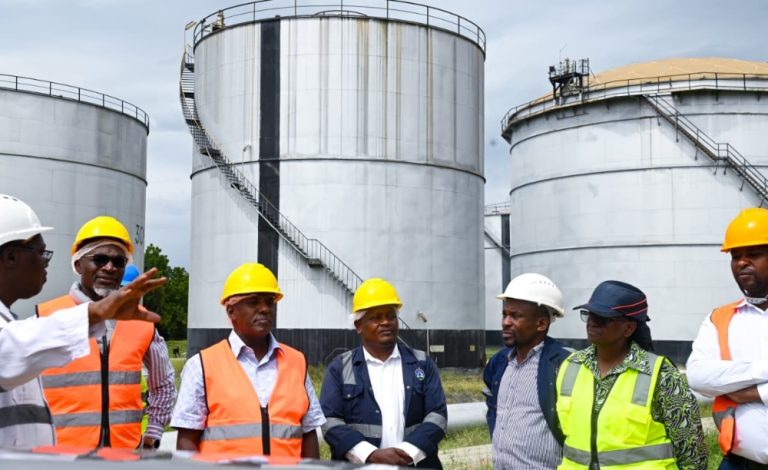
Speaking during a familiarization tour of key petroleum facilities in the Coast Region, the PS said current fuel reserves are sufficient to meet national demand for more than a month, with additional cargoes already en route to further strengthen supply levels.

“Kenya has consistently maintained a stable and reliable fuel supply system that compares favourably with many countries in the region. We have adequate stocks, additional cargoes on the way, and robust infrastructure that enables us to sustain supply and shield consumers from fuel shortages and price volatility,” said Mr. Harsama.

Current petroleum price adjustments by CS energy (May 15 – June 14, 2026)

The PS reaffirmed the Government’s commitment to strengthening strategic petroleum infrastructure, expanding storage capacity, improving efficiency across the supply chain, and supporting investments that enhance Kenya’s position as a regional energy and logistics hub.

The tour included visits to the Kenya Petroleum Refineries Limited (KPRL), a subsidiary of the Kenya Pipeline Company (KPC); the Kipevu Oil Terminal 2 (KOT 2) operated by the Kenya Ports Authority (KPA); the VTTI terminal; and the Taifa Gas facilities in Dongo Kundu.

At KOT 2, the PS observed fuel offloading operations and noted the facility’s critical role in facilitating the importation and handling of petroleum products, thereby ensuring a reliable and uninterrupted fuel supply for Kenya and the wider East African region.

The visit also highlighted the Government’s efforts to promote investment in LPG and gas storage infrastructure to support the growing demand for clean cooking energy. Expanding storage capacity will enhance energy access, strengthen supply resilience, and accelerate Kenya’s transition to cleaner and more sustainable energy solutions.

Kenya’s Top Betting Platforms with Welcome Offers

0

A welcome bonus has long ceased to be just a marketing tool. In Kenya, competition among betting operators is so intense that new users receive not only extra funds to start with but also access to promotions that allow them to explore a platform without making large deposits. While researching betting platforms, many punters compare different betting sites in Kenya to understand which welcome package provides the most realistic advantage. In many cases, the details hidden behind the promotion determine whether it is worth claiming at all.

What Makes a Welcome Bonus Really Worth It?

At first glance, most offers look similar, yet the details can vary significantly. Some operators focus on a higher percentage match, while others attract newcomers through lower deposit requirements or more achievable wagering conditions. These factors often have a greater impact on the overall value of a promotion than the headline figure itself.

When comparing welcome offers, it is worth paying attention to several key aspects:

  • Size of the bonus
  • Initial deposit requirement
  • Wagering conditions attached
  • Promotion validity period

The clearer the rules are, the easier it becomes to assess whether the offer can realistically benefit a new bettor.

Pin Up Africa App Review: Betting and Casino Experience on Smartphone

Platforms That Attract New Players

Several operators regularly appear in Kenyan betting rankings thanks to their introductory promotions and local-friendly features. Support for M-Pesa payments, extensive football coverage, and mobile betting options are often among the main reasons why these platforms are in demand.

Typical welcome offers include:

  • Afropari first deposit bonus
  • 1xBet matched deposit offer
  • Helabet registration promotion
  • PlanBet starter betting package

Many bettors notice Afropari because of its attainable entry demands.1xBet often attracts attention with a larger introductory package, while Helabet focuses on a straightforward activation process. PlanBet combines its welcome offer with additional promotions that remain available after the initial registration period, making it an interesting option for users who plan to stay active beyond their first few bets.

How to Evaluate a Platform After Registration

Many newcomers focus exclusively on the welcome bonus, but after placing several bets, other factors quickly become more important. Deposit speed, and access to live mode and streams often have a greater impact on the overall betting experience than the initial promotion itself.

It is worth checking the following aspects:

  • M-Pesa payment support
  • Quality mobile application
  • Local league coverage
  • Withdrawal processing speed
  • Ongoing promotional offers

This approach helps evaluate a platform from a broader perspective and choose a service that remains comfortable to use long after the welcome bonus has been claimed.

Conclusion

Welcome bonuses are a common way for Kenyan operators to bring in new customers, but the best offers are rarely the loudest ones. What matters most is what sits behind the headline figure — the conditions, the wagering requirements, the fine print.

I got a job in Europe. How do I budget my money to build my family a house?

The Question: My name is John. I am 44 years old. I got a job in Europe and moved to Romania, Eastern Europe, two months ago for work.

I have a wife and three kids who are in Kenya. Every month, I am able to make between Sh90,000 and Sh150,000 depending. My family currently lives in a rental apartment.

My goals are to make enough money to buy land and build my family a home, then invest and return home. I don’t want to live here forever. I borrowed Sh800,000 (Sh400,000 from the bank for two years, Sh250,000 from siblings and relatives, and Sh150,000 from my chama) to fund my move here.

I spent this money on agency fees and visa fees. My current savings are largely going towards offsetting these debts. I pay the bank about Sh21,700, I pay siblings depending on how much I make in a particular month, and chama I pay Sh10,000.

I then send Sh35,000 to my wife to cater for my family’s monthly expenses. How do I plan my money, save more, invest and realize my goals so that I can return to Kenya before in six years and live comfortably without struggling financially?

The Answer: Benjamin Cheruiyot – the Engagement Lead at Abojani Investments, a personal finance and investments advisory firm.

With an average monthly income of Sh120,000, your disclosed expenses add up to Sh66,700. This does not include your personal living expenses abroad. Assuming you spend Sh26,800 you will be left with Sh26,500. Investing this amount monthly will help you to meet your medium term financial goals of home ownership.

However, you should look at a longer employment duration as six years won’t be enough to cover your goals, pay debt and meet other needs like your children’s education costs.


For instance, Sh26,500 invested in a low risk fixed income fund returning 12 percent annually will add up to Sh2.7 million in six years.

This may not be enough to buy land in a desirable location in 2033. The cost of land today will have accelerated in six years at a bigger pace than the returns derived from your investment.

This scenario would force you to work even longer abroad to keep up with the cost of land and building that will keep rising in tandem.

If the same amount is invested for ten years, you will accumulate Sh6 million that may afford you a plot at a cost of about Sh4 million further away from urban areas.

With inflation and fuel costs steadily out-pricing materials and transportation costs, building a modest three bedroom house could cost Sh6 million in a decade.

This may not be a very viable financial plan for you as saving Sh26,500 monthly in a fixed income fund posting 12 percent annually won’t be enough.

An easy way to realize your goals is borrowing to buy land first. Currently, you may spend about Sh2 million on a plot. Borrowing this will cost you about Sh30,000 monthly payments in ten years, or Sh35,000 in eight years.

You may not afford that now since you are servicing debts. Your bank loan will likely end in three years, and the chama loan in eighteen months. You will be better placed to consider a loan to purchase land by 2030.

This also depends on the nature of your job. Contractual jobs may forbid you from taking long term debt. You would need to take shorter loan repayment periods. Sh2 million loan repayable in five years will cost Sh45,000 per month. This will be possible after you clear the current loan.

A SACCO loan would be cheaper. You need savings of Sh600,000 to access a Sh2 million SACCO loan through the 3-4 times loan multiplier effect.

If you join a SACCO now and contribute Sh15,000 monthly, you’d accumulate Sh600,000 in three years from own contributions and interests on deposits.

Depending on location, though, you may consider a rural set-up where costs of acquiring land and building would significantly reduce.

This should be based on the area your family currently resides and the ability of the rural area you might target to be economically activated. For example, through agribusiness.

Alongside this, you can deposit Sh10,000 monthly in a unit trust fund for liquidity to manage unforeseen circumstances or build a sinking fund for your children’s education or building budget.

Actively managed cash flow assets like unit trust funds – bond fund and special fund can help meet education costs through regular interests. Carefully selected NSE stock, for example, Stanbic, Standard Chartered, Williamson Tea, and BAT can achieve both income and growth objectives.

Rhina Namsia: Money Market Funds are popping up all over; Is yours working for you?

Growth of assets through consistency and compounding interests will set you up for a comfortable retirement. Increasing income sources avails more cash to meet long term goals.

At 44 years old, personal finances must align with milestones to help achieve financial freedom at 60. Lifestyle costs must pass austerity measures. Medical and life insurance are not luxuries.

It is also recommendable that you and your spouse discuss how she can bring extra income on board.

The two of you can start by tracking how the Sh35,000 family expenses budget is utilized and if there are unnecessary expenses that can be cut off or reduced to eke out an extra shilling that can go to an emergency fund to be set up in a money market fund.

Once this is done, evaluate your spouse’s employability, the skills she has and how they can be converted into a job, if she is not already working and earning.

If she is already working and earning, you may need to have a talk on how her income can be enjoined in achieving the family goals, how her money is spent and what financial changes and, or obligations need to be included in her income.

Should the two of you consider starting a business, I would urge that you be cautious as more new businesses collapse than break even. Consult a professional who can evaluate your business ideas and their viability based on location and the targeted clients.

In addition, it’s not late for you to acquire skills that can position you for higher income opportunities abroad and locally. This also means that you should start to consider what you will do to continue earning, directly or passively, when you return to Kenya.

A version of this question and answer was previously published in the Saturday Nation. The Saturday Nation is a publication of the Nation Media Group.

NCBA investment bank and NSE partner to empower youth

0

NCBA Investment Bank, in partnership with the Nairobi Securities Exchange (NSE), has launched the 2026 NSE Investment Challenge, with a target of onboarding more than 30,000 participants across universities and youth segments with the aim to empower the next generation of retail investors.

The challenge will run until June 2027, with the top three participants in the 2026 edition set to receive cash prizes of KES 100,000, KES 60,000, and KES 40,000, respectively. The winnings will be disbursed directly into CDS accounts held with NCBA Investment Bank Brokerage. Participants will also benefit from financial literacy, investing, and wealth creation training, further expanding the programme’s impact and relevance.

Speaking on the partnership, Muathi Kilonzo, Managing Director, NCBA Investment Bank, noted that the collaboration reflects NCBA’s broader ambition to make investing more accessible, relatable, and inclusive for young people entering the financial ecosystem.

“Our partnership with the NSE Investment Challenge is about more than sponsorship; it is about equipping young people with practical investment knowledge, exposure to capital markets, and confidence to begin their investment journeys early. As we continue building a trusted and digitally enabled investment ecosystem, we remain committed to supporting the next generation of investors through platforms that combine education with real-world participation,” said Kilonzo.

Inside East Africa’s 2025 trade boom: Key takeaways from the NCBA forum

The Challenge, powered by the SokoPlay platform, is a gamified investment education initiative designed to improve financial literacy and cultivate a new generation of retail investors through experiential learning and practical exposure to capital markets.

David Wainaina, Chief Operating Officer, Nairobi Securities Exchange (NSE), highlighted the importance of ecosystem partnerships in deepening retail investor participation and strengthening financial literacy among young people.

“The NSE Investment Challenge is designed to bridge the gap between financial education and practical market participation by giving young people hands-on exposure to investing through a safe and engaging platform. Our partnership with NCBA Investment Bank Brokerage strengthens our shared ambition of building a more financially informed and investment-ready generation while expanding access to Kenya’s capital markets ecosystem,” said Wainaina.

In 2025, the NSE Investment Challenge attracted more than 10,000 new registrations from over 50 tertiary institutions across the country. This performance reflects the growing interest among young people in financial literacy, investing, and wealth creation, as well as the expanding impact and relevance of the programme.

By partnering with NSE on the Investment Challenge, NCBA continues to strengthen its positioning as a trusted advisor within Kenya’s retail investment ecosystem while demonstrating the NCBA Group’s commitment to its purpose, “Banking on Belief; Empowering Ambitions,” and strategic focus on delivering digital simplicity for the modern consumer.

Ruto ally Mary Wambui Mungai ordered to pay Equity Sh100mn or face auctioneers

0
The High Court has ordered President William Ruto’s ally Mary Wambui Mungai to pay Equity Bank Sh100 million or lose her hotel to auctioneers. The hotel is known as Glee Hotel and is located in Runda, Nairobi.

The ruling came after President Ruto’s ally Wambui moved to court seeking to stop Equity from exercising its statutory power of sale over the hotel and other properties belonging to her that had been charged for a loan.

“The suspension is on condition that [Mary Wambui Mungai] pays [Equity Bank] the sum of Sh100 million within seven days of the date of this ruling, in default of which the order of suspension shall automatically lapse,” the High Court in Nairobi ruled.

In her plea to the court, Mary Wambui had sought for an extension of 60 days to comply with a consent agreement that she had entered into with Equity Bank at the beginning of 2026.

According to the consent that was recorded on February 24, 2026, Equity Bank had agreed to accept Sh7.75 billion in full and final settlement of outstanding debt that the woman and her related entities owe the bank.

The properties that were used to secure the debt included parcels of land on which the Glee Hotel was constructed on,

This amount was 85 percent of the total debt owed by Wambui that was to be refinanced through an arrangement by KCB Bank Kenya. This agreement required payment within 45 days.

At the same time, the agreement declared that failure to pay the money within the stipulated period would entitle Equity Bank to rescind the settlement and pursue the recovery of the full debt together with related interests and costs by means of enforcing the charged securities.

New York Times: How Ruto’s family, allies make profits from sending Kenyans to Saudi

Mary Wambui had told the court that she needed an extra 60 days to comply since the deal was complex and required intense due diligence on the part of the KCB Bank.

This was however opposed by Equity Bank which told the High Court that the dispute had already been settled through a binding consent judgement that had been entered into voluntarily by the parties involved.

Bridging markets: How the 2026 Africa international expo catalyzes sino-African industrial synergy

0

As the global manufacturing landscape undergoes deep structural realignments, the economic corridors between China and Africa are rapidly evolving from traditional commodity trading into advanced capacity partnerships. The upcoming 2026 Africa International Construction Machinery, Mining Machinery, Agricultural Machinery, Automobile & Motorcycle Parts, Electromechanical and Hardware Products Expo represents a crucial milestone in this transformation.

Scheduled to open its doors from June 17 to 19, 2026, at the iconic Kenyatta International Convention Centre (KICC) in Nairobi, Kenya, this expansive industrial gathering stands as a definitive platform for economic integration. Orchestrated on the ground by core organizing and execution partner Hongxing Sparkle Africa International Exhibition Co., Ltd., the event marks a sophisticated turn toward precision-targeted industrial matchmaking.

Historically, large-scale international exhibitions focused primarily on broad product showcases. However, the modern trade architecture demands high-precision execution where immediate business outcomes are guaranteed.

The organizing apparatus has prioritized an outcome-oriented blueprint that leverages established government, industry, and corporate networks across both regions. By deploying a rigorous, data-driven service methodology—encompassing pre-event demand profiling, structured on-site matchmaking, and systemic post-event outcome tracking—the Expo aims to transform transient transactional interactions into long-term strategic joint ventures.

The scale of global response underscores the high institutional demand for this platform, with more than 5,000 registered professional buyers from 15 participating sovereign nations, including Nigeria, Tanzania, Switzerland, Türkiye, and the United Arab Emirates, formalizing their attendance as of mid-June.

A defining feature of the 2026 Expo is the composition of its attendee base, shifting away from uncoordinated individual buyers toward organized procurement delegations led by structural pillars of African industry. Major industrial giants such as Komatsu Machinery, Holman Brothers EA Limited, CFAO Motors, and ASL Limited have confirmed their participation alongside key institutional organs like the Kenya Association of Building and Civil Engineering Contractors (KABCEC) and the Kenya Chamber of Mines.

Middle East Energy announces launch of the African Energy Expo

These delegations are targeting critical objectives across diverse verticals: construction and mining firms seek to upgrade heavy equipment fleets to meet infrastructure demands; agricultural sectors look to enhance localized processing and field mechanization; automotive representatives aim to stabilize regional supply chains for parts and light transport; and electromechanical buyers intend to source raw tool networks for expanding industrial zones.

With the official opening slated for June 17, structural readiness at the KICC has reached terminal stages. On-site logistics have transitioned from primary layout fabrication to the delicate processes of positioning, calibration, and commissioning of heavy industrial machinery. Exhibitors are scheduled to commence localized booth customization and physical inventory displays on June 16.

To optimize the efficiency of the three-day visitor window, the execution partner has institutionalized seven distinct industry-specific matchmaking symposiums and four technical-business inspection tours, allowing international suppliers to evaluate localized market conditions firsthand.

Beyond immediate corporate order books, the Expo serves as a practical extension of macro-diplomatic frameworks, specifically reinforcing the Comprehensive Strategic Cooperative Partnership between China and Kenya.

By introducing advanced Chinese engineering capability, localized manufacturing equipment, and deep capital pools to the African continent, the event lays down the technical infrastructure required for the realization of Kenya’s Vision 2030 and broader African Continental Free Trade Area (AfCFTA) manufacturing goals.

The event organizers have ensured that when the curtains close on June 19, the economic relationship continues through continuous post-show project tracking, investment evaluation pipelines, and regulatory facilitation support. The 2026 Africa International Expo does not merely showcase the future of industrial production—it actively builds it.

Pain of grounded Kenya Airways Embraer jets, Boeing Dreamliners

0
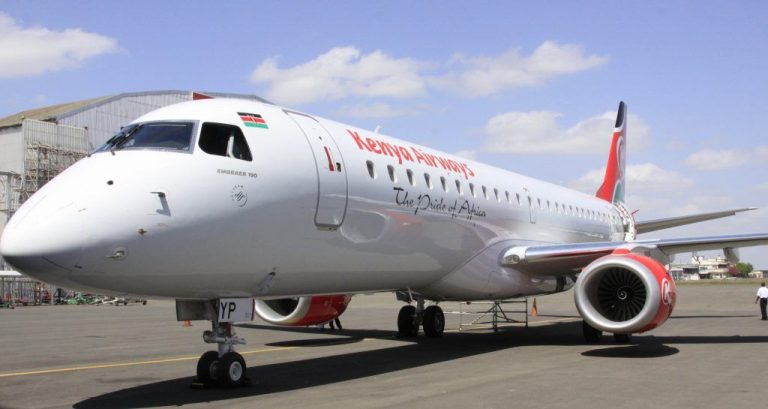
The national carrier Kenya Airways is still struggling to get its grounded aircraft up in the air again. The grounded aircraft include three Kenya Airways Embraer jets and three Boeing Dreamliners.

The grounded aircraft is currently representing 18 percent of the carrier’s seat capacity.

“We have three Embraer jets on the ground waiting for engines and landing gears. We also have two Boeing 787s waiting for engines, and one requiring heavy checks,” George Kamal, the KQ acting group managing director and chief executive officer said.

“We have an engine coming from the shop on June 19 and a second engine coming on July 15. This is due to supply chain issues, which is not something localized for Kenya Airways. It’s something impacting most airlines globally.”

Grounded aircraft has been a thorn in the flesh of the national carrier over the past one year. The grounded aircraft was blamed for the mega net loss of Sh17.2 billion in the full financial year 2025.

“Overall performance and operations in the year 2025 were severely impacted primarily by the temporary grounding of three of the wide body fleet, Boeing 787-8 Dreamliner aircraft. This was driven by the global supply chain constraints and limited engine availability,” Kenya Airways had attributed the loss.

During that year, Available Seat Kilometres (ASKs) declined by 18 percent to 13,349 million, while passenger numbers dropped by 13 percent.

In the first six months of the 2025 year, 33 percent of the carrier’s wide-body aircraft was grounded. The grounding of the aircraft resulted in a 14 percent drop in passenger numbers and a 19 percent drop in Revenue Passenger Kilometres (RPKs).

“While our financial performance reflects a challenging year, it is important to recognize that this was driven primarily by global supply chain disruptions and not a lack of demand,” Kenya Airways Chairman, Kiprono Kittony had said.  In the previous 2024 financial year, KQ had returned a historic net profit of Sh5.4 billion.

The airline says that it is working to restore its full fleet by the of the current financial year, which could be interpreted as meaning that shareholders might still be in the woods this current financial year.

One of the measures taken by Kenya Airways to offset part of the lost passenger capacity is the reintroduction of its Boeing 777-300ER which the airline had leased out to Turkish Airlines. This plane shall bring on board its 400-seater capacity and is expected to bring down the grounded passenger capacity from 18 percent to between six and eight percent.

In addition, Mr Kamal said that the airline will be adding more aircraft over the medium future by acquiring more planes including the Boeing 737-Max jets.

“We took the decision in February 2026 to slow down and move our plan to acquire Boeing 737-Max jets forward to 2027. However, our end goal, say in 2030, we are looking at 60 aircraft and 100 in 2035,” said Kamal. “Not all of them will be owned aircraft; some will be owned, and others shall be leased.”

SEE MORE: Ethiopian Airlines orders 6 brand new Airbus A350-900 planes

The national carrier’s aircraft is majorly dominated by Boeing jets with Embraer models coming a distant second. The airline has a low to zero hold on Airbus airplanes unlike regional rivals such as Ethiopian Airlines which operates a mixture of Boeing and Airbus aircraft.

By the end of the previous financial year on December 31, 2025, the national carrier operated 37 owned and, or leased air- craft that comprised of seven Boeing 787 wide-body jets, nine Boeing 737 narrow-body jets, seven Embraer regional jets, four Boeing 737 freighters and 10 Bombardier Dash 8-400.