

Home Blog Page 63

Why experience-led living is redefining real estate in Kenya

0

Kenya’s real estate sector is not just evolving, it is being fundamentally reshaped. For years, the industry has approached the convergence of real estate and hospitality as a matter of adding amenities: a service hub, a gym, maybe a co-working space to signal modernity.

That thinking no longer holds. What we are seeing in 2026 is not an upgrade but a complete shift in how real estate is defined and delivered. At its core, real estate is no longer just a product. It is becoming an operating system.

The true value of a building is no longer only in its physical structure but in how it functions daily, how it integrates services, technology, wellness, and community into one seamless experience.

Hospitality is no longer an add-on but the layer that brings everything together. This changes the role of the developer entirely from someone who builds and sells spaces to someone who creates and manages living ecosystems.

According to the Kenya National Bureau of Statistics (KNBS), Kenya’s real estate sector contributes over Sh364.6 billion to GDP, while the broader construction and property ecosystem accounts for more than 15 percent of the economy.

At the same time, tourism is projected to generate around Sh650 billion annually. These sectors are increasingly interconnected, shaping a new kind of opportunity.

The real disruption lies in how value is created. Real estate has traditionally monetized space, while hospitality monetizes time. The future lies in combining both.

Experience-led developments are introducing models where revenue comes not just from occupancy, but from engagement. The most successful properties will not simply be full; they will be active.

They will generate value through memberships, co-working, wellness services, events, and retail experiences. Success is less about how many people occupy a space and more about how often they return and how long they stay.

This requires a mindset shift. The traditional “build, sell, exit” approach is becoming less relevant in a market where people expect continuous value.

Real estate is moving closer to a platform model where the building is just the foundation, and the real value comes from the experiences built around it.

At the same time, we are seeing what can best be described as the “hotelification” of real estate. The standards people expect from hotels, that is, service, convenience, and personalization, are now being applied to homes, offices, and mixed-use developments.

This is not just about luxury; it is about expectations. Branded residences are no longer niche products. They are becoming a strategy for developers to build trust, attract buyers, and reduce risk. More broadly, hospitality-driven thinking is becoming essential across all developments.

This shift is also linked to changes in how people work. With hybrid work becoming the norm, traditional office spaces are under pressure. Buildings that only offer desks and meeting rooms are losing relevance.

In their place, there is a growing demand for spaces that offer a full experience; places where people can work, connect, relax, and recharge. Offices that fail to create this kind of environment risk becoming obsolete.

Another major shift is in how wellness is viewed. For a long time, wellness was treated as a bonus feature. Today, it is a basic requirement. Wellness now goes beyond gyms or green space.

It includes mental well-being, air quality, natural light, noise control, and how a space makes people feel. The most forward-thinking developments are designed to support healthier, more balanced lifestyles.

Developers who still treat wellness as an afterthought are building for a market that no longer exists. As real estate changes, so must the way success is measured.

Traditional metrics like yield, occupancy rates, and price per square meter are still important, but they are no longer enough. New measures are emerging.

These include how satisfied people are, how productive they feel, how often they engage with the space, and how much value each user generates over time. These indicators reflect the true performance of modern developments.

However, they also require new capabilities, particularly in operations, service delivery, and technology. This is where many developers face a challenge.

Moving into experience-led real estate requires a different skill set that blends property development with hospitality, data, and customer experience.

It is more complex, but it is also where the biggest opportunities lie. Those who adapt will unlock new value; those who do not risk falling behind.

Perhaps the most important shift is the rise of identity-led living. People are no longer choosing where to live or work based only on price and location. They are choosing spaces that reflect who they are.

This is especially true for younger professionals and urban consumers. They want environments aligned with their lifestyle, values, and aspirations. As a result, developments are becoming more expressive and human-centered.

Design, branding, and community are all playing a bigger role. The most successful projects will have a clear identity, something people can connect with and return to.

For Kenya, this presents a major opportunity. With a growing urban population, a strong tourism sector, and an increasingly sophisticated consumer base, the country is well-positioned to lead in this space.

The key will be adapting global trends to local realities, creating developments that are not only modern but also relevant and inclusive.

The message for the industry is clear. The era of static real estate is over. Buildings are no longer just physical assets; they are living systems that must respond to the needs of the people using them.

The future of real estate in Kenya will not be defined by how much we build, but by how well we design experiences. It will not be about space alone, but about time, connection, and value. Those who understand this shift and act on it will shape the next chapter of the industry.

The writer is the Managing Director of Superior Homes Kenya, Ian Henderson.

Also Read: NCBA targets self-build market with EASYBUILD solution
Nairobi investment dialogue: Forging the Africa-France economic frontier

0

Investors and business leaders from Kenya, France and the wider region have called for practical long-term partnerships anchored on infrastructure, green transition projects, skills development and de-risking investments to unlock Africa’s economic potential.

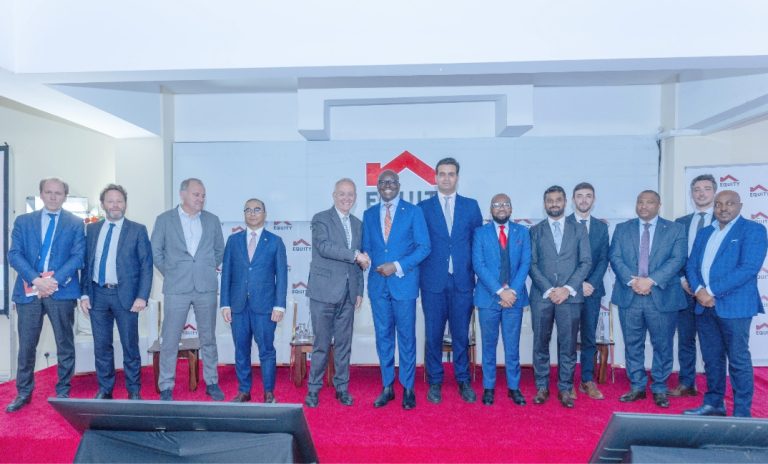
The call was made during business leaders and investors engagement held in Nairobi on the sidelines of the Africa Forward Summit, as stakeholders explored opportunities for deeper trade, financing and industrial cooperation between African and French businesses.

The meeting brought together France and Kenya private sector players, development finance institutions and investors seeking to strengthen commercial ties and position Kenya as a strategic gateway into East and Central Africa.

Equity Bank Kenya Managing Director Moses Nyabanda who hosted the group, said Africa’s improving economic outlook and expanding consumer base continue to make the continent increasingly attractive to investors.

“Africa is now truly bankable, and we’ve played our part, we’ll continue to do that. The market that we offer you is at least 350 million consumers, and if you look at the trend of GDP per capita across the regions that we are looking at, it is the place to be,” Nyabanda said.

He noted that Kenya remains strategically positioned as an entry point into the East African market and beyond, adding that stronger partnerships between African and French businesses could help unlock value across the continent.

Equity Bank retains top spot as Kenya’s most valuable brand in 2026

“Kenya provides a fantastic gateway to not only the six markets that we have, but the wider East Africa region. And that’s why we are here, for that conversation of how do we bring Kenyan businesses to align to our partners from France, how are we able to catalyse that?” he said.

Nyabanda added that the focus should now shift towards connecting businesses, financing opportunities and regional value chains capable of driving enterprise growth and economic transformation.

French investors signaled growing interest in expanding partnerships with African businesses through financing, export support and technical collaboration.

Martin Heslouin, Executive Director of the Council at BPIFrance, said France has developed specific programmes aimed at supporting African businesses through financing guarantees, advisory support and stronger commercial linkages with French suppliers.

“We have specific programmes for Africa. Since a few years, we are bringing companies to Africa, and this is very important,” Heslouin said.

He noted that the programmes are designed to help Kenyan and African companies access French business solutions while securing financial guarantees and loans that reduce transaction risks and support expansion.

“Our core mission now for the team is to connect Kenyan businesses and African businesses to French suppliers and French solutions, so that here you can grow the business of Kenyan companies, and you can get some guarantees or some loans to secure all the transactions,” he said.

The discussions also highlighted the growing need for investment models focused on sustainability, industrialization and long-term value creation rather than short-term returns.

Gerard Wolf, Vice President of the Africa Committee at Medef International, said investors are increasingly looking at projects tied to ecological transition, skills development and infrastructure as key drivers of Africa’s future growth.

“We have to be more practical and pushier,” Wolf said, adding that Kenya remains central to regional investment corridors and long-term infrastructure partnerships.

He said French private sector players are looking beyond short-term commercial opportunities and are instead focused on long-term investment commitments in Africa.

“We are here for infrastructure, we are here for long-term commitments, for long-term investment,” Wolf said.

Stakeholders at the engagement emphasized that stronger collaboration between African institutions, international investors and development finance actors will be critical in unlocking sustainable growth, supporting businesses and positioning Kenya as a regional hub for trade and investment.

State ignores World Bank, ends Kenya Power monopoly

0

The long-standing Kenya Power monopoly in the energy sector is coming to an end. This is after the government published the Energy (Electricity Market, Bulk Supply and Open Access) Regulations of 2026 which will allow power producers to compete directly with Kenya Power. These regulations were gazzetted on May 8, 2026.

This means that power producers who do not have any existing power purchase agreements (PPAs) with Kenya Power will be able to sell their electricity to consumers such as industries, factories and commercial enterprises.

However, these power producers will still need to use infrastructure developed by Kenya Power and the Kenya Electricity Transmission Company (Ketraco) to reach these customers. They will then pay an ‘access’ fee to both Kenya Power and Ketraco for using their infrastructure.

The opening of this power market to independent power producers goes against the recommendations of the World Bank which had warned that ending the Kenya Power monopoly would cause a hike in electricity prices across the country.

“A network service provider shall provide non-discriminatory open access to its transmission or distribution system to a licensee or an eligible consumer,” the new regulations state.

The network service provider shall grant open access to the wheeler, provided that the load shall not be less than one megavolt-ampere (1MVA) in the distribution system or ten megavolt-amperes (10MVA) in the transmission system.”

According to the World Bank, the segment of power consumers that will now be open for other producers has been paying more for a unit of electricity in comparison to domestic power consumers. This has been allowing Kenya Power to subsidize what domestic consumers pay.

If the larger consumers stop using Kenya Power and move to the new power producers, the World Bank has been warning that Kenya Power will lose its ability to subsidize the local domestic user which will trigger price increases per unit of power consumed.

READ MORE: How Kenya Power and IPPs continue to mess up Kenyans unabated

The larger consumers usually have load demands of 10MVA. The Energy and Petroleum Regulatory Authority (EPRA) will then approve the prices that power producers will sell the electricity to larger consumers at.

Currently, Kengen is at the forefront of selling power independently. Earlier this year, the power company declared that it was waiting for regulations and pricing before it can start supplying power directly to customers.

“What is pending are regulations of how the [sell of electricity directly to larger consumers] shall be undertaken, and how the infrastructure will be based on wheeling charges for using transmission lines,” Kengen stated in a note to shareholders in February 2026.

Kengen is currently the single-largest supplier of electricity to Kenya Power. It supplied 59 percent or 8,482GWh of the 14,472GWh that Kenya Power purchased from power producers in the financial year ended June 2025.

Inside Kenya’s rare fruit boom: What farmers are growing

1

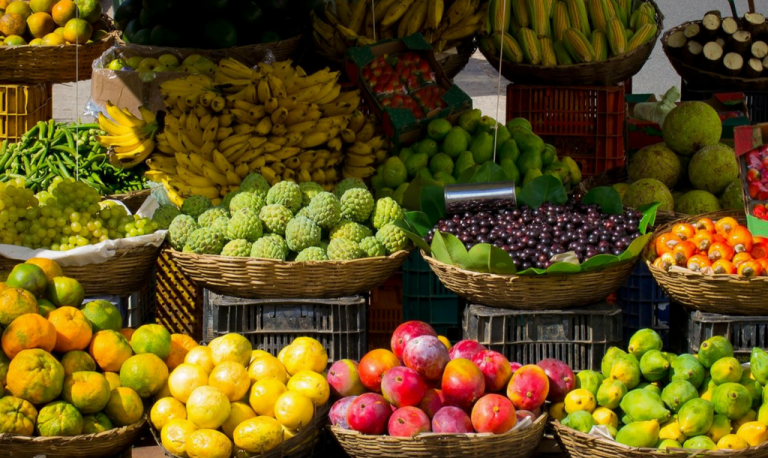
With the high competition in the agriculture sector, some farmers are slowly adopting rare fruits and are now experiencing a new wave of prosperity in fruit farming.

This is owing to the high demand these fruits have generated both locally and internationally. This article features some of the most profitable yet rare-to-find fruits in Kenya.

Dragon fruit

Dragon fruit, also called Pitaya is one of the rare yet profitable crops in Kenya. It comes in various varieties including the Hylocereus Undatus (pink-green scales), Hylocereus Costaricensis (pink), and the Hylocereus Megalanthus (yellow).

The pink-green scales variety is the most popular in Kenya and around the world markets and features a striking pink or red skin with prominent green scales.

Dragon fruit can either be sowed from seeds or cuttings. Planting from cuttings is the most preferred method as it is not time-consuming.

It will take 1 to one and a half years for a dragon fruit vine to produce the first fruit if it is planted from the cutting of a mature vine.

A vine propagated from seed, on the other hand, will take more than 6 years to mature. The lifespan of dragon fruit plants is over 40 years, and the plant can produce fruits more than twice a year.

The fruit is usually ready for harvesting when its skin color changes and the wings on the fruit start to wither. In addition, when the fruit is easy to pluck from the vine suggests ripeness.

You can keep dragon fruits for up to 18 days after harvesting without refrigeration. Under proper refrigeration, the fruit will remain fresh even for 3 months.

This fruit is not perishable since it stops ripening immediately after it is cut off from the mother plant.

According to experienced farmers, this exotic fruit can yield an average of 6500 kg per acre during the first two years of growth and assuming a plant population of 2400 plants.

As the tree progresses, the yield increases to 10,000 to 12,000 kg per acre. Each dragon fruit is normally around 300 – 1000 grams in weight.

The market price for dragon fruit ranges between Sh400 and Sh600 during the low and high seasons, respectively.

Jack fruit

Jackfruit, commonly known as ‘fenesi’ in Swahili, is one of the most popular fruits in the western parts of Kenya.

It is majorly grown in Busia, Kakamega, Bungoma, Kwale, Kilifi, and Vihiga counties. The fruit thrives in environments with warm temperatures and ample rainfall.

It requires minimal fertilizer and is resistant to most major pests and diseases. The plant takes up to three years to mature and can produce up to 300 fruits, with each fruit weighing between five and forty kilograms, depending on the size.

Compared to traditional crops, jackfruit offers a significantly higher return on investment, making it a lucrative option for farmers seeking to improve their livelihoods.

A single mature tree can produce upwards of 300 fruits in a year, with each fruit fetching a price between 400 and 650 Kenyan shillings. This translates to a potential annual income of Sh450,000 from just 10 trees.

Pepino melon

The pepino fruit resembles a melon in color, and its flavor recalls a succulent mixture of honeydew and cucumber.

The three main varieties of pepino melon grown in Kenya are golden pepino, Purple pepino, and Kiwi pepino.

They thrive in a variety of regions in Kenya, but the main production areas are the Central Highlands, the Rift Valley, and the Western Highlands.

The fruit has a fast growth rate and bears fruit within 4 to 6 months after planting. The best time to harvest pepino melons is during the cool season, from June to September.

The main market for pepino melon in Kenya is domestic, and prices vary depending on the time of the year, the quality of the fruit, and the market.

“You can calculate your total revenues assuming a yield of 12 tonnes per acre and a market price of Sh50 per kilo,” says Dedan Maina, a Pepino melon farmer.

Persimmon fruit

The demand for persimmon fruits is increasing both locally and internationally, making it a promising investment for farmers.

The fruit thrives in well-drained sandy or loamy soil with a pH range of 6.0 to 7.5. Proper soil preparation, irrigation, fertilization, pest, and disease control, and pruning are critical factors for successful persimmon farming in Kenya.

Persimmon trees can be propagated through seeds or grafting. However, grafting is the most preferred method since it ensures that the tree grows true to the desired variety.

The best time to plant persimmon trees is during the rainy season when the soil is moist.

According to Farmers Trend, the total cost of production per acre for persimmon farming in Kenya can range from Sh180,000- Sh350,000, depending on the specific inputs and labor costs.

Persimmon trees begin to produce fruit in the third or fourth year after planting, with full production being achieved by the fifth year.

A mature persimmon tree can produce around 400-1000 of fruit per year, depending on the variety. The fruit’s market price ranges between Sh80- Sh120 per piece.

Also Read: Pixie farming in Kenya: How much can you really make?

Pixie farming in Kenya: How much can you really make?

Pixie oranges continue to become very popular among Kenyan consumers owing to their higher sugar content than the ordinary large oranges.

The fruits are also juicier, and their orange flavor is very sharp. Being a variety of citrus fruits, pixie oranges thrive in hot climatic conditions.

Currently, Makueni County leads in the production of this fruit, followed by the other Ukambani counties of Machakos and Kitui.

According to farmers growing the fruit, pixie demand is very high both locally and abroad that farmers can’t meet it.

Given the seedless nature of the fruit, the only way to propagate it is by grafting, with grafted pixie plants ready to produce fruits in the second year and mature after 3-5 years depending on how well they are taken care of.

Ecological requirements

Pixie thrives in a wide range of soils although they perform best in sandy loamy soils. Just like oranges, pixie thrives in areas with low and moderate rain. This means that it can perform well in arid and semi-arid areas. In dry areas, the plants should be watered regularly.

Planting

The pixie plant sprouts vigorously and farmers are advised to observe the correct spacing. A spacing of 4m x 5m is recommended with an acre occupying between 200 – 250 pixie trees.

When planting, farmers should mix the top soil with well-decomposed manure to improve soil fertility. However, in areas with clay soils, the top soil should be mixed with sandy or loamy soil and well-decomposed manure to improve drainage, aeration, and soil fertility.

The field should be weed free and farmers are encouraged to apply Mulchi and plant cover crops which minimizes the growth of weeds.

Pests and diseases

The fruits are susceptible to pests such as mites, aphids, fruit flies, and mealybugs, and diseases such as collar rot and twig blight. Grafted varieties are resistant to certain pests and diseases. In severe cases, chemical control should be employed.

Production and output

Pixies start bearing fruits in the second year after planting. When properly managed, an acre can give a a turnover of up to Sh1.2 million per year. These fruits are sold at an average price of Sh80 per kilo at the farm gate.

A well-tended tree will give 60 kilos of fruits in a year and an acre can accommodate 270 such trees.

According to agriculture firm RichFarm Kenya, the cost of starting a pixie farm is just one-time and would be about Sh150,000.

Of this initial capital, you only need about Sh100,000 for purchasing seedlings (around Sh67,500) , planting labour (around Sh33,000) and maintenance cost of Sh50,000.

Rich Farm adds that once established, the farm will be generating income every year for the next 20 to 30 years.

Haron Muthini, a farmer in Makueni County who grows the fruits on eight acres of land says pixie farming is very profitable given the high local demand.

Muthini’s farm hosts 1,400 pixie plants with each tree producing up to 80kgs. He sells a kilogram at Sh150. The farmer says a well-managed tree can produce up to 120 kilograms.

His farm produces more than 150 tonnes, with a tonne selling for more than Sh100,000. Muthini notes that the venture broke even after 3.5 years, adding that nurturing the plants requires a lot of mone

Also Read: Savannah Honey CEO Kyalo Mutua Named CEO of the Year at Jamhuri Kenya Leadership Awards

KMTC reopens portal for students who missed March intake

0

The Kenya Medical Training College (KMTC) has opened a deferment window for students who secured admission for the March 2026 intake but were unable to report.

In a notice on Tuesday, May 12, KMTC invited the students to apply for deferment online through the students’ admission portal at admissions.ac.ke.

“Missed the March 2026 Intake? Don’t worry! KMTC has officially opened deferment to the September 2026 Intake for students who were unable to join the March 2026 class,” the college announced.

Students applying for deferments will be admitted to the medical college in the September intake.

Applicants are required to log in to their admissions portal and click the dropdown menu at the top left of the screen. They will need to select the item they are applying for and complete the process.

Once applications are completed, applicants will receive SMS notifications on the status of their applications.

With over 22,000 students attending more than 50 medical courses, the KMTC makes the biggest single contribution to the health sector in Kenya.

The only public middle-level health training institution under the Ministry of Health produces over 6000 graduates every year for both the Kenyan public and private health sectors, accounting for more than 80 percent of the hospitals’ workforce.

Some of the academic programs offered at KMTC are:

  1. Clinical Medicine (diploma and higher diploma)
  2. Community Nutrition (certificate, diploma)
  3. Community Oral Health (diploma)
  4. Dental Technology (diploma)
  5. Environmental Health Sciences (certificate, diploma and higher diploma)
  6. Health Education and Promotion (diploma and higher diploma)
  7. Health Records and Information (certificate and diploma)
  8. Medical Education (higher diploma)
  9. Medical Engineering (certificate, diploma and higher diploma)
  10. Medical Imaging Sciences (diploma and Higher diploma)
  11. Medical Laboratory Sciences (diploma and higher diploma)
  12. Nursing (certificate, diploma and higher diploma)
  13. Occupational therapy (diploma)
  14. Optometry (diploma)
  15. Orthopedic Technology (Certificate, diploma)
  16. Orthopedic Trauma and Medicine (diploma)
  17. Pharmacy (diploma and higher diploma)
  18. Physiotherapy (diploma, higher diploma)
  19. Health Systems Management (Higher diploma)

Also Read: JKUAT announces fully funded scholarships for Master’s and PhD students; how to apply

Planning an event in Nairobi? Here’s how to find and book the perfect venue on Myjiji

0

Myjiji: You’ve got the date. You’ve got the guest list. You might even have the DJ set. But you still don’t have a venue — and suddenly that’s the only thing standing between you and an event people will actually remember.

Finding a venue in Nairobi is one of those things that sounds simple until you’re actually doing it. Then you realise: the referrals are scattered, half the Instagram pages haven’t posted in months, the pricing is never upfront, and you spend three days chasing WhatsApp confirmations that lead nowhere. Meanwhile, your date is getting closer and your stress is getting louder.

It doesn’t have to be this way. Myjiji Venues is changing how Nairobi finds and books event spaces — and if you’re planning anything from a birthday dinner to a corporate product launch, it’s the smartest place to start.

Why Finding a Venue in Nairobi Is Harder Than It Should Be

Let’s name the problem properly. Nairobi has incredible event spaces — rooftops with views that stop traffic. These garden venues feel worlds away from the city, sleek boardrooms, intimate private dining rooms, and open-air spaces perfect for outdoor receptions. The spaces exist. The problem is getting to them.

Why Nairobi’s Best Events Are All on Myjiji — And How You Can Be Part of Them

Most venue discovery in Nairobi still happens through informal networks. Someone knows someone who knows a place. You post in a Facebook group and get seventeen different opinions and one useful lead. You Google “event venues in Nairobi” and find a 2019 blog post with broken links. You call three numbers, and two of them no longer apply to that venue.

For event organizers and individuals planning celebrations, this friction costs real time and real money. And when you finally land somewhere that seems right, you still can’t be sure what you’re walking into until you physically go there.

Myjiji was built to eliminate exactly this kind of guesswork.

Planning an event in Nairobi? Here's how to find and book the perfect venue on Myjiji
Planning an event in Nairobi? Here’s how to find and book the perfect venue on Myjiji

 What Myjiji Venues Actually Gives You

When you browse venues on Myjiji, you’re not looking at a dusty directory or a random Google Maps listing. You’re looking at curated, verified venue profiles with everything you need to make a confident decision — in one place.

Here’s what a Myjiji venue listing gives you as someone looking to book:

Real photos, not stock images. You see the actual space — the layout, the lighting, the ambience. No surprises when you show up for a site visit.

Capacity and event type information. Whether you need space for 20 people or 200, whether it’s a cocktail party or a conference, the listing tells you upfront if a venue is the right fit for your event.

9 Forex Trading App Mistakes That Cost Mobile Traders Real Money

Transparent pricing guidance. No more “send us a DM for rates.” Myjiji venue listings include pricing information so you can shortlist realistically before you even pick up the phone.

Location details. Find venues by neighbourhoodWestlands, Karen, Kilimani, Upperhill, and beyond — so you can plan around your guests’ convenience, not just availability.

Direct booking enquiry. When you find the right space, you can send a booking reservation request directly through the platform. No middlemen, no third-party complications. Just you and the venue, connected.

Planning an event in Nairobi? Here's how to find and book the perfect venue on Myjiji
Planning an event in Nairobi? Here’s how to find and book the perfect venue on Myjiji

The Nairobi Venue Spotlight: What’s Listed on Myjiji This May

To give you a feel for what’s available, here’s a look at the types of spaces currently listed on Myjiji — perfect for different kinds of events happening across Nairobi this month:

Rooftop & Skyline Spaces — Nairobi’s rooftop venues are some of the most sought-after in the city. Ideal for sundowners, product launches, birthday celebrations, and anything where atmosphere matters as much as the occasion itself. Several are currently available to book on Myjiji.

Garden & Outdoor Venues — For events that need air, space, and a touch of greenery, Nairobi has stunning outdoor venue options. From lush garden settings in Karen to open-air courtyards closer to town — perfect for weddings, weekend brunches, and intimate celebrations.

Namsia: What is wrong with being in the Middle Class in Kenya?

Corporate & Conference Spaces — Fully equipped meeting rooms, boardrooms, and event halls for product launches, team offsites, workshops, and corporate functions. Listed with capacity, AV setup details, and catering options where available.

Private Dining & Intimate Spaces — For smaller, more personal gatherings — anniversary dinners, client entertainment, or a special birthday meal — Nairobi has a number of private dining rooms and exclusive restaurant spaces that can be reserved for your group.

Head to myjijievents.com/venues to browse the full listings with photos, capacity details, pricing, and booking information.

Planning an event in Nairobi? Here's how to find and book the perfect venue on Myjiji
Planning an event in Nairobi? Here’s how to find and book the perfect venue on Myjiji

Book Your Venue in Minutes — Not Days

Once you’ve found a space that works, the booking process on Myjiji is straightforward. Here’s how it works:

1. Visit myjijievents.com/venues
2. Search or browse by location, capacity, or event type
3. Open a listing that interests you — read the full details, view photos, check pricing
4. Send a booking enquiry directly through the platform
5. Receive confirmation and finalise your booking with the venue

No endless email chains. No calling five different numbers. No uncertainty about whether the venue is even available. You find it, you enquire, you book.

The Right Venue Makes the Whole Event

Here’s the thing about venues that experienced event organisers know, and first-timers often learn the hard way: the space sets the tone for everything. The right venue makes your décor look better, makes your guests feel welcomed before the programme even starts, and gives the whole occasion a sense of occasion.

Nairobi has the spaces. Myjiji has them listed, verified, and ready to book. All you have to do is find the one that fits your vision — and now you know exactly where to look.

Start your venue search today at myjijievents.com/venues — and book the space your event deserves.

Follow Myjiji for weekly venue spotlights, event listings, and everything happening across Nairobi.

  • #MyjijVenues
  • #NairobiVenues
  • #EventPlanningNairobi
  • #VenueHireNairobi
  • #NairobiEvents

Kenya Airways & Rubis to launch Africa’s first dedicated SAF refinery

0

Kenya Airways (NSE: KQ) and Rubis Energy Kenya, a subsidiary of Rubis Énergie, signed a Memorandum of Understanding (MOU) to develop the first dedicated sustainable aviation fuel (SAF) refinery on the African continent.

The project, based in Nairobi, establishes a framework for the joint engineering, financing, and operation of a facility designed to produce low-carbon fuel from local waste feedstocks.

The agreement was finalized in the presence of His Excellency Dr. William Ruto, C.G.H., President of the Republic of Kenya, and His Excellency Mr. Emmanuel Macron, President of the French Republic.

As the two heads of state observed the signing during the Africa Forward Summit, the event marked a shift in regional industrial cooperation. For the first time, this summit was hosted in a non-Francophone nation, highlighting a shared intent between Kenya and France to accelerate investments in green energy and technology.

The refinery will utilize Dragonfly’s modular technology to process primary feedstocks, including used cooking oils, waste animal fats, and other vegetable oils. By locating the facility near Jomo Kenyatta International Airport (JKIA), the partnership aims to integrate production directly with existing infrastructure. The refinery is expected to have a production capacity of 32,000 tonnes, with a project investment estimated at €60–70M.

George Kamal, Acting Group Managing Director and CEO of Kenya Airways, stated that the project addresses the urgent need to decarbonize the aviation sector. “The expansion of air transport is linked to a growing share of global greenhouse gas emissions. Currently, Jomo Kenyatta International Airport consumes 2.9 million litres of jet fuel every day, an amount equal to filling the tanks of 52,727 family cars.”

RUBiS launches modern washrooms to enhance traveler experience

He said switching to SAF was the most commercially viable, technologically mature, and lowest-risk solution to significantly de-carbonise aviation in the world today. “While we currently depend entirely on imports, this refinery allows us to produce a sustainable, local version of that fuel. Sustainable, renewable biogenic fuel is the optimal route for airlines to reach the goal of the International Civil Aviation Organization (ICAO) to achieve net zero CO₂e emissions by 2050.”

Jean-Christian Bergeron, Co-Managing Partner of Rubis and CEO of Rubis Énergie, said the company’s involvement was consistent with Rubis Energie’s roadmap to deliver low-carbon energy solutions around the world, with a special focus on bringing meaningful opportunities to Africa.

“Our priority will be technology transfer and ensuring that training is provided for local skills development so that the facility, and associated supply chains, will be operated and managed by Kenyans. This focus on local skills aligns with the broader objectives of the Africa Forward Summit to create meaningful economic opportunities through international partnerships.”

Dragonfly, the company Rubis has partnered with to provide modular SAF refineries, is founded on bringing existing technologies to market quicker than any other SAF refinery in the world, with a smaller and lower financial and carbon footprint. Dragonfly intends to bring the facility online within 24 months.

Karl W. Feilder, CEO of Dragonfly, said, “The critical advantage of this project is that a Dragonfly refinery can be sited close to both the feedstock and the consumers of the fuel, and utilise the existing Rubis infrastructure to provide a long-term daily supply of SAF to Kenya Airways at Jomo Kenyatta International Airport.”

NCBA group: Go getter internship program 2026

0

NCBA Group has launched the 2026 cohort of its Go Getter Internship Program, selecting 50 graduates drawn across 16 Kenyan universities.

Structured as an eleven-month immersive experience, the Program allows participants to rotate across key business units including Retail Banking, Corporate & Investment Banking (CIB), Investment Banking, Human Resources & Culture, Finance, and Regional Business. Each of them is paired with a dedicated coach and mentor with opportunities to solve real business problems.

The launch comes at a critical time for Kenya’s labour market, where youth unemployment and underemployment remain a pressing challenge. According to the Kenya National Bureau of Statistics, young graduates continue to face significant barriers to formal employment, with many requiring months, if not years, to transition into stable careers. In this context, structured internship programmes such as the Go Getter Internship are increasingly becoming essential bridges between education and employment, equipping graduates with practical skills, workplace exposure, and professional networks that significantly improve their employability.

Uhurus brother Muhoho owns Sh20 billion stake in NCBA Group

Since its inception in 2023, the Program has onboarded 200 graduates, with 50% transitioning into permanent and contract roles within the Group. This strong conversion rate reflects NCBA’s deliberate approach to talent development as a long-term investment in workforce of the future. By providing hands-on experience in a dynamic corporate environment, the Program enables young professionals to better prepare for the realities of the employment world while sharpening their competitive edge.

“In a market where young professionals are often asked to gain experience before they are given a chance, NCBA is taking a different approach, one rooted in belief. Through the Go Getter Program, we are empowering ambition by trusting young talent early, providing real-world exposure beyond the classroom, and opening clear pathways into meaningful careers. We believe in our Go Getters first, and we are proud to help them turn potential into impact,” said Monicah Kihia, Group Director of Human Resources and Culture at NCBA Group.

NCBA’s recent certification as a Top Employer 2026 by the Top Employers Institute, an independent global authority on workplace excellence, reinforces the Group’s commitment to building a high-performance culture and people-centric practices.

The 2026 cohort is anchored within NCBA’s Ubuntu 2026 – 2030 Strategy, a five-year transformation framework that places people, purpose, and shared growth at the centre of the Group’s operations. Rooted in the philosophy of “I am because we are,” Ubuntu guides NCBA’s commitment to nurturing talent, fostering inclusive growth, and building sustainable impact across the communities it serves.

The Program also forms part of the broader NCBA Change The Story sustainability agenda, which focuses on rewriting the narrative around youth employment by investing in mentorship, skills development, and access to opportunity. Through this initiative, NCBA continues to play a proactive role in shaping a more inclusive and resilient workforce of the future.

Mabati Rolling Mills launches Safal Eye in the Wild Photography Competition 2026: A new vision for conservation and education through the lens

Mabati Rolling Mills Ltd (MRM), through its foundation arm, the Safal MRM Foundation, has officially launched the 2026 edition of its prestigious Safal Eye in the Wild Photography Competition. What was once an annual award has now evolved into a flagship Corporate Social Investment (CSI) movement, repositioned to help you “Frame Your Future”. A photography movement that leverages art for conservation while funding education in an inclusive, socially conscious way that engages and creates opportunities for the communities we call home.

The competition repositions photography as a force for environmental conservation, while directly funding education initiatives across Kenya and East Africa. It calls on photographers, professional and amateur alike, to use their lenses not only to capture beauty but to build classrooms, fund scholarships, and shape a more inclusive, conscious, and opportunity-rich future for the communities MRM serves.

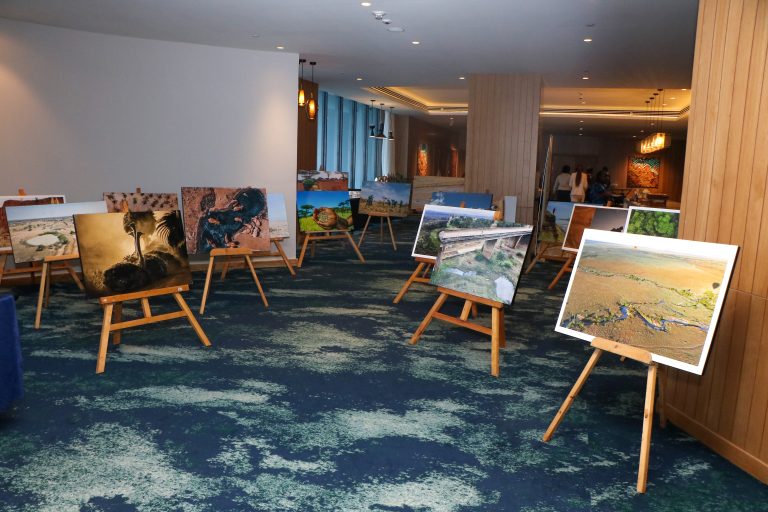
The launch event, held at Hyatt Place in Westlands, unveiled a bold new framework: photography as a “circular impact engine.” This model transforms Creative Capital, the art of photography, into Human Capital, tangible educational infrastructure. Every image submitted helps support learning opportunities for young people across the region.

“At Mabati Rolling Mills Ltd, we believe that when you invest in educating young people, you are powering the hope and dreams of future generations,” said Mr Sarit Shah, Chairman of the Safal MRM Foundation.

How to start a photography business in Kenya

“With ‘Frame Your Future,’ we are proving that human ingenuity and nature can thrive together. Every photograph captured through this movement is no longer just a digital file. It is a call to action that will help secure our shared future.”

Mr Shah added:

“This is also a direct effort to support education in Kenya. Every photo becomes a brick in a classroom or a scholarship for a young Kenyan. We are inviting photographers to use their lenses to address the crisis of classroom shortages arising from a growing population, as we champion education initiatives across the country through the innovative, quality building solutions manufactured by Mabati Rolling Mills Ltd.”

Mr Albert Sigei, CEO of MRM, highlighted the competition’s focus on empowering younger generations:

“The 2026 competition introduces a significant focus on democratizing conservation through mobile photography. By featuring dedicated Under 18 Amateur categories, Safal Eye in the Wild aims to empower what we call ‘The Future Lens’; Gen Z and Alpha storytellers who use their smartphones to document and make positive changes and impact in the world around them.”

How to start a wedding photography business in Kenya

Mabati Rolling Mills launches Safal Eye in the Wild Photography Competition 2026: A new vision for conservation and education through the lens

About the Competition

The competition is now open to photographers across East and Southern Africa, including professionals, amateurs, and young entrants. Submissions will be judged by an elite panel based on thematic alignment with conservation and education, technical excellence, and emotional impact.

Prize Pool & Gala Event

Winners will be celebrated at a red-carpet, black-tie gala on 17th July 2026. The total prize package includes: The Gold Award: USD 3,000, The Silver Award: USD 2,000, The Bronze

Award

USD 1,000, The People’s Choice Award: USD 500 and Amateur/Minor Categories: USD 500.

How to Enter

Photographers are invited to “Frame Your Future” by submitting entries via the official campaign microsite. https://safaleyeinthewild.safalgroup.com/#/