
Home Blog Page 80

Kamande farming guide: How you can make Sh90,000 from an acre in 3 months

0

As farmers across Kenya search for crops that can withstand harsh weather, deliver quick returns, and tap into growing food demand, lentils, locally known as Kamande stands out as one of the most promising yet underutilised agribusiness opportunities.

Despite being widely consumed in many Kenyan households, Kamande farming remains largely unexplored compared to maize, beans, and green grams.

Yet, the crop has proven commercial value across Africa, especially in Ethiopia, Sudan and South Sudan, where it is grown at scale for both domestic and export markets.

For Kenyan farmers willing to venture into drought-resilient agribusiness, Kamande farming presents a realistic pathway to good yields and strong profits within a short period.

The crop is said to have superior characteristics that make it worth investing in. Kamande is fast-growing, drought-tolerant, and require relatively low production costs compared to many staple crops.

According to agronomists, the crop the crop matures in about 80 days in hot areas while in cooler regions it may take up to 110 days.

This means a farmer can potentially harvest and earn income within three to four months, making it suitable for both small-scale and commercial farming.

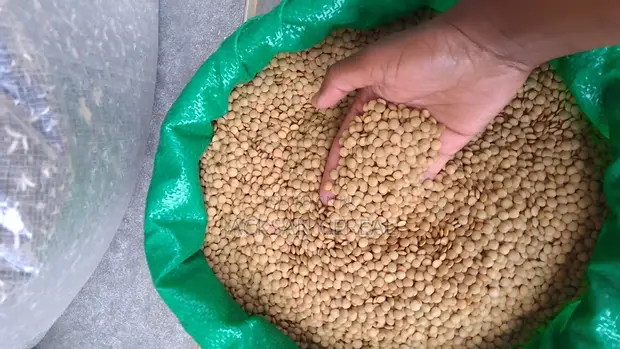
Another advantage is that the crop has a ready market in Kenya, in supermarkets and cereal shops. In fact, the lentils sold in local markets are the same seeds farmers can use for planting, making access to seed simple and affordable.

Ideal growing areas and climate requirements       

Kamande grows best in hot areas, and thrives in sandy or sandy-loam soils that drain water quickly.

Due to its high tolerance to drought conditions,the crop is suitable for growing in Kenya’s arid and semi-arid regions such as Makueni, Machakos, Kitui, Kajiado, Narok, Siaya,and the coastal region.

Land Preparation

Good land preparation is critical because lentil seeds are small and require fine soil for proper germination. Farmers should plough thoroughly to achieve a fine tilth, removing clods and weeds.

Well-prepared land improves seed-to-soil contact, boosts germination rates, and promotes healthy root development.

Seed Selection and Planting

One of the unique advantages of kamande farming is that the seeds purchased from cereal shops can be used as planting seeds. However, farmers should ensure they select clean, mature, and disease-free grains for planting.

An acre of land requires approximately 12 to 15 kilograms of seed. When planting, a farmer should drill planting lines 1 to 2 inches deep and maintain a spacing of 45 centimetres between rows.

The best time to sow lentils is at the onset of rains. Since the crop does not require a lot of water, it performs well in both the long rains and the short rains seasons.

After planting, seeds typically germinate from the 10th day, depending on soil moisture and temperature.

Crop Management and Pest Control

Lentils are generally easy to manage, but farmers should monitor the crop closely for pests, especially during early growth stages. Kamande plants are susceptible to common bean pests such as aphids, thrips, and worms.

These pests can reduce yields significantly if not controlled early. Farmers are advised to practice regular scouting and consult agricultural extension officers for recommended pesticides and safe application procedures.

Weeding should also be done early to prevent competition, especially during the first few weeks when the plants are still establishing.

Harvesting and yield per acre

Lentils are ready for harvesting when the plants turn brown and dry. A key indicator is the rattling sound produced by the dry pods when shaken. At this stage, delaying harvesting can lead to pod shattering and losses.

Harvesting should be done when the crop is fully mature, then dried further before threshing to separate the grains.

According to experts, under proper management, lentil farmers in Kenya can expect an average yield of 600 to 800 kilograms per acre.

Assuming a yield of 600kg and a selling price of Sh150 per kilo, this translates to a turnover of approximately Sh90,000 from one acre in about three months.

The crop has a ready market in local cereal shops, supermarkets, and institutions such as schools and hospitals.

Also Read: Industrial Development: CS Kinyanjui lauds Kakuzi value addition efforts, confirms government support for exporters

Dem Wa Facebook earns Sh35 million from content creation

0

Millicent Ayuwa, popularly known as Dem wa Facebook has emerged among the top earning content creators in Kenya in 2025.

According to a new report by Nairobi-based research and data analytics firm OdipoDev, Ayuwa raked in approximately Sh35 million in 2025 from influencer marketing deals.

The reports ranks her as the third top paid creator in 2025, behind socialite Amber Ray (Sh44 million) and Comedian Eric Omondi (Sh57 million).

Other top earners include Jaymo Decin (Sh25 million), Tom Daktari(Sh25 million), Crazy Kennar (Sh23 million), Awinja Nyamwalo (Sh22 million), and Bahati (Sh20 million).

Veteran creators Pascal Tokodi and Njugush rounded off the top tier, with Sh20 million and Sh16 million respectively.

In total, the country’s top 10 influencers collectively earned Sh296 million in 2025 through brand-sponsored content, pushing total payouts in the creator economy to approximately Sh1.07 billion.

Top-paying platforms

According to the report, Instagram remains the most profitable platform for Kenyan creators, with a higher percentage of content being monetized, followed by Facebook.

“Instagram is the best monetisation platform for creators, with top creators converting an average of 40.8 percent of their views into paid content. Facebook’s top creators sit in the middle at 21.2 percent,” the report reads in part.

TikTok, despite attracting huge audiences, delivers the lowest returns. Creators on the platform convert only about 12.2 percent of their views into income, highlighting a significant gap between online attention and actual earnings.

“A discovery gap persists among the top 20 creators by views, particularly on TikTok, highlighting a significant opportunity in undercapitalised creators who are not yet fully leveraged or supported. We have multiple cases of Influencers with billions of views, barely attracting any paid partnerships to their content,” the report reads in part.

“TikTok’s top creators average just 12.2 percent despite the fact that they dominate raw attention,” it adds.

The report further notes that high viewership alone does not guarantee income, with earnings largely dependent on creators’ ability to secure paid partnerships, negotiate favourable deals, and build multiple revenue streams beyond platform-driven traffic.

Also Read: Dem Wa Facebook: Struggles for success and how I made my first million in 2024

Kenya Railways announces multiple job openings: How to apply

0

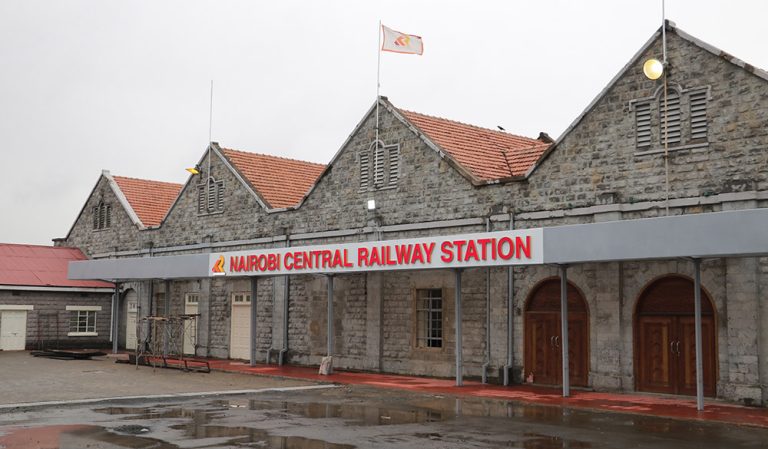
The Kenya Railways Corporation (KRC) has announced multiple job vacancies across its departments.

In an advertisement, the corporation invited qualified candidates to submit applications to fill the 9 managerial positions.

Some of the positions are re-advertised while others are new. They include managerial positions in rail safety, passenger services, sales and marketing, quality management system and risk coordination manager.

Others are signalling, electrical and communication manager, technical audit manager, stores and inventory manager, train operations manager and accounts manager.

Applicants are required to submit a signed application letter, a detailed curriculum vitae, copies of academic and professional certificates and a valid identification document.

Other required details include information on work experience, referees and salary expectations.

How to apply

Interested and qualified candidates are required to submit applications online through Kenya Railways career portal by April 28, 2026, at 5 pm.

Applicants must clearly indicate the Position Applied For and the Vacancy Reference Number in the subject head. The corporation warned that hard copy applications will not be considered.

Kenya Railways  emphasised its commitment to equal opportunity employment and encouraged applications from women, persons with disabilities, minorities and marginalised groups.

Only shortlisted candidates will be contacted for interviews. Successful candidates will be required to present clearance certificates from relevant government agencies, including those from the Directorate of Criminal Investigations, the Kenya Revenue Authority (KRA), the Higher Education Loans Board (HELB), the Ethics and Anti-Corruption Commission (EACC), and the credit referencing bureau (CRB).

“Candidates should provide all the details requested for in the advertisement. It is an offence to include incorrect information in the application,” KRC stated.

Also Read: KQ shares touch one year high with 36 percent gain in 10 days

KQ shares touch one year high with 36 percent gain in 10 days

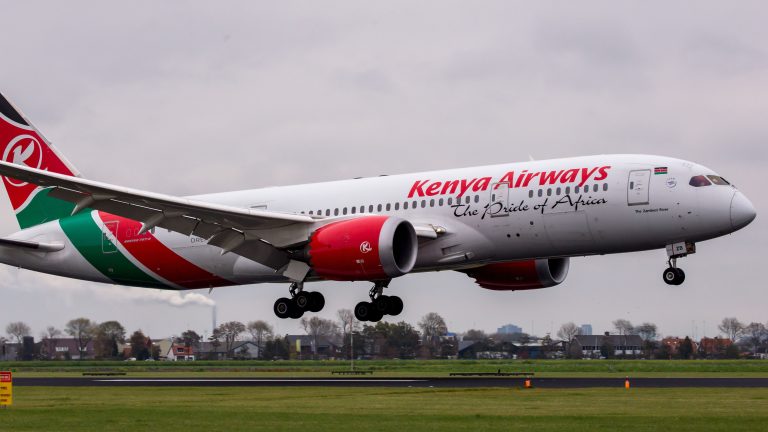
Kenya Airways shares have gained 36 percent in ten days at the Nairobi Securities Exchange (NSE). An analysis by Bizna Kenya has shown that the Kenya Airways have been on an upward trajectory that started on March 30, 2026.

At the end of trading on March 30, the KQ counter closed at an average price of Sh4.74 per share from a traded volume of just 119,000 shares. A day later, the counter inched upwards to Sh4.91 per share with a traded volume of about 182,000 shares.

The counter closed the Sh5 per share on April 1 and has gone on to touch the Sh6 mark. As at the end of trading on April 8, 2026, Kenya Airways shares ended trading at an average price of Sh6.44 per share, representing a gain of 35.86 percent from the closing price of Sh4.74 as of March 30.

These shares also touched a high of Sh6.56 per share and a low of Sh6.02 per share during the day’s intra-trading session which saw a traded volume of 2.81 million shares.

The day’s high of Sh6.56 per share marked the highest price that the counter has traded at over the last one year.

The analysis by Bizna Kenya shows that the KQ shares have a one year low of Sh1.56 per share and a high of Sh6.56 per share.

READ MORE: Are inexperienced investors copying Ndindi Nyoro when buying shares?

The KQ counter has attracted increased interest from investors following revelations that the government is exploring a potential sale of the national carrier to foreign investors.

In February 2026, the Cabinet Secretary for the National Treasury John Mbadi announced that President William Ruto and his government had decided to sell off Kenya Airways.

According to the Cabinet Secretary, the government will hand over the national carrier to foreigners who will pump in between Sh154.8 billion and Sh258 billion.

Mbadi claimed that the government will float an international expression of interest (EOI) in a bid to get an investor.

“The new investor is expected to inject a minimum of Sh154.8 billion and up to Sh258 billion into the business. We shall be rolling out an international expression of interest to search for a strategic partner,” said CS Mbadi. The CS, however, did not announce when this bid will be opened.

“The government took up Sh63.1 billion which it is now servicing. The government then signed an on-lent agreement with KQ. This amount can be converted to equity once we firm up the onboarding of a strategic investor.”

At the same time, the entry into the list of shareholders by stockbroker and Kiharu Member of Parliament Ndindi Nyoro has also piqued the interest of some local investors who consider him a voice on stocks.

According to regulatory filings for the month of February 2026, Nyoro had acquired 10,396,251 shares. Nyoro is now the second-largest individual shareholder at Kenya Airways. He is also the seventh largest shareholder at Kenya Airways.

NCBA unveils digital banking and protection solutions for diaspora in 2026 programme

0

NCBA has unveiled new digital and protection solutions for Kenyans living abroad as part of its 2026 Diaspora Market Activation Programme, marking a major step forward in modernizing diaspora banking and strengthening long-term financial support for Kenyans overseas.

This year’s campaign introduces two milestone offerings that differentiate the programme from previous years:

A Fully Digital Straight-Through Account Opening Journey

Kenyans abroad can now open an NCBA account seamlessly from anywhere in the world. Once onboarded, they can invest now in fixed deposits and mutual funds, and instantly swap foreign currency on the NCBA Now app at competitive rates with FX Now.

The Diaspora Last Expense Cover

Developed in partnership with Bird View Microinsurance, this solution provides a dependable, fully digital option for repatriation and funeral expenses an area traditionally dominated by informal and unpredictable welfare contributions. With benefit levels of up to KES 3 million and claim settlement within 48 hours, the cover delivers true peace of mind during life’s most difficult moments.

Diaspora remittances continue to rise, hitting USD 423 million (KSh 54.68 billion) in June 2025, a 12.1% increase year-on-year. This growing economic influence is fueling demand for integrated, digital-first financial solutions tailored to the unique needs of diaspora customers.

The Australia market activation is the first phase of NCBA’s global diaspora engagement roadmap for 2026. The bank will conduct multi-state engagements across Adelaide, Brisbane, Melbourne and Perth connecting with Kenyan communities through financial advisory sessions, product education, partnerships and customer networking forums.

NCBA Insurance emerges as a pillar of trust in Kenya’s claims processing sector

Speaking on the expanded offering, NCBA Group Director, Retail Banking, Denis Njau said:

“Kenyans in the diaspora are central to our country’s economic growth, and we are committed to serving them with solutions that match their ambitions. With our straight through digital account opening journey and the Diaspora Last Expense Cover, we are ensuring that customers can bank, invest and protect their families seamlessly, no matter where they live.”

Through its Diaspora Banking offering, NCBA provides solutions spanning property financing, foreign exchange services, wealth management, insurance solutions and dedicated relationship management tailored to diaspora customers.

During the activation tour, NCBA will host a series of engagements including community forums, customer sessions, financial advisory discussions, partnership meetings and networking activities to strengthen diaspora collaboration and connections. These will provide a platform for open conversations, enabling NCBA to co-create solutions informed by the real experiences and ambitions of Kenyans living abroad.

Following the Australia leg, NCBA’s 2026 Diaspora Market Activation Programme will extend to other key diaspora corridors, which will be announced in due course.

The activations reaffirm NCBA’s commitment to building lasting partnerships with diaspora communities while positioning the bank as a trusted financial partner supporting growth, prosperity and economic empowerment for Kenyans worldwide.


How Makini Schools owner made Sh15 billion profit in 2025

0

Makini Schools’ parent company, Advtech Group, has posted a strong financial performance for the year ended December 31, 2025.

According to its audited financial results, the group, which owns Makini Schools, Crawford International, and Rosebank College, reported an operating profit of R2.04 billion (Sh15.39 billion).

The performance, which is the first of its kind in the group’s history, was supported by increased enrolment demand, improved operating efficiencies, and continued expansion in key markets, including Kenya.

“These were achieved through healthy enrolment growth, moderate fee increases, improved debtor control and continued margin improvement,” the financial statement reads in part.

“The group continues to strengthen its competitive advantage through ongoing investment in superior technology to enhance teaching and learning, further cementing our position as the leading provider of private education on the African continent,” it adds.

Advtech said revenue grew by 10 percent in 2025 to R9 330 million (Sh2.58 billion), while operating profit rose by 14 percent.

The group’s Education division, which contributes 84 percent of total revenue, remained the primary engine of growth, with a 13 percent increase in revenue.

The operating margin in the division improved to 21.8 percent, up from 21.0 percent, as the company benefited from scale leverage and efficiency gains.

These improvements helped offset costs related to investments in AI-enhanced learning tools and global benchmarking systems, which Advtech says are aimed at strengthening the quality of learning outcomes.

Advtech’s strongest segmental performance came from its Rest of Africa schools segment, with revenue surging 28 percent to R574.1 million (Sh4.36 billion), while operating profit increased by 33 percent to R193.6 million (Sh1.47 billion).

This segment also recorded the highest operating margin in the group at 33.7 percent, up from 32.4 percent, signalling improved cost control and strong demand for its premium offerings.

The group disclosed that students under its Cambridge International Curriculum delivered impressive results, achieving 716 distinctions, translating to an average of 1.3 distinctions per student.

High demand for Cambridge Curriculum

The company attributed much of the growth in Kenya to an increasing preference among parents for international education pathways, particularly the Cambridge International Curriculum.

“Our premium-priced Makini Cambridge International curriculum continues to experience high demand, with parents increasingly choosing it over the Kenyan national syllabus. This is having a positive impact on the overall financial performance of the Makini brand,” It noted.

“Driven by continued demand, the next phase of Crawford International School in Kenya was completed in September 2025, increasing student capacity from 900 to 1,300 students,” it added.

Makini Schools, started in 1978, was founded by the late Pius Okello and his Wife, Mary Okello. The school, which previously operated under the name Riara Gardens Academy, was acquired by the ADvTECH Group in 2018 in a deal estimated to be worth Sh1 billion.

ADvTECH Group, a private education provider and a Johannesburg Stock Exchange (JSE)-listed company specializing in schools, has continued on its expansion strategy in Kenya with the acquisition of more schools under its management portfolio.

In September 2025, the company acquired Regis Runda Academy in Nairobi from Peter and Mary Burugu in a deal estimated to be worth over Sh1.2 billion and rebranded it as Makini School Runda.

Since the acquisition, enrolments have risen by 17 percent to nearly 1,400 students against a built capacity of 2,000.

Also Read: 3 ways Kenyan traders are losing profit (and how to stop it)

Click Awards 2026 unveils official nominees list, opens public voting across digital platforms

0

The Click Awards 2026, Kenya’s platform recognising creator-entrepreneurs and the organisations powering the digital ecosystem, has officially announced its nominees and opened public voting.

Following a competitive nomination period that drew entries from across the digital landscape, the awards have shortlisted top creators, brands, agencies, and platforms shaping Kenya’s fast-growing creator economy.

Organized by technology company Teki, the awards are anchored on the theme “Building Scalable Creator Enterprises in a Regulated Digital Economy,” highlighting the shift from content creation to sustainable, revenue-generating digital businesses.

This year’s nominees reflect the diversity, innovation, and impact of Kenya’s digital landscape, which spans content creators, influencer-led brands, digital entrepreneurs, and the ecosystem players enabling their growth.

Click Awards 2026 launched to celebrate Kenya’s creator-entrepreneurs and brands powering ecosystem

“Releasing the nominees list is a major milestone for the Click Awards,” said Click Awards Director and Teki CEO, Mr. Martin Muli. “But more importantly, it highlights how far the creator economy has evolved. Today, influential creators are no longer just building audiences. They are transforming that influence into businesses that extend beyond social media, creating new revenue streams, building brands, and contributing meaningfully to the economy.”

Muli said this evolution has created an urgent need for stronger industry support systems.

“At the same time, we are seeing the rise of ecosystem builders such as platforms, agencies, service providers, and technology partners who are laying the rails and infrastructure that creators need to scale sustainably. Their role is critical in formalising and professionalising the industry,” he added.

He further called for increased innovation in the sector, encouraging the development of creator-specific products and solutions tailored to the unique needs of digital entrepreneurs.

“There is a clear opportunity for businesses and innovators to build tools, financial products, distribution systems, and services designed specifically for creators. Supporting creators requires not just visibility but also requires infrastructure that understands how they work and how they grow.”

The Nominees

The Click Awards 2026 nominees have been selected across two key divisions:

Sector Leadership Awards – Featuring standout creator-entrepreneurs across categories such as content, lifestyle, business, technology, and entertainment, etc.

Ecosystem Builders AwardsRecognising brands, agencies, platforms, and service providers driving growth and sustainability in the creator economy.

(See attached for full nominees list and various sub-categories)

Each nominee has undergone a rigorous evaluation process, including screening for originality, consistency, audience engagement, ecosystem support, and measurable impact.

Ruto: Kenya has paid Sh. 500 million to host Grammy Awards

Public Voting Now Open

With the nominees now unveiled, public voting is officially open, giving Kenyans the chance to directly influence who takes home top honours.

Voting is available via web and mobile platforms, making it accessible to audiences across the country.

Organisers are encouraging fans, communities, and industry stakeholders to rally behind their favourite nominees and ensure their voices are heard.

“This is where the ecosystem comes full circle,” Muli added. “Voting is not just about recognition. It’s about backing creators who are building real businesses and supporting the ecosystem players who are enabling that growth. It further amplifies creator businesses and the infrastructure driving their growth

Public participation in the voting process will play a key role in elevating deserving creators and brands, strengthening credibility, and accelerating the development of a more structured and sustainable creator economy.

With millions of Kenyans actively engaging on platforms such as YouTube, Instagram, Facebook, and X, the influence of digital creators has never been more significant—and increasingly, more commercial.

The Click Awards aims to harness this momentum by creating a structured platform for recognition, industry development, and long-term growth.

After the public voting phase, winners will be announced at the Click Awards 2026 Gala Ceremony, set to take place on 14th May 2026 in Nairobi, bringing together creators, brands, partners, and industry leaders. These awards will coincide with the 3rd annual International Creator Day 2026.

The public is invited to review the nominees and cast their votes in support of their favourite creators and organisations.

“Every vote counts,” said Muli. “This is an opportunity to support creators who are building businesses and the ecosystem players who are making that growth possible.”

For the full nominees list, voting guidelines, and updates, follow https://vote.teki.co.ke/awards.

CBK launches Sh20 billion bond offer, invites bids from as low as Sh50,000

The Central Bank of Kenya (CBK) has announced a Sh20 billion government bond offer aimed at raising funds for budgetary support.

In a notice published on Tuesday, April 7, the CBK said it is offering investors two long-term bond options: a re-opened 30-year Savings Development Bond and a new 30-year Fixed Coupon Treasury Bond.

“Central Bank of Kenya, acting in its capacity as fiscal agent for the Republic of Kenya, invites bids for the above bonds whose terms and conditions are as follows,” read the statement in part.

The first instrument, SDB1/2011/030, is a reopened Savings Development Bond carrying a coupon rate of 12 percent. The bond has 14.9 years remaining to maturity and is scheduled to mature on January 21, 2041.

The second offer is a new bond, FXD1/2026/030, which carries a slightly higher coupon rate of 12.5 percent. It will mature on March 13, 2056, giving investors a full 30-year investment horizon.

Both bonds will attract a 10 percent withholding tax on interest payments.

The offer is structured to cater to both retail and institutional investors. For non-competitive bids, the minimum investment is Sh50,000, while competitive bids require a minimum of Sh2 million.

Non-competitive bids are largely suited for retail investors who prefer allocation at the average accepted yield, while competitive bids are typically targeted at institutional and large-scale investors.

The auction will run from April 7 to April 15, 2026, with bids required to be submitted by 10am on April 15, 2026. CBK will announce the tender results on the same day, while settlement is scheduled for April 20, 2026.

Successful bidders will receive their payment key and the exact allocation amount through the CBK DhowCSD Investor Portal or mobile application on April 17, 2026.

The regulator warned that investors who fail to honour payments after successful allocation risk being suspended from participating in future government securities transactions.

Secondary trading of the bonds will begin on April 20, 2026, with transactions allowed in multiples of Sh50,000.

The Central Bank will rediscount bonds as a last resort, at 3 percent above the prevailing market yield or coupon rate, whichever is higher.

Rediscount instructions should be sent from the CBK DhowCSD investor portal/app, under the Instructions tab, by selecting Create new and the Rediscount.

The bonds may be reopened at a future date and will be listed on the Nairobi Securities Exchange.

Also Read: Kenya must strengthen financing ecosystems to unlock sustainable growth

Kenya must strengthen financing ecosystems to unlock sustainable growth

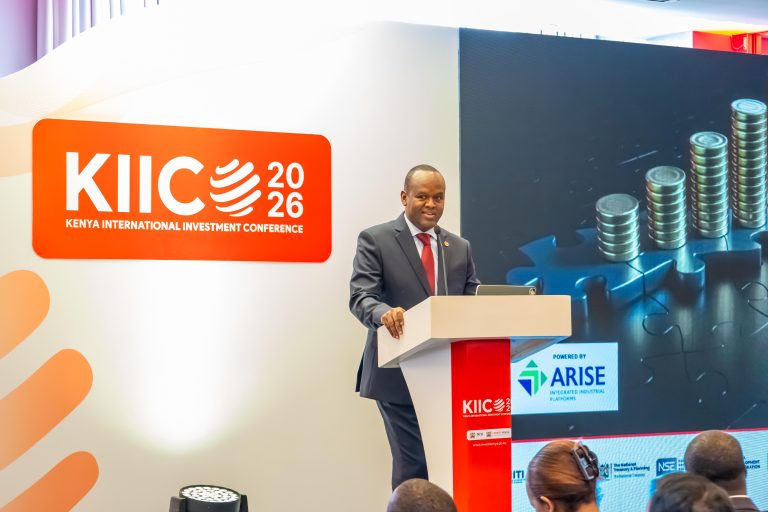
At the just-concluded Kenya International Investment Conference (KIICO) 2026, financial experts and industry leaders have reached a firm consensus that Kenya’s ability to accelerate economic development and attract tangible investment hinges on how effectively the country can coordinate, structure, and deploy capital.

Speaking during the “Financing Ecosystem” side event, the MD and CEO of Absa Bank Kenya Abdi Mohamed emphasized that the nation must shift away from fragmented financing approaches toward more integrated, ecosystem-driven models to successfully bridge the infrastructure gap.

The Absa CEO noted that Kenya stands at a pivotal moment where the ambition to accelerate industrialization, deepen inclusion, and build resilience in an increasingly complex global environment is clear.

Addressing the forum, he stated, “Kenya stands at an important moment. The ambition to accelerate industrialisation, deepen inclusion, and build resilience in an increasingly complex global environment is clear. The question before us is not whether capital exists to support this ambition, but how effectively we can mobilise and deploy it.”

Financing Kenya’s future through purpose-driven, sustainable investments reporting

He maintained that the primary challenge is no longer the availability of funds, but the mechanisms through which the public and private sectors mobilize that capital.

Reinforcing this need for a strategic pivot, the Permanent Secretary for the National Treasury Chris Kiptoo highlighted the fiscal urgency of these reforms, noting that the country currently spends 40% of its ordinary revenue on debt service.

The Permanent Secretary emphasized that such a high debt-service-to-revenue ratio is a trend the government is determined to reverse, stating, “To averse these trends, as Treasury we are pursuing reforms to bring this down. Continued borrowing is not a sustainable strategy for prosperity. We are implementing structural reforms across both revenue and expenditure to mobilize capital more effectively. This shift is supported by the President’s recent signing of the National Infrastructure Bill, which introduces a new framework designed to reduce reliance on public debt in favor of a sustainable, investment-led approach.”

This shift requires a departure from traditional commercial banking in order to meet the nation’s vast development needs. While capital exists across government, development finance institutions, and the private sector, large-scale project funding remains constrained by inconsistent structuring and operational silos. To unlock value across entire value chains, the discussions highlighted a need to look more deliberately at domestic capital sources such as pension funds, institutional investors, and other long-term pools that represent sustainable opportunities for the country. By focusing on execution across the entire ecosystem, Kenya can move beyond intent to achieve delivery at scale.

The path forward requires significant clarity in policy frameworks, the strengthening of project preparation, and the creation of clear risk-sharing mechanisms to attract a broader range of investors. When public-private partnerships are well-structured, they align public priorities with private capital to ensure that projects are positioned for successful execution. If the country succeeds in these efforts, the impact will extend far beyond infrastructure to shape the overall competitiveness of the economy, deepen capital markets, and accelerate truly inclusive growth.

The conference concluded with a call for unprecedented coordination between government, financial institutions, and development partners to unlock the long-term capital flows essential for Kenya’s future.

The Kenya International Investment Conference (KIICO) 2026 brought together 500 global investors, policymakers, and industry leaders, collectively representing trillions of US dollars in capital, to explore Kenya’s investment landscape and forge partnerships capable of creating millions of jobs while reinforcing Kenya’s position as Africa’s leading destination for doing business.

3 ways Kenyan traders are losing profit (and how to stop it)

You’ve saved your capital, stocked your shelves, and hired staff. Customers are walking through the doors of your hardware store, pharmacy, or minimart. The M-Pesa till is ringing. On paper, business is booming.

But at the end of the month, when you look at your actual bank balance, the numbers don’t add up. Where did the profit go?

If you run a retail or hospitality business in Kenya, making money is only half the hustle. Protecting it is the real challenge. Here are the three hidden ways business owners are quietly losing their profits today, and how to plug the leaks.

1. The “Blind” M-Pesa Till.

We all love the convenience of mobile money, but it has created a massive loophole at the checkout counter. If your cashier uses a separate phone to verify an M-Pesa Paybill or Till message, you are running a “blind” till.

  • The Leak: Cashiers can easily collude with customers, read a fake SMS, or fail to ring up an item on the system while pocketing the cash difference.
  • The Fix: You must integrate your payments directly into your Point of Sale (POS). When a payment hits the till, the POS should automatically match it to the exact item sold without the cashier ever needing to check a phone.

5 key financial skills every young entrepreneur should master

2. Invisible Inventory Shrinkage

“Shrinkage” is the polite corporate word for staff theft. In a busy bar, it’s a bartender pouring unrecorded shots. In a hardware store, there are a few bags of cement leaving the back door. If you are tracking inventory using physical ledger books or basic Excel sheets, you will never catch this until it is too late.

  • The Leak: Employees know when the boss is “guessing” the stock levels.
  • The Fix: Move your inventory tracking to the cloud. Modern systems allow you to track ingredient usage down to the gram. If your system knows exactly what was sold, it knows exactly what should be on the shelf. When staff know the system is tracking everything in real-time, pilferage drops to near zero.

3. The Hidden Cost of Manual eTIMS.

The government’s push for the eTIMS digital tax system is a reality every business must face. However, many business owners are trying to comply by manually logging into the KRA portal for every single sale.

  • The Leak: Manually generating receipts slows down your checkout line, frustrates customers (who might walk away), and leads to costly data entry errors that can trigger tax audits. Time spent fighting with a portal is time you aren’t spending growing your business.
  • The Fix: Automate your compliance. Your POS system should be doing the heavy lifting.

Taking Back Control

You cannot physically be in your shop 24/7, but your systems can be.

This exact frustration is why we built Cute Profit, a localized cloud POS and accounting system designed specifically for the Kenyan market. We built it to automatically reconcile your M-Pesa transactions at the counter, track your stock in real-time from your phone, and instantly print KRA eTIMS receipts without slowing down your business.

Don’t let manual errors and staff pilferage eat the profits you worked so hard to build. Upgrade your systems, automate your compliance, and finally take control of your hustle.

About the author

Kevin Onyango is the founder of Cute Profit, a Nairobi-based tech company helping Kenyan SMEs automate their accounting and POS operations. Visit cuteprofit.com to learn more.