

Home Blog Page 87

How Kenyan SMEs can leverage whatsapp business api + bulk sms for 5x customer retention

0

Celcom Africa enables Kenyan SMEs to combine WhatsApp Business API and bulk SMS into a single, unified retention strategy that consistently delivers five times higher customer retention rates compared to businesses using either channel alone.

With WhatsApp reaching 97% of Kenyan internet users and bulk SMS hitting 98% open rates across all 78 million Kenyan mobile subscribers — including feature phone users without internet — this dual-channel approach is the most powerful, most affordable customer retention system available to Kenyan small and medium businesses in 2026.

Why Customer Retention Is the Most Underused Growth Lever for Kenyan SMEs

Every Kenyan SME owner knows the struggle: you spend money attracting new customers, they buy once, and then they disappear. The cycle repeats, costs climb, and growth stalls. Yet research consistently shows that retaining an existing customer costs five to seven times less than acquiring a new one, and a 5% increase in retention can increase business profits by 25–95%.

The painful truth for most Kenyan SMEs is that their communication strategy is almost entirely pointed at acquisition — social media ads, word-of-mouth, flyers, and walk-ins. Almost nothing is systematically designed to bring customers back.

The True Cost of Losing a Customer in Kenya

Consider a Nairobi salon with 500 active clients. If 30% churn annually — a conservative estimate for businesses with no structured retention system — that is 150 lost clients per year. At an average spend of KES 2,500 per visit and three visits per year, those 150 lost clients represent KES 1,125,000 in lost annual revenue. Replacing those 150 clients through advertising costs significantly more than retaining them through a KES 0.25/SMS message or a WhatsApp campaign.

The numbers are similar for restaurants in Mombasa, pharmacies in Kisumu, SACCOs in Nakuru, and online retailers serving customers from Nairobi to Eldoret.

Why Most Kenyan SMEs Rely on Acquisition Alone (And Lose)

The reason is simple: most Kenyan SMEs don’t have a structured, automated retention communication system. Sending a text to every customer after a purchase sounds simple — but without the right tools, it requires manual effort that doesn’t scale. The WhatsApp Business App limits broadcasts to 256 contacts. Manually sending SMS is error-prone and time-consuming.

The solution is a dual-channel strategy powered by WhatsApp Business API and bulk SMS — both automated, both affordable, and both accessible through a single platform.

Understanding the Two Channels — And Why Together They Win

What Is WhatsApp Business API and How Does It Work in Kenya?

The WhatsApp Business API is the enterprise-grade version of WhatsApp, designed for medium and large-scale messaging. Unlike the standard WhatsApp Business App (limited to 256 contacts per broadcast), the API allows Kenyan businesses to:

  • Send messages to unlimited contacts simultaneously
  • Automate responses with chatbots and workflow triggers
  • Send rich media — images, PDFs, videos, interactive buttons, product catalogues
  • Integrate with CRMs, e-commerce platforms, and payment systems
  • Display a verified green tick on your business number — building instant trust

In Kenya, where 97% of internet users are on WhatsApp, the API is no longer a luxury for large corporations. It is a retention necessity for any SME with more than 500 customers.

Celcom Africa is an official WhatsApp Business API provider in Kenya, meaning your business gets a verified account, template management, and full support — without navigating Meta’s complex direct approval process.

What Is Bulk SMS and Why Does It Still Dominate in Kenya?

In Kenya, where smartphone penetration has reached 85% and active mobile subscriptions exceed 78 million as of early 2026, bulk SMS remains a powerhouse for instant, reliable communication with open rates consistently hitting 98% and delivery in seconds.

Critically, bulk SMS reaches customers that WhatsApp cannot — the approximately 15% of Kenyan mobile users still on feature phones, rural customers with limited internet, and customers who have WhatsApp installed but notifications turned off. A text message lands in the native SMS inbox of every phone, every time, with no app required.

Celcom Africa offers bulk SMS from KES 0.25 per message with 99.9% delivery rates and 2-second delivery to Safaricom, Airtel, and Telkom networks.

The Retention Power Gap: Using Both Channels vs Either Alone

Here is the mathematical reality of the dual-channel approach:

Metric WhatsApp API Only Bulk SMS Only WhatsApp API + Bulk SMS
Audience Reach 97% of internet users 100% of mobile subscribers 100% of mobile subscribers
Open Rate 98% 98% 98% (combined, no gaps)
Rich Media ✅ Yes ❌ No ✅ Yes
Works Without Internet ❌ No ✅ Yes ✅ Yes
Automation ✅ Advanced ✅ Basic ✅ Full automation stack
Avg. Cost/Message (Celcom) Variable (per template type) KES 0.25 Best of both
Customer Retention Lift 3x vs no messaging 2x vs no messaging 5x vs no messaging

The retention multiplier comes from channel redundancy and contextual timing — WhatsApp for rich, engaging content; SMS for instant, urgent, always-delivered alerts. Together, no customer falls through the gap.

The 5x Retention Framework — WhatsApp API + Bulk SMS Combined

This is the exact playbook that Kenya’s most retention-focused SMEs are running in 2026. Each step maps a specific retention objective to the optimal channel.

Step 1 — Onboarding: Make the First 7 Days Count With Instant SMS

Channel: Bulk SMS (primary) + WhatsApp (secondary)

The first 7 days after a customer’s first purchase are the most critical window for establishing a retention habit. A customer who receives timely, helpful communication after their first interaction is significantly more likely to return.

Action: Within 60 seconds of a purchase, payment, or registration, trigger an automated bulk SMS via Celcom Africa’s API:

“Hi [Name], welcome to [Business Name]! Your order KES [amount] is confirmed. Track it here: [link]. Questions? WhatsApp us: +254703727272. – [Business Name]”

Within 24 hours, follow up on WhatsApp with a richer message: a welcome image, a video introduction to your team, or a product care guide — content that SMS cannot carry but WhatsApp does beautifully.

Why SMS first? Because the confirmation lands in the universal inbox within 2–5 seconds, before a WhatsApp notification is even seen. It sets the reliability tone immediately.

Step 2 — Engagement: Use WhatsApp for Rich, Personal Follow-Ups

Channel: WhatsApp Business API (primary)

Businesses using the WhatsApp API can achieve 45–60% conversion rates compared to 2–5% for email and SMS, and 68% of WhatsApp customers end up buying again.

At the 7-day and 30-day marks after first purchase, send WhatsApp messages that add genuine value:

  • A personalized product recommendation based on their first purchase
  • A how-to video showing how to get more out of what they bought
  • A loyalty offer — “As a valued customer, here’s 10% off your next order.”
  • A customer survey via WhatsApp interactive buttons (“Rate your experience: 👍 / 👎”)

These rich interactions drive the emotional connection that turns a one-time buyer into a loyal customer. WhatsApp’s 98% open rate and real-time read receipts mean you can see exactly who is engaging and who needs a different approach.

Step 3 — Re-engagement: SMS for Lapsed Customer Win-Backs

Channel: Bulk SMS (primary)

A customer who hasn’t interacted in 60–90 days is at high churn risk. This is where bulk SMS’s universal reach becomes invaluable — because lapsed customers often have WhatsApp notifications muted or the app deleted.

SMS cuts through every time:

“Hi [Name], we miss you at [Business Name]! Come back this week and save 15% on any purchase. Use code: COMEBACK15. Valid till [date]. Reply STOP to opt out.”

Businesses using WhatsApp for customer communication have reported 50% faster response times versus email, and win-back SMS campaigns with a WhatsApp call-to-action can reactivate customers who respond to personal follow-up there.

This “SMS to reopen the WhatsApp conversation” technique is one of the highest-ROI retention moves available to Kenyan SMEs.

Step 4 — Loyalty Loops: Combine Both Channels for Repeat Purchase Triggers

Channel: WhatsApp API + Bulk SMS (alternating)

Loyal customers — those who have bought 3+ times — deserve your richest communication. Use WhatsApp for:

  • Exclusive member announcements with images and product videos
  • Early access to sales before the general public
  • Birthday messages with personalized discount codes

Use SMS for:

  • Time-sensitive flash sale alerts (“SALE ENDS IN 3 HOURS — see your WhatsApp for details”)
  • Payment reminders for SACCOs, clinics, schools — where SMS delivers reliably regardless of internet access
  • Delivery confirmations and pickup notifications

The combination creates a cadence that feels personal and helpful rather than spammy — because each channel is used for what it does best.

Step 5 — Feedback & Trust: Two-Way WhatsApp + SMS Surveys

Channel: WhatsApp API (primary) + Bulk SMS Surveys (secondary)

Customer feedback collected at the right moment — immediately after a service interaction — is one of the most powerful retention tools available. It shows customers you care, it surfaces problems before they cause churn, and it generates social proof.

Via WhatsApp: Send a two-button interactive message (“How was your experience today? 😊 Great / 😞 Could be better”). Customers who rate you poorly trigger an automatic escalation to your support team — preventing a negative Google review and saving the relationship.

Via SMS: For customers without WhatsApp or with poor connectivity, Celcom Africa’s USSD and SMS survey tools deliver the same feedback loop to every Kenyan phone.

Trust Signal: “Reuben Kimani, Digital Marketing Executive at Username Investment, has used Celcom Africa for 6 years: ‘Celcom’s affordability, timely delivery, and reliability are unmatched.'”

Real-World Use Cases Across Kenyan SME Industries

  • Retail & E-Commerce SMEs in Nairobi

A Nairobi clothing retailer using Celcom Africa sends an order confirmation SMS within 30 seconds of purchase, a WhatsApp shipping update with a tracking image, a WhatsApp “How does it fit?” check-in 48 hours after delivery, and a personalized bulk SMS promotion 30 days later. Result: repeat purchase rate rises from 22% to over 60% within 3 months.

  • SACCOs and Microfinance

SACCOs across Nakuru, Kisii, and Thika use Celcom Africa’s bulk SMS for loan repayment reminders (reducing default rates), WhatsApp for AGM notifications and dividend announcements with PDF attachments, and USSD for self-service balance checks. The combined approach improves member retention and reduces manual follow-up calls by over 70%.

  • Restaurants, Salons & Hospitality Businesses

A Westlands salon sends appointment reminders via WhatsApp 24 hours and 2 hours before a booking, with an interactive confirm/reschedule button. No-show rates drop by 40%. Post-appointment, an automated SMS requests a Google review. Over 90 days, their Google rating climbs from 3.8 to 4.6 — driving significant organic new customer acquisition alongside improved retention.

  • Healthcare Clinics and Pharmacies

Nairobi clinics use Celcom Africa’s API to send appointment reminder SMS the day before, WhatsApp messages with clinic directions and pre-visit instructions, and post-visit SMS for prescription refill reminders. For patients in Mombasa and Kisumu without stable internet, the SMS fallback ensures critical health reminders always arrive.

  • Schools and Training Institutions

Schools in Nakuru and Eldoret send fee balance alerts via SMS (reaching every parent regardless of smartphone), term dates and event notifications via WhatsApp (with PDF timetable attachments), and end-of-term results via a secure WhatsApp link. Parent engagement — a key retention metric for private schools — increases measurably when communication feels personal and timely.

WhatsApp API vs Bulk SMS — Choosing the Right Channel for Each Message

Message Type Best Channel Why
Order/payment confirmation Bulk SMS Universal delivery, 2–5 sec, no internet needed
Promotional campaign with images WhatsApp API Rich media, 98% open rate, interactive
OTP / 2FA verification Bulk SMS Speed-critical, works on all phones
Product catalogue/menu WhatsApp API Scrollable, visual, shareable
Appointment reminder WhatsApp API (+ SMS backup) Confirm/reschedule buttons, then SMS fallback
Flash sale alert (urgent) Bulk SMS Instant delivery, cuts through regardless of notifications
Post-purchase follow-up WhatsApp API Rich, personal, drives conversation
Lapsed customer win-back Bulk SMS Bypasses muted WhatsApp notifications
Loan/fee payment reminder Bulk SMS Reaches rural areas, all handsets
Customer satisfaction survey WhatsApp API Interactive buttons, higher response rate
Staff/internal alerts Bulk SMS Guaranteed delivery, no app required

How Celcom Africa Powers This Retention Strategy for 10,000+ Kenyan Businesses

Unified Dashboard: WhatsApp + SMS in One Place

Celcom Africa is Kenya’s leading provider, offering official WhatsApp Business API and bulk SMS from KES 0.25/message in a single, unified dashboard. No switching between platforms, no reconciling two different providers’ bills, no duplicated contact lists. One login. One analytics view. Full retention stack.

API Integration That Works With Your Existing Systems

Celcom Africa’s REST API integrates with virtually any system your Kenyan SME already runs — WooCommerce, Shopify, accounting software, SACCO management systems, school ERPs, clinic management platforms, and custom-built apps. SDKs are available for Python, PHP, Node.js, and Java.

cURL API Example — Trigger Retention SMS After Purchase:

curl -X POST https://api.celcomafrica.com/v1/sms/send \

  -H “Content-Type: application/json” \

  -H “Authorization: Bearer YOUR_API_KEY” \

  -d ‘{

    “to”: “+254712345678”,

    “from”: “YourBrand”,

    “message”: “Hi John, your order KES 4,500 is confirmed! Track on WhatsApp: wa.me/254703727272. Thank you – YourBrand”, “network”: “safaricom” }’

The same API call can trigger across Safaricom, Airtel, and Telkom with automatic network detection — no separate integrations per carrier.

Pricing That Makes Retention Campaigns Affordable for SMEs

For a Kenyan SME with 2,000 active customers sending one retention touch per customer per month:

Campaign Channel Volume Cost (Celcom Africa)
Monthly SMS re-engagement Bulk SMS 2,000 messages KES 500
WhatsApp loyalty update WhatsApp API 2,000 messages Variable (per template)
Quarterly win-back SMS Bulk SMS 500 lapsed customers KES 125
Total per month From KES 625

Compare this to the cost of acquiring a single new customer through paid advertising in Kenya — typically KES 500–3,000 per acquisition. A full monthly retention programme costs less than acquiring one new customer.

Top 10 Reliable Bulk SMS Service Providers in Kenya -Ultimate Guide

Getting Started — Step-by-Step for Kenyan SMEs

  1. Register free at Celcom Africa— takes under 2 minutes. Receive 50 free SMS credits to test delivery immediately.
  2. Activate your WhatsApp Business API — Celcom Africa handles the Meta verification process and provides your verified business number within 3–5 business days.
  3. Import your customer contact list — upload a CSV, integrate via API, or connect your existing CRM.
  4. Create your retention message templates — WhatsApp requires pre-approved templates for outbound messages; Celcom Africa’s team assists with template creation and approval.
  5. Set up automation triggers — link your purchase system, appointment calendar, or payment platform to Celcom Africa’s API so messages fire automatically at the right moment.
  6. Launch and monitor — use Celcom Africa’s real-time dashboard to track delivery rates, open rates, and customer responses across both channels.
  7. Optimise weekly — review which messages drive repeat purchases, adjust timing and copy, and scale what works.

Industrial Development: CS Kinyanjui lauds Kakuzi value addition efforts, confirms government support for exporters

The government plans to intensify value addition and consumption of locally manufactured agro-products as part of the national industrial development strategy, Investments, Trade and Industry Cabinet Secretary Lee Kinyanjui has said.

The ongoing plans, CS Kinyanjui said, are geared toward promoting value addition and agro- business capacity building, targeting various crops and superfoods, including Macadamia, Avocado, and Livestock products.

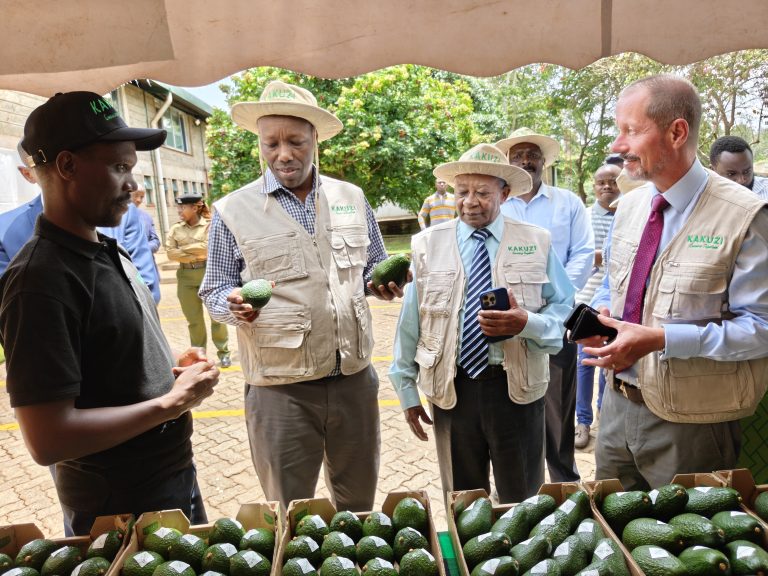
Speaking during a tour of listed agribusiness firm Kakuzi Plc’s orchards in Murang’a County, CS Kinyanjui noted that Kenya has latent potential to produce edible oils from Macadamia, among other oil crops. The local production of edible oils, he said, will play a key role in advancing import substitution efforts while promoting the Buy Kenya, Build Kenya agenda.

In Kenya, Kakuzi is the largest producer of avocados and the largest single macadamia orchard estate, with plans to double its current export capacity to more than US$100 million per year in the medium term. This year, Kakuzi is eyeing an investment of more than US$ 15 million to expand its blueberry-growing venture by increasing its orchards from 10 hectares to 100 hectares.

Avocado Millionaires: New generation of smallholder farmers reaping big from exports

While lauding Kakuzi’s value-added capacity, CS Kinyanjui noted that, as global demand for healthy foods grows, Kenya needs to position itself as a major producer of superfoods.
“Demand for food will always be there, even in difficult times such as war. I commend Kakuzi for the great work. As they expand, they also create employment opportunities,” he said.

He added, “The government will continue to support investors in exports. As we open up international markets through economic partnership agreements, we must also ensure we have enough produce to meet demand.”

The country, he acknowledged, spends more than KSh 500 billion annually importing agricultural products, including edible oils, which can be grown and produced locally. The government, he reiterated, is working to decisively shift our economy from dependence on imports to a net exporter of agricultural products, manufactured goods, and value-added commodities.

“I am impressed at the diverse manufacturing and agribusiness value addition that Kakuzi is undertaking, including the daily production of 1,000 litres of cold-pressed Macadamia oil,” Kinyanjui said.

He added, “As a strategic policy, the government is clear, and His Excellency President William Ruto is spearheading efforts to power agro-industrialisation. Working with partners such as Kakuzi and through SEZs, EPZs, and County Aggregation and Industrial Parks, the intention is to transform agricultural produce into high-value products for domestic, regional, and global markets.”

On his part, Kakuzi Plc Managing Director Mr Chris Flowers confirmed that the firm is actively undertaking a products-and-markets diversification strategy to boost its earnings and shareholder value.

The Story of Kenya Nut Company and the coffee farmer who brought it into existence

Kakuzi’s ongoing diversification strategy, he said, prioritises the development of high-quality consumer products for the domestic and export markets. Kenya, Mr Flowers added, is ideally placed (geographically) to be Africa’s largest producer of superfoods, supplying the Far-East, the Middle East, Europe and the USA.

“The Kakuzi business growth and diversification plan is firmly anchored in positively contributing to the development and promotion of locally produced, export-grade, quality, value-added products,” Mr Flowers said.

As part of Kakuzi’s commitment to industrialisation and the value addition of local oil crops, as envisioned in the Bottom-Up Economic Transformation Agenda (BETA), the company has integrated a Macadamia Processing Plant, including a Cold-Press Oil extraction unit. The Kakuzi Macadamia Processing Plant has an installed capacity of 2,000 tons of saleable kernel (SK), making it one of the largest in Kenya.

Early this year, Kakuzi introduced a quality loose-leaf tea brand, available in 250 gms and 500 gms packs. Alongside Kakuzi Pure Black Tea, Kakuzi has, in recent years, launched quality ready-to-eat Macadamia, Cold Pressed Macadamia Oil, and Blueberry products to the local market. These products are available at selected retail outlets, Kakuzi Farm Market along the Nairobi-Nyeri Highway, and online at the Kakuzi online shop.

HACO industries, Mama fua partner to empower laundry professionals in Eldoret

0

HACO Industries Kenya Limited, through its leading homecare brands SoSoft and ACE, has partnered with Mama Fua App to conduct a training and empowerment session in Eldoret aimed at equipping cleaning and laundry professionals with practical skills to enhance service quality and create sustainable income opportunities.

The initiative is designed to support individuals working in the cleaning and laundry sector, popularly known as Mama Fua – by providing professional training on modern laundry techniques, effective homecare practices, and the proper use of cleaning and fabric care products.

Through the training programme, participants gained valuable knowledge and hands-on experience that will help them improve efficiency, deliver higher-quality services, and expand their earning potential.

Speaking on the initiative, HACO Industries, Home Care Category Manager, Joan Chege noted that the programme reflects the company’s broader commitment to empowering communities and strengthening local enterprise ecosystems. “At HACO Industries, we recognize the important role that cleaning and laundry professionals play in households across Kenya. Through our partnership with Mama Fua and the support of our SoSoft and ACE brands, we aim to provide practical training and tools that empower these entrepreneurs to improve their services, grow their businesses, and increase their income opportunities.”

HACO Industries recognized as circular economy leader at Kenya ESG awards

The training offered by Cleaning School Kenya, a subsidiary of Mama Fua also provided participants with insights on best practices in fabric care, stain removal, hygiene standards and efficient cleaning solutions for housekeeping, safety & workplace hygiene using HACO’s homecare products. Financial literacy was also inculcated to ensure that sustenance beyond the training is achieved.

Mama Fua, a premier provider of high-quality cleaning and laundry services across Kenya, continues to champion professionalization within the sector by connecting trained service providers with households and businesses seeking reliable cleaning solutions.

A representative from Mama Fua, Stephine Nguta emphasized that partnerships such as this play a critical role in improving livelihoods and elevating service standards within the cleaning industry. “Empowering cleaning professionals with the right skills and tools not only improves the quality of services delivered to customers but also creates sustainable opportunities for individuals and families who rely on this sector for their livelihoods.”

The Eldoret training forms part of HACO Industries’ broader efforts to build stronger community partnerships and promote inclusive economic participation through skills development and entrepreneurship support. By combining product expertise with practical training, the programme aims to contribute to a more professional, empowered, and sustainable cleaning services sector in Kenya.


Loop Loan: What you need to know to secure up to Sh3 million instantly

The most common reason why small businesses fail is a lack of funding or working capital. A business needs a certain amount of money to keep operations running on a day-to-day basis.

This includes expenses such as stock, funding payroll, rent, utilities, and maintenance, among others. When a business does not make enough sales to cater for such expenses, it can face funding shortfalls that can put it out of operation.

Sadly, most small businesses in Kenya are unable to access credit when needed. In fact, the SME credit denial rate in Kenya is at 60 percent, with the high financing gap attributed to various issues, including limited experience in running a business and lack of collateral, among others.

At the same time, some SMEs lack information about available credit products, despite the rollout of various SME friendly products by financial institutions.

One of the products that SMEs can utilize is the NCBA Loop, a unique app that simplifies financial management by combining banking, transactions, budgeting, and savings in one place.

The platform not only gives business people instant access to credit but also flexible loan periods.

Borrowers can access unsecured loans of between Sh50,000 and Sh3 million, repayable in 6 to 36 months depending on the amount borrowed.

To qualify for a loan, users are advised to make LOOP their primary account, channel salary or proceeds from business through LOOP, and transact for at least 3 months.

“If you have a good credit history and we are happy with your transaction activity on LOOP, we will assign you a loan limit,” the platform states.

Once a loan is approved, all applicable fees including credit insurance, and excise duty are collected upfront on disbursement meaning the amount received is lower than the amount requested.

Interestingly, Loop users can also access an overdraft of up to Sh100,000 to complete transactions whenever short of funds in their Loop account.

How to apply for a loan from NCBA Loop

Below is the step-by-step guide to accessing the NCBA loop loan:

  1. Register for the service: To register for an NCBA Loop account, you need to download the Android app, iOS app, or go to their website https://www.ncbaloop.com/
  2. Create an account: To create an account you need a phone number and your ID number. You will be sent a PIN to activate the service to access your account.
  3. Applying for a loan: Once you have successfully created an account, you can be able to apply for a loan.

How to repay NCBA Loop loan

  1. Allowed Payments: In an instance where a customer chooses to pay in bits, full and partial settlement shall be accepted
  1. Repayment Period: Every loan has a different schedule, this is found via the Loop App in the Loop Loan Menu Option. This schedule summarizes all future payment dates and amounts due with a clear view of the Principal and Interest component.
  2. Settlements: The app is curated in that, loan repayments will be automatically collected from your Loop Current Account every month from the date of disbursement.

Also Read: NCBA Insurance emerges as a pillar of trust in Kenya’s claims processing sector

Why Safaricom’s PostPay plans are emerging as a smart choice for SMEs

In today’s fast-paced business environment, small and medium-sized enterprises (SMEs) are under increasing pressure to remain agile, responsive, and cost-efficient.

Communication sits at the heart of this equation linking teams, customers, and partners in real time. It is within this context that Safaricom’s PostPay plans are gaining traction as a practical solution tailored to the evolving needs of SMEs.

Unlike traditional prepaid services that require constant top-ups and monitoring, Safaricom’s postpay model introduces a more flexible and predictable approach.

Businesses can call, text, and browse seamlessly throughout the month and settle the bill at the end of the billing cycle.

This “use now, pay later” structure not only simplifies operations but also allows entrepreneurs to focus more on growth and less on day-to-day airtime management.

At the core of the offering is flexibility. SMEs can choose a credit limit starting from as low as Sh1,000, making the plans accessible even to small startups and growing enterprises.

The tiered packages are structured to align with varying business demands, ensuring that companies only pay for what they need.

For instance, the Sh1,000 plan provides 8GB of data, 400 minutes, and 1,000 SMS alongside WhatsApp access, sufficient for small teams or solo entrepreneurs.

As businesses scale, higher tiers such as the Sh2,000 and Sh3,000 plans offer increased data and communication capacity, with up to 27GB of data and 1,500 minutes.

For more communication-intensive operations, such as customer service centres or sales-driven enterprises, the Sh5,000 and Sh10,000 packages provide substantial value for high-volume interactions.

Beyond the numbers, the predictability of postPay billing is a key advantage. SMEs can better manage cash flow by consolidating their communication expenses into a single monthly bill.

This transparency reduces the risk of unexpected service disruptions that can occur with prepaid systems when credit runs out at critical moments.

For SMEs seeking a balance between cost control and uninterrupted connectivity, the shift to postPay may well be a strategic move worth considering.

What Safaricom PostPay offers

  1. Sh1,000: 8 GB data, 400 minutes, 1,000 SMS+WhatsApp
  2. Sh2,000: 17GB data, 1,000 minutes,2,000 SMS+WhatsApp
  3. Sh3,000: 27GB data, 1,500 minutes, 3,000 SMS+WhatsApp
  4. Sh5,000: 47GB data, 2,500 minutes,5,000 SMS+WhatsApp
  5. Sh10,000: 100GB data, 7,500 minutes, 10,000 SMS+WhatsApp

How to subscribe to PostPay

  • Dial *544# select the option Monthly Plans then select Join Postpay
  • You will be presented with five integrated plans to choose from
  • You will be prompted to enter your email address for billing
  • Select a PostPay bundle Plan of choice
  • Accept terms and conditions
  • You will receive a notification that your

Also Read: Exploring Co-op Bank’s YEA account: What makes it a tick?

SME financing made easy: A look at options from Co-operative Bank of Kenya

0

Are you a small business looking for financing for your business? Well, the Co-operative Bank of Kenya has some of the best financing options tailored for various SMEs’ needs.

Below are some of the SME financing products offered by the lender.

MSME Overdraft Working Capital

The Co-op Bank MSME Term Loan is a type of loan that allows small and medium-sized enterprises to access the financing needed to expand or raise their business supply capabilities.

Under this product, borrowers can access financing under three categories: Bronze, Silver, and Gold. Each category has a varying loan limit, meaning borrowers access various loan limit depending on the category they fit it.

The Bronze package provides financing of up to Sh600,000, Silver Sh6 million and Gold Sh10 million.

The amount can be repaid in up to 60 months based on the level of the borrower’s business and the type of security provided.

Mkopo wa Kujengana – Business

Mkopo wa Kujengana Loan is available to individual group members. The group must be registered as a self-help group by the relevant government authorities.

Under this product, borrowers not only access financing but also receive training on how to manage it.

The loan is based on a co-guaranteeing mechanism and members qualify for the loan after 8 weeks of training.

Msamaria Women’s Loan: A perfect solution for women in business

Overdraft

The Co-op Bank overdraft facility allows enterprises to access funds even when their savings balance is below zero, enabling them to continue with their operations without interruptions.

Borrowers can repay the borrowed amount at any given time without any penalties. To qualify for this loan, borrowers must have:

  • Copies of identification documents, that is, Memorandum and Articles of Association (for registered companies)
  • Certificate of Incorporation (for registered companies)
  • Business Registration Certificate
  • Identity cards for borrowers who do not have registered businesses
  • Identity cards for directors of registered companies and registered businesses
  • Bank statements for 6 months, audited accounts for loans above Ksh 5 million
  • Resolution to borrow (for registered companies), details of business location and securities to be provided

Supply Chain Financing

This is a financing solution designed to help MSMEs pay suppliers. It facilitates financing for suppliers to the Anchor customer to obtain early payment once they submit their invoices.

Features

Security:

  • For limits up to 2M –Chattels i.e. Motor vehicle discounted at 150%
  • Cash and Land for exposures above 2M

Benefits of the parties involved

Benefits to Anchor

  • The solution allows the Anchor to maintain or extend the payment terms with the Bank
  • Ensuring the Anchor suppliers have access to working capital.
  • Negotiate Better pricing for purchased goods and services and enjoy cash discounts

Benefits to Suppliers

  • Alleviate the cash flow challenges of suppliers by accelerating the conversion of receivables (invoices) into cash.
  • Extend financial access to suppliers who lack collateral – using approved invoices as a form of credibility and surety.
  • Help businesses to grow with enhanced access to finance
  • Reduce days of sales outstanding (debtor’s days).

Requirements

  • 3 years audited accounts
  • Company/ Business profile
  • Banks statements (12 months) if new customer to Co-operative Bank
  • 12 months payments data of the client from anchor
  • Credit application

Land investment in Kenya: 10 key things every buyer must know in 2026

0
You know that feeling when you finally buy that item that has long been on your wish list? Imagine if that item were a piece of land in Kikuyu, Ngong, Nakuru, or Juja that you have patiently saved for, envisioned building on and are proud to call your own. What factors should you consider when buying land in Kenya?

Land remains one of Kenya’s most lucrative investment options, offering long-term value and generally resisting inflation. Although a great investment option, many investors make costly mistakes due to the excitement of finally making a significant purchase. Consequently, it is during this time that investors need to be even more careful and consider the following factors before rushing to make any decisions on buying land.

1. Due Diligence

Due diligence is the foundation of making any land investment and this is where many go wrong. Why, you may wonder. While everything may seem just right, the seller and supposed owner of the property may not be the legal owner.  Therefore, before you fall for the price and location, ensure you do your own research on the plot of land you are buying. As you do your research, look for the green card of that land and evaluate who the owners are, the size of the land in question and any encumbrances that the plot of land may have.

Conduct an official land search at the Ministry of Lands or at the land registry to get the green card of the land. This search will reveal the following aspects of the property:

  • The registered owner

  • The size and location of the land

  • Any encumbrances such as loans, caveats, or court disputes

Remember, never to rely on photocopies and verbal assurances on matters the title deed. Before you start the investment journey, ensure that ownership of the land is clear and the owners hold an original copy of the title deed to the said plot of land.

2. Location and Accessibility

When investing in land, it is not all about acquiring a piece of land, but about the location you are investing in. Besides just how prime a plot of land is, location also reveals how practical and valuable a plot of land will be in the future. Land near upcoming developments such as highways, railways, airports, industries and satellite towns appreciates faster than land in rural areas far away from social and economic amenities. A plot that is cheap today but inaccessible may remain cheap for years. Accessibility often determines whether land becomes an asset or a burden.

They say the best time to do a site visit is during the rainy season because you will learn about the location and accessibility of the land in question. This enables you to know how well drained the plot of land is and thus informs on issues like flooding and poor drainage.

Before you invest in that piece of land, ask yourself the following:

  • Can you reach the land easily during rainy seasons?

  • How far is it from the nearest town or main road?

  • Are there signs of growth, such as schools, markets, or new developments?

3. Land Use and Zoning Regulations

Do you know that not all land can be used for the same purpose? In Kenya, land use is regulated by zoning laws that specify exactly what can be done on a property. To prevent legal issues, monetary losses, or project delays, developers, investors and homeowners must comprehend these regulations. Residential, commercial and agricultural land all have different uses and are governed by different laws. In addition to being required by law, following these guidelines is a wise choice that protects your investment and reduces risk. Buying agricultural land with the intention of commercial development, but without approval, can lead to fines or demolition.

Therefore, before buying that dream plot, confirm whether the land is zoned for:

  • Residential use

  • Commercial use

  • Agricultural use

  • Mixed development

4. Availability of Utilities

The availability of utilities indicates how far the plot is from amenities. Land should never exist in isolation. As an investor, you should be able to determine the distance to the nearest electricity connection and the distance to access to water. Other factors to consider include how well the drainage is and is there availability of internet connection? These aspects directly affect how soon and how affordably one can develop the land, especially for residential purposes. While a plot may seem affordable, if the utilities are far away, the cost of development quickly goes up and can exceed the budget.

To prevent this, always ask yourself:

  • How far is the nearest electricity connection?

  • Is there water on site, or will you need to drill a borehole?

  • Are there existing sewer or drainage systems?

5. Soil Type and Topography

Who knew the type of soil and its topography could influence the stability and cost of construction? Truth is, what lies beneath the surface of that plot you are aspiring to buy actually matters more than you realise. This is because the type of soil in your plot influences the stability of your structures and the cost of building your foundation. Rocky or black cotton soil can significantly increase foundation costs, while on the other hand, land that is too steep may require expensive grading. Additionally, areas that are prone to flooding may limit your construction and development entirely.

Before making the commitment to buy anywhere, ensure you go on a site visit to identify the topography and type of soil of the area. This is because soil affects all the following aspects:

  • Construction costs

  • Structural stability

  • Agricultural productivity

6. Access Roads

Remember landlocked countries? Well, do you know that your plot is landlocked if it has no legal access road? Now you know.

One major overlooked factor to consider while investing in land is how easily accessible your plot of land is. There are so many disputes that arise years after investing in a plot of land over access roads, as buyers are often told that access roads will be created later. Therefore, before investing, as you do your due diligence, ensure that all access roads to your property are clearly defined in public records and that the access is documented and recorded to avoid any parties claiming them later. Never assume that access roads are there or that they will be created later because they must exist first.

Confirm that:

  • There is a clearly defined public or private access road

  • The access is documented and recognised

  • Any wayleaves for power lines, roads, or pipelines are clearly marked

7. Price Comparisons and Market Value

In real estate, cheap often turns out to be expensive. When a plot is priced unusually low, the excitement of a “good deal” can make it easy to overlook critical red flags. If an offer seems too good to be true, it usually is.

Top 10 land selling companies in Kenya 2026 guide

Always compare prices with similar plots in the same location. Significant price differences may signal underlying issues such as ownership disputes, poor or inaccessible roads, or delayed or unavailable title documents. Affordable land does exist, but true value lies in transparency, not urgency.

Before you buy land, always:

  • Take time to understand the market,

  • Verify payment details

  • Conduct proper due diligence before committing your funds.

8. Survey and Boundary Verification

Boundaries are not just suggestions but legal facts that define ownership and protect property rights. Unclear or disputed boundaries are among the most common causes of land conflicts and can take years to resolve through surveys, mediation, or lengthy court processes, which always have high legal and financial costs.

It is imperative to verify boundaries and beacons to avoid conflict in the future that would cost you your investment. This includes confirming beacon positions, reviewing survey maps, and ensuring the land corresponds with official records. Failure to do so can result in encroachment disputes, restricted use of the land, or even loss of a portion of the property.

Always ensure you engage a licensed surveyor to confirm:

  • The exact size of the plot

  • Boundary markers

  • Alignment with survey maps

9. Payment Terms and Documentation

Even before you start making payments on your plot of land, you are required to sign an offer letter and a sales agreement, respectively. These two documents stipulate how and when you are required to make payments. While the excitement of finally owning your piece of land may be thrilling, avoid making cash payments without proper documentation. In land transactions, paperwork is your first line of protection. Every shilling paid should be clearly recorded, receipted, and supported by formal agreements to safeguard your investment and prevent future disputes.

Similarly, after completion of payment, transfer documents should be prepared to transfer ownership from the seller to the buyer and a title deed issued thereafter.

Always ensure that:

  • A formal sale agreement is signed

  • Receipts are issued for every payment

  • Payment schedules are clearly outlined

  • Transfer documents are prepared and acknowledged

10. Reputation of the Seller or Land Selling Company

Lastly and the most important factor, is to consider the company, agent or seller you are buying the land from. In this case, consider the seller’s years of experience, track record, customer reviews and level of transparency they uphold in their transactions. Always choose a seller who maintains professionalism and is registered and regulated by the responsible bodies. An organisation like Username Properties is registered to sell land and property for sale in Kenya and has been in operation for over 14 years. Remember, a reputable seller or land company will not force you into buying but instead will ensure a smooth, secure transaction that protects your investment.

A reputable seller or land-selling company will:

  • Provide verifiable documentation

  • Allow and encourage due diligence

  • Offer clear timelines for title transfer

  • Maintain open communication even after payment

Conclusion.

Land investment has the power to transform your life, but just like in life, land investment also requires a strong foundation before making that first investment move. Land investments have the potential to secure your family’s future, grow wealth and also open opportunities for generations to come. While all the above is foreseeable, making land purchases requires patience, careful research and informed decision-making. This is why understanding and considering these ten key factors is important when buying land in Kenya.

The writer is the CEO of Username Properties Ltd.

From instinct to insight: How Ken Gitonga’s stockApp is transforming small businesses

0

Across Kenya, small small businesses are the engines that keep daily life moving. They are also, in many cases, running on instinct. Records sit in notebooks, stock is tracked mentally, sales are remembered rather than recorded, and decisions are often made without a clear picture of what is actually happening in the business.

For Kenyan entrepreneur Ken Gitonga, this was not just something he observed. It was something he experienced firsthand.

“The idea for StockApp started from a very personal experience, my uncle, who runs a hardware store, asked me for a way to manage his business better,” Gitonga says. What he found was not just disorganisation, but a lack of visibility.

“Every time he stepped away and came back, things were unclear. Stock records did not add up, sales were difficult to track, and it was hard to know what was really happening.” That experience quickly pointed to something much larger.

This is the reality faced by millions of MSMEs across Africa. These businesses employ nearly 85 per cent of the non-farm workforce, yet many still rely on manual processes to run their operations. This approach limits their ability to grow, and it is not sustainable if you want to scale.

In its early stages, StockApp was shaped by direct engagement with small business owners.  “Most businesses struggle with three fundamental challenges. The first is lack of structured data. Many cannot accurately track inventory, sales, purchases, profits, or expenses.”

The second is visibility. “Owners are making decisions without clear insight into what is working and what is not. They do not always know which products are performing or where they are losing money.”

The third is fragmentation. “If they are using digital tools, they are often using several apps that don’t talk to each other. That creates more confusion instead of solving the problem,” Gitonga explains.

These realities informed the direction of the platform; one system where everything comes together. From the beginning, the focus was on building something usable.

“We designed StockApp with the understanding that many business owners are not technology experts. They just want tools that help them run their businesses better,” Gitonga says.

The platform brings together stock tracking, sales, expenses, supplier management, staff monitoring, and even online selling into a single environment.

“Everything is designed to mirror how businesses already operate,” he explains. “The goal is to make it feel simple and natural.”

Today, StockApp is used in more than 70 countries, a reach that reflects how widely shared these challenges are.

“The problems we are solving are universal. Whether you are a small retailer in Nairobi, Lagos, or Manila, the challenges are very similar,” Gitonga says.

Why every small business owner needs the NCBA Business Saver Account

Much of that growth has happened organically.

“Entrepreneurs share tools that work, and that has been a big part of how we have expanded,” he adds.

That traction has also been recognised within the local innovation ecosystem. StockApp is part of Safaricom’s Spark Accelerator Cohort II, a programme supporting high-potential startups with mentorship, funding, and access to market.

At the core of the platform is its ability to make business data usable. “The AI assistant analyses sales patterns, inventory movement, purchasing behaviour, and cash flow,” Gitonga explains. “It helps business owners understand how their business is performing.”

The next step is already in progress. “We are moving towards AI that not only gives insights, but also takes action,” he says. “Things like suggesting reorders, generating reports, and supporting day-to-day operations.”

For many businesses, the impact is immediate.

“One of our clients, Joy Pinky Stores in Diani, runs two retail outlets. After adopting StockApp, she was able to manage both stores and access all her reports directly from her phone,” Gitonga says.

The difference was clear. “For the first time, she could see her sales, stock levels, and overall performance in real time.”

Beyond Kenya, similar stories are emerging. “In Zambia, one of our clients is opening their 13th branch,” he adds. “They have told us that being able to manage everything from one platform has made that growth possible.”

These outcomes extend beyond individual businesses, as each expansion creates jobs, supports families, and strengthens local economies.

Expanding into multiple countries has not been without challenges. “There are differences in regulations, business culture, currencies, and infrastructure,” Gitonga says.

To navigate this, the company is testing a more localised model. “We are piloting an agency model, similar to franchising. “We partner with local operators who handle customer-facing activities like sales and support, while we focus on the technology, ” he adds.

The model is currently being tested in Tanzania, with plans to expand into more markets if successful.

As more businesses digitise, trust becomes critical. “Data security is a fundamental priority for us. We have implemented secure infrastructure, encryption, access controls, and continuous monitoring.”


Grounded Boeing Dreamliners sink KQ in Sh17.2bn full year 2025 net loss

0

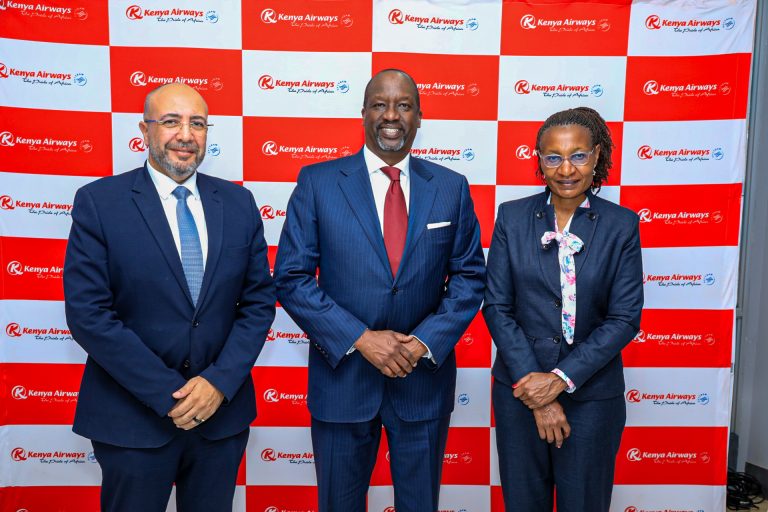
The national carrier Kenya Airways has announced a full year 2025 net loss of Sh17.2 billion. This loss was a reverse shift from the record profit of Sh5.4 billion that the national carrier posted in the full year 2024.

The national carrier has blamed this heavy loss on the grounding of its wide body Dreamliner planes that were due for engine overhauls.

“Overall performance and operations in the year 2025 were severely impacted primarily by the temporary grounding of three of the wide body fleet, Boeing 787-8 Dreamliner aircraft. This was driven by the global supply chain constraints and limited engine availability,” Kenya Airways said in a statement.

In the full year under review, total income fell by 14.3 percent to Sh161.5 billion. Total assets increased by 2.3 percent to Sh183.2 billion while non-current assets went up by 3.1 percent to Sh141.8 billion. Total liabilities went up by 6. percent to Sh315.3 billion.

During the year, Available Seat Kilometres (ASKs) declined by 18 percent to 13,349 million, while passenger numbers dropped by 13 percent.

“While our financial performance reflects a challenging year, it is important to recognize that this was driven primarily by global supply chain disruptions and not a lack of demand,” said Kenya Airways Chairman, Kiprono Kittony. 

The national carrier had already issued a profit warning to shareholders following a challenging year in which it recorded a half year net loss of Sh12.15 billion.

In the first six months of the 2025 year, 33 percent of the carrier’s wide-body aircraft was grounded. The grounding of the aircraft resulted in a 14 percent drop in passenger numbers and a 19 percent drop in Revenue Passenger Kilometres (RPKs).

READ MORE: KQ pilot training costs Sh8 million; Cabin crew Sh500,000 per person

Following the results, Acting Group Managing Director and Chief Executive Officer George Kamal said that the management of the airline was now focusing on stabilizing the airline.

“We are taking deliberate steps to stabilize the business in the near term while laying the foundation for long-term resilience. Our focus is not just recovery, but reinvention,” said Kamal.

Kenya Airways reaffirms strategic importance amid global aviation constraints

0

Kenya Airways has reaffirmed its strategic role in connecting markets and supporting economic growth despite reporting a challenging financial performance for the year ended December 31, 2025.

The national carrier said its results were significantly impacted by global aviation supply chain disruptions, which constrained operations even as demand for air travel remained strong.

Speaking during the results announcement, Chairman Kiprono Kittony said the airline’s performance should be viewed within the context of industry-wide operational challenges rather than weak demand.

“While our financial performance reflects a challenging year, it is important to recognise that this was driven primarily by global supply chain disruptions and not a lack of demand,” Kittony said.

Seven golden rules of air travel

The airline’s operations were affected by the temporary grounding of three Boeing 787-8 Dreamliner aircraft due to limited engine availability, reducing capacity across key routes.

Available Seat Kilometres (ASKs) declined by 18 per cent to 13,349 million, while passenger numbers dropped by 13 per cent. Revenue fell by 14 per cent, or KSh 27 billion, to close the year at KSh 161 billion.

Operating costs declined by 3 per cent to KSh 167 billion, reflecting reduced activity and the cost implications of grounded aircraft. The airline posted an operating loss of KSh 5.6 billion and a net loss of KSh 17.2 billion.

Kenya Airways reaffirms strategic importance amid global aviation constraints
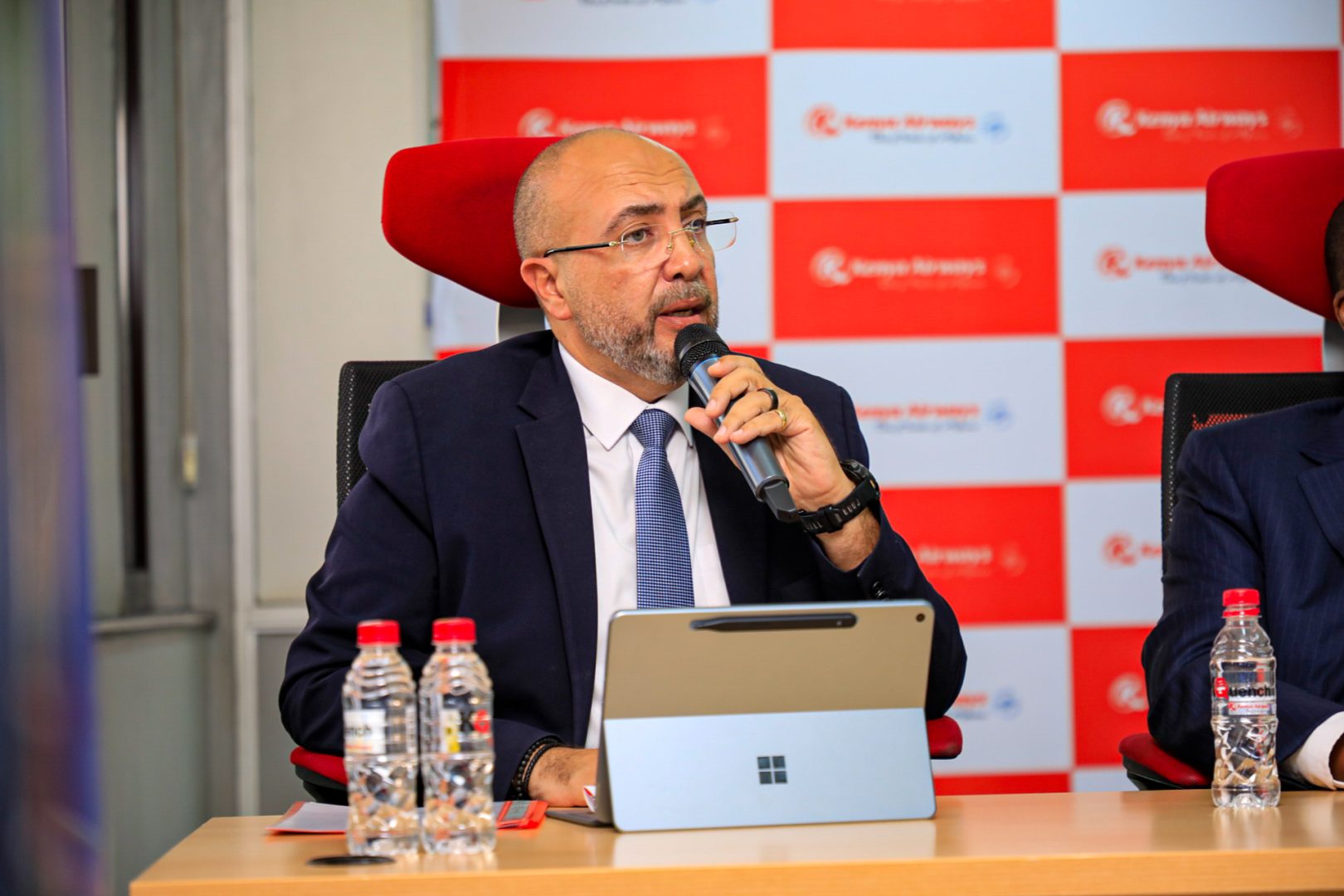
Ag. Group Managing Director and Chief Executive Officer addresses the current industry outlook during the official announcement of the FY2025 results

Acting Group Managing Director and CEO George Kamal said the airline operated in a complex global environment marked by rising input costs and persistent supply chain challenges.

“The global aviation sector continued its recovery in 2025, supported by strong passenger demand, particularly on international routes. However, the industry continues to face headwinds, including aircraft delivery delays, engine shortages, and geopolitical uncertainty,” Kamal said.

He added that within Africa, structural constraints such as high operating costs and infrastructure limitations continue to shape airline performance, even as travel demand grows.

Fredrick Marwa: How I became a millionaire through traveling

Cargo operations softened during the year amid slower global trade and changing tariff regimes, while regulatory costs remained elevated across the sector.

On the macroeconomic front, the Kenyan shilling remained relatively stable compared to 2024, which had seen significant foreign exchange gains. However, ongoing tensions in the Middle East pose risks through potential fuel price volatility and airspace restrictions that could increase operational costs.

Looking ahead, Kenya Airways said it will prioritise restoring capacity, strengthening its financial position, and building long-term resilience.

Key focus areas include returning grounded aircraft to service, maintaining strict cost discipline, and advancing capital raising initiatives to support fleet expansion and liquidity.

According to the International Air Transport Association (IATA), global passenger traffic is expected to grow by 4.9 per cent, while cargo volumes are projected to increase by 3.1 per cent, signalling continued recovery in the aviation sector.

Kamal said the airline’s long-term strategy goes beyond recovery.

“We are taking deliberate steps to stabilise the business in the near term while laying the foundation for long-term resilience. Our focus is not just recovery, but reinvention,” he said.

He added that Kenya Airways remains a critical national asset, supporting trade, tourism, and regional integration.

“The skies may be turbulent today, but our direction is clear, and our destination is long-term, sustainable growth,” Kamal said.