The Daily Pressure of Running a Small Business
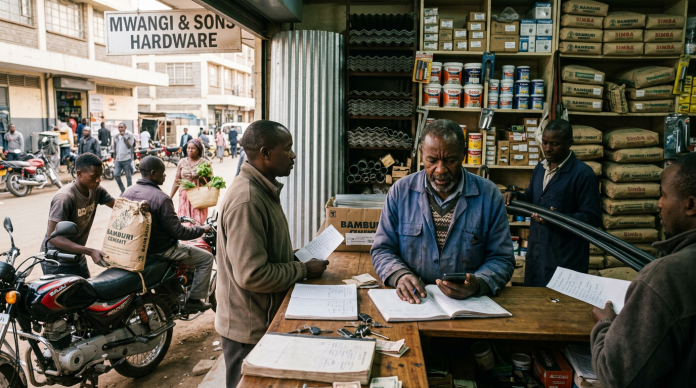
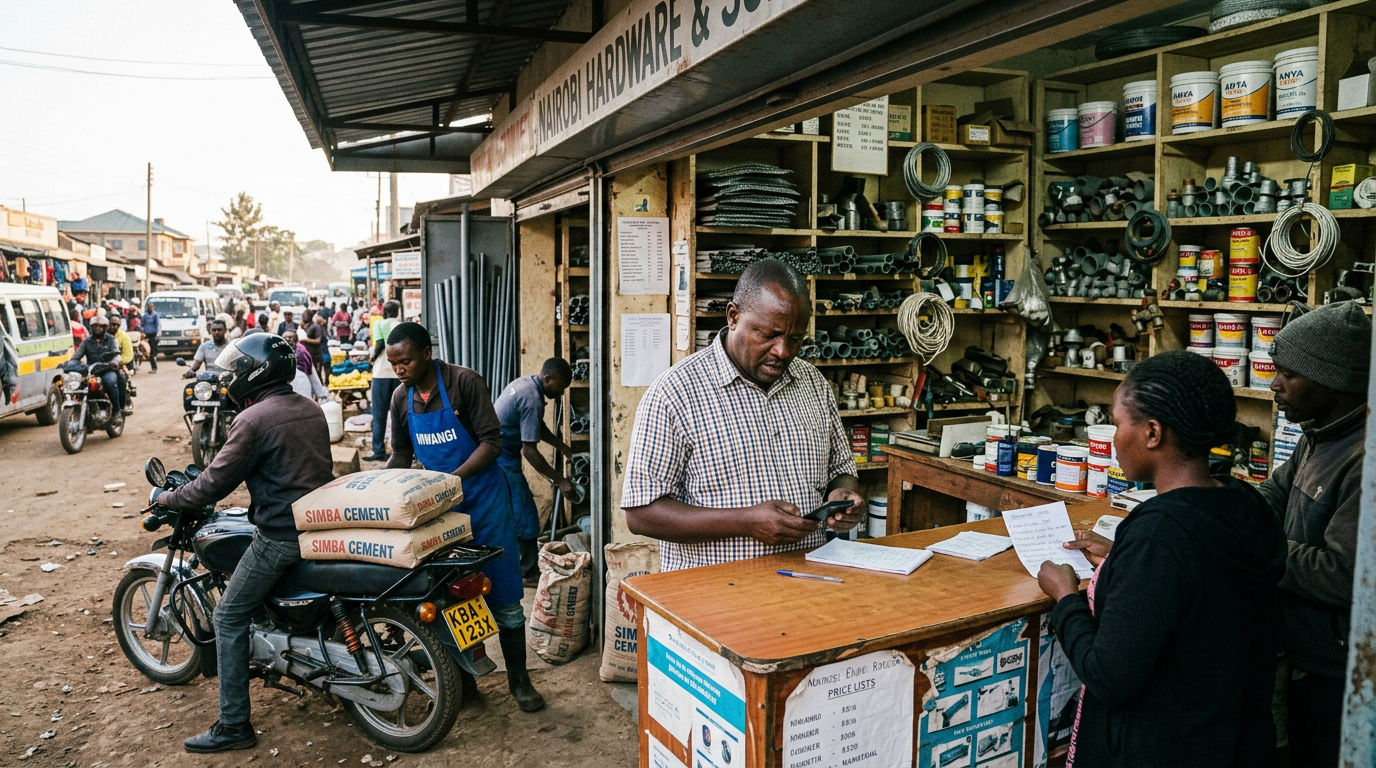
By 7am, the hardware stores along Gikomba Road are already alive.
One customer wants iron sheets delivered to a site in Kitengela. Another is bargaining over the price of paint buckets. A fundi waits impatiently for plumbing fittings while a boda boda rider loads sacks of cement onto his bike.
For many small business owners, this is the rhythm of everyday survival.

The hardware owner opens before sunrise because every hour matters. A delayed delivery means a lost customer. An absent employee slows down the entire operation. One medical emergency can wipe out weeks of profit.
It is the kind of pressure many Kenyan entrepreneurs quietly carry. And it is not limited to hardware businesses.
How much do you need to start a kitchen utensil business?
When Health Becomes a Business Risk
In Nairobi’s boutiques, fashion shop owners spend long days serving customers while managing rising costs behind the scenes. Across estates and market centres, salon owners depend heavily on a few trusted employees to keep business moving.
Freelancers, from photographers and designers to content creators and consultants, often operate without any form of medical protection at all.
Then there are chamas.
Chamas as an Informal Safety Net
For years, chamas have become the invisible financial safety net for millions of Kenyans.
Groups of friends, traders, church members, professionals, and small business owners come together to pool resources, contribute monthly, and support one another during emergencies, school fees crises, funerals, or investment opportunities.
Healthcare challenges frequently find their way into those conversations.
A member falls sick unexpectedly. A child is admitted to hospital. Contributions meant for investment are suddenly redirected toward medical bills. What was meant to build financial progress becomes emergency support.
9 Most Profitable Businesses to Start With Sh. 20,000
A Medical Cover Designed for Groups
It is within this everyday reality that Equity’s SME Health Cover comes in handy.
Rather than targeting only large corporations, the cover focuses on the people who keep Kenya’s informal and SME economy running, small businesses, SACCOs, chamas, schools, churches, staff groups, and growing enterprises seeking practical healthcare solutions.
The model is intentionally built around accessibility and flexibility.
Groups can join from as few as three principal members, making it suitable even for small businesses or informal groups that may previously have considered medical insurance out of reach.
Affordability and Simplicity Matter
For many SMEs, affordability alone is not enough. Simplicity matters just as much.
Business owners often avoid medical cover because of hidden costs, complex terms, or fears that employees will still be forced to top up payments during treatment.
Equity’s SME Health Cover addresses this by offering no co-pay on services, alongside full cover for chronic and pre-existing conditions.
Protection Beyond Routine Healthcare
The product also includes unlimited children cover, emergency care support including ambulance services, and lifetime cover with no upper age restriction.
That becomes especially important for informal business groups and freelancers who may not have access to employer-sponsored healthcare.
For boutique owners operating with small teams, or freelancers whose income depends entirely on remaining healthy and active, a medical emergency can easily interrupt income flow for weeks.
The same applies to chama members who often carry both personal and collective financial responsibilities.
Nationwide Access to Healthcare
Healthcare access is also central to the offering.
Members can seek treatment through a nationwide network of mission, public, and private hospitals, alongside Equity Afya clinics that continue expanding closer to communities.
For SMEs operating across counties or serving mobile populations, nationwide accessibility becomes critical.
10 Entrepreneurship Lessons from the 2026 World Cup Every Business Owner Should Learn
Building Resilience, Not Just Treating Illness
But beyond healthcare itself, the product speaks to something deeper within Kenya’s SME culture: the need for stability.
Many small businesses are no longer about profits only. They are thinking about resilience: how to keep operations running during emergencies, how to protect employees without straining finances, and how to grow without slipping back into crisis management.
This is where Equity Health insurance serves you well, not just as a provider of insurance, but as a long-term partner in the growth of Kenya’s SME economy.
Protecting the People Behind the Business
Because whether it is a hardware owner in Gikomba, a boutique operator in Eastleigh, a freelance photographer in Nairobi, or a chama managing shared savings, the challenge is often the same:
Growth becomes fragile when a single illness can destabilize everything.