
Home Blog Page 12

400 artisans get NCA certification as BioTank Africa rolls out Nationwide Fundi Training drive in Kitengela

0

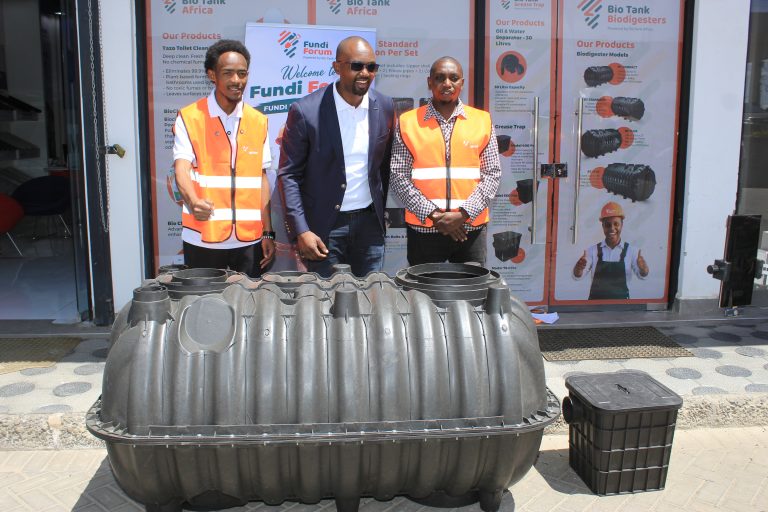
NCA certification: Over 400 local fundis, plumbers, and contractors received official NCA technical certification today at Kitengela town, Kajiado County, as BioTank Africa convened the largest edition yet of its Fundi Forum. The event officially marked BioTank Africa’s new county-by-county initiative to upskill thousands of construction tradespeople across Kenya on modern, sustainable biodigester and wastewater technology.

Kitengela’s Rapid Growth Highlights Need for Decentralised Sanitation

Kitengela was strategically selected due to its rapid real estate expansion paired with the absence of widespread municipal sewer coverage; a dynamic common across Kenya’s emerging urban centres, where property developers rely heavily on decentralised wastewater solutions.

Water Services Regulatory Board data shows only about 9 per cent of Kenya’s population — roughly 5 million people — is connected to a municipal sewer network, leaving onsite sanitation as the primary solution nationwide.

BioTank Africa Takes Technical Training County by County

Highlighting the strategic evolution behind the county rollout and the vital role of grassroots tradespeople in national development, Edwin Kirugo, Founder and General Manager at BioTank Africa, noted:

“Our fundis are our primary brand ambassadors on the ground, making sure every installation protects public health and meets strict quality standards. With over 90 per cent of the country depending on onsite sanitation, the artisans we accredit today are directly building safer, cleaner communities for tomorrow. Taking this Forum county by county ensures we take world-class technical training directly to where fast-paced construction is actually happening.”

The event also marks a key milestone for BioTank Africa as it celebrates eight years in the Kenyan market. It follows the April launch of the company’s “Kuwa Mbele Jenga Easy” campaign, the opening of its Nakuru branch, and upcoming plans to roll out a nationwide distributor network.

Best institutions for IT training in Kenya

NCA Certification Targets Technical Skills Gap

The day-long practical training drive directly responds to a major national technical gap.

Data from the National Construction Authority (NCA) indicates that while over 90% of Kenyan developments rely on onsite wastewater systems, only 30% of local construction artisans hold formal technical training.

Participating artisans at today’s Kitengela Forum completed structured practical modules and were awarded official technical accreditation certificates issued directly by the NCA, as part of the regulator’s ongoing partnership with BioTank Africa to formalise skills and safeguard installation, safety, and environmental standards on site.

Fundis Urged to Embrace Compliance and Financial Literacy

“Fundis should be agents of compliance, because if you build without proper licences, you are the one who will be arrested,” said James Karatu, President of the Real Building Workers Association of Kenya (REBWAK), a member organisation representing construction workers and promoting compliance and worker welfare.

He urged fundis to see themselves as agents of accountability, also cautioning artisans on the need for financial literacy, noting that many fundis, paid daily wages, struggle to manage their earnings.

KeNHA announces free training programme for form four leavers

BioTank Africa Scales Fundi Forum Nationwide

Now in its fourth edition and the greatest yet — after the inaugural Forum in 2023 — the initiative is scaling up significantly to meet growing nationwide demand.

By transitioning from localised sessions into a mobile, county-by-county rollout, BioTank Africa is expanding its scope to build an accredited network of skilled artisans across Kenya.

“When the fundi grows, the standards improve, and the customer wins. Construction and sanitation industries are evolving every day. Today’s customer is more informed, and with AI, customers are the ones now searching for the fundis they want. A fundi of today is one who is always learning, keeps up with changing technology, maintains high standards, and is trustworthy. As a fundi, reputation is your capital,” added Mr Kirugo, of the forum dubbed Fundi Bora Kazi Bora.

Women Increasingly Join Kenya’s Plumbing Trade

The Forum also spotlighted the growing role of women in the trade.

Nellygrace Korika, 25, a plumber from Njiru, Kasarani, Nairobi, with two years in the trade, attended to learn and network:

“As women, we can also be good plumbers. I came here to learn and network. Plumbing is always changing, and I wanted to know what the latest innovations are, plus these events also give me jobs.”

Study tour for SOS Technical Training Institute electrical department students 

Returning Fundis Report Business Growth

For returning artisans, the Forum’s value compounds year on year.

Hassan Isadia, a plumber from Eldoret with a decade of practice who has attended the Forum for four consecutive years, said the training has directly grown his business:

“This training has helped me grow my business. I get more customers as I get the latest skills. I am happy I got certification today from NCA.”

The forum featured live installation demonstrations, practical business clinics to help artisans formalise their enterprises, and one-on-one access to technical experts.

Key Event Highlights

  • Artisan Upskilling: Hands-on training on 3-chamber biodigester setup, maintenance, and site safety.
  • National Certification: Official NCA accreditation issued to participating fundis and plumbers.
  • Economic Empowerment: Business growth clinics covering formal trade registration and client acquisition.

CAF opens tender opportunities for 2027 AFCON; How to apply

0

The Confederation of African Football (CAF) has opened a broad range of tender opportunities for companies seeking to provide goods and services for the 2027 Africa Cup of Nations (AFCON), jointly hosted by Kenya, Tanzania and Uganda.

In a tender notice issued on Friday, August 28, CAF invited qualified companies and service providers to participate in the official procurement process for the continental tournament.

The opportunities span several critical areas of AFCON operations, including ticketing, transportation, accommodation, broadcasting, accreditation, venue access, technology, branding, ceremonies, photography and workforce management.

“CAF invites qualified companies and service providers to join the official tender process for the Africa Cup of Nations 2027 in Kenya, Tanzania and Uganda,” the organisation said in the notice.

Among the tenders are contracts covering end-to-end ticketing services, integrated transport solutions, hotel and accommodation services, infotainment, venue access management, accreditation printing materials and accessories, as well as access-control hardware and equipment.

CAF has also invited bids for various broadcasting-related services, including host broadcasting, crew services, transmission services, accreditation management systems, language services and on-site television graphics.

Companies with expertise in workforce and volunteer management are also eligible to participate.

The procurement process extends to technical and venue-related services, with opportunities available for pitch and floodlight expertise, testing, monitoring, training and technical support.

Other tenders cover photography, branding and signage, and pre-match ceremonies.

Technology and match-day services

CAF is also seeking service providers for a range of technology-driven solutions that will support the tournament and match-day operations.

These include player and team tracking cameras, Semi-Automated Offside Technology (SAOT), goal-line technology, live data, fitness data and match tactical data services.

Additional opportunities are available for Video Assistant Referee (VAR) services, team and medical extra services, information systems, announcement systems, RefCam services and a technical/TSG report tool.

The tender programme also includes accommodation services for apartments. CAF has urged interested candidates to submit applications via [email protected] by September 16, 2026.

Bidders are required to submit their proposals by email in accordance with the instructions contained in the respective Requests for Proposals (RFPs).

“CAF kindly requests you to submit your Proposals for subject tender (by email) in accordance with the RFP instructions, no later than: 16 September 2026, 17:00 (Cairo time),” the notice adds.

The football governing body said it would respond to inquiries received through the stipulated process and share the responses with bidders who had submitted their Letters of Interest (LOI) within the required timeframe.

CAF also stressed that bidders must comply with all documentation requirements, including the submission of mandatory registration documents and compliance forms as part of their offers.

“Kindly ensure that all mandatory registration documents and compliance forms are submitted as part of your offer,” CAF said.

How to access the tenders

Companies and service providers interested in bidding can access the detailed tender documents, requirements and application instructions through CAF’s official tenders portal.

Also Read: KRA clarifies Sh3.2m minimum yield for consolidated cargo

KRA clarifies Sh3.2m minimum yield for consolidated cargo

0

The Kenya Revenue Authority (KRA) has moved to clarify the application of a new Sh3.2 million minimum yield for consolidated cargo, saying the figure does not represent a fixed tax charge on importers.

The clarification follows concerns among small-scale traders who feared the revised threshold could significantly increase the cost of importing goods through cargo consolidation.

KRA said the minimum yield is a risk-management benchmark designed to streamline the clearance of consolidated cargo and identify containers that can be processed with minimal Customs intervention.

Cargo consolidation enables small-scale traders to combine shipments in a single container, reducing the cost and administrative burden associated with clearing numerous small consignments individually.

The revised minimum yield came into effect on August 21, 2026, following consultations between KRA and industry stakeholders. The Authority said traders had also been granted a one-month grace period before implementation.

According to KRA, the benchmark is used to identify containers that meet established risk parameters and can therefore qualify for simplified clearance.

“The minimum yield serves as a reference point for identifying containers that meet the threshold for clearance with minimal Customs intervention, based on established risk parameters,” the Authority said in a statement.

KRA said the previous minimum yield had last been reviewed during the 2022/23 financial year. Since then, changes in exchange rates, freight costs and national and East African Community tax laws have altered the trading environment, prompting the latest review.

The Authority, however, stressed that the Sh3.2 million threshold should not be mistaken for the amount of tax payable on every consolidated container.

“It is important to emphasise that the minimum yield is not a representation of the actual tax liability,” KRA said.

The actual customs duty and taxes payable, it added, depend on factors including the nature, value and classification of the goods, in line with applicable customs valuation and tax laws.

Traders who do not wish to use the simplified clearance arrangement can request Customs to physically or otherwise verify their consignments and assess the applicable taxes based on the actual contents, correct customs value and classification of the goods.

Importers also have the option of de-consolidating their cargo into individual consignments. Under this arrangement, each importer can make a separate customs declaration and settle the taxes applicable to their own shipment.

“A trader may opt out of the simplified trade facilitation arrangement and request Customs to verify their container and determine the applicable taxes based on the actual contents, their correct Customs value and proper classification.

“Alternatively, traders may opt to de-consolidate cargo into individual consignee parcels or consignments, allowing the respective importers to make individual declarations and pay the requisite taxes directly to KRA based on their goods,” the statement adds.

KRA said it remains committed to supporting cargo consolidation, which plays an important role in facilitating trade for small-scale importers.

The Authority added it would continue strengthening controls to prevent the misuse of customs procedures and safeguard government revenue.

Also Read: I&M Group profit after tax rises 22% to Shs10.2B on strong regional growth

I built a Sh1 billion business then watched it collapse in two years

0

Imagine building a business from the ground up, watching its value soar to nearly Sh1 billion, only to lose it within about two years.

This is the sad reality that hit Mwatha Njoroge, a financial consultant who now says the painful experience shaped his understanding of business, money and wealth creation.

Njoroge, reflecting on his experience as a young entrepreneur, said the business initially performed exceptionally well and created significant wealth.

However, the rapid growth was not matched by strong management systems, financial controls or a clear strategy for preserving the wealth generated.

Among the biggest lessons he said he learnt was the importance of hiring people based on competence rather than personal relationships.

Njoroge admitted that, at the time, he employed relatives because they were family, without adequately considering whether they possessed the skills required for the positions they were given.

The decision, he said, eventually created operational challenges and exposed the business to alleged misuse of resources and irregular staffing.

He recalled one instance in which he employed a first cousin at one of his shops, only to later discover that the relative was using a company card to fund personal spending at a club.

In another case, Njoroge said he appointed a different first cousin as a supervisor before discovering that the employee had 10 ghost workers under his watch.

The experiences forced him to rethink his approach to recruitment and the role of family in business.

“So if you’re employing someone, the first qualification should be the necessary skills required to manage that business. Not blood relation,” he said.

For Njoroge, however, poor recruitment was only part of the problem. How he handled the money generated by the business also contributed significantly to its eventual collapse.

As his income grew, he said he began spending heavily on personal possessions and lifestyle expenses rather than putting the money into investments capable of generating more income.

“I have made one million today; tomorrow I will buy a car. The day after, I will buy a house,” he recalled.

The cycle of spending, he said, continued until much of the wealth he had accumulated was depleted.

His experience reinforced a lesson he now considers central to financial management: earning large sums of money is not the same as building lasting wealth.

Njoroge said wealth must be protected through deliberate financial planning and productive deployment of money. Without systems to determine where income should go, he said, even substantial earnings can disappear quickly.

“I cannot allow a coin to come into my financial life without me commanding it where to go through a budget,” he said.

The consultant now advocates for intentional money management from the earliest stages of a person’s working life.

He urged young people not to wait until they are earning large salaries before developing financial discipline. Even small amounts, he said, should be assigned a purpose through budgeting and planning.

Njoroge also cautioned against treating savings as the final destination for money. While saving remains important, he argued that people should also consider how their money can be deployed productively to create additional income and build long-term wealth.

Also Read: Why this dairy farmer believes Jersey cows are the better choice

I&M Group profit after tax rises 22% to Shs10.2B on strong regional growth

0

Nairobi, 27th August, 2026 – I&M Group PLC today announced a strong 22% increase in Profit After Tax to Shs10.2 billion for the six months ended 30 June 2026, compared with the same period in 2025. This growth was supported by strong operating income across the Group’s markets and an increased contribution from its regional subsidiaries at 33% up from 25%.

The impressive six-month performance reflects the continued execution of the Group’s regional diversification strategy and disciplined implementation of its iMara strategy.

Total operating income increased by 23% to Shs33.7 billion, driven by growth in both net interest income and non-interest income. Profit before provisions rose by 22% to Shs18.7 billion.

Net loans and advances rose by 15% to Shs334 billion as the Group continued to support customers across its corporate, retail and business banking segments. Customer deposits increased by 18% to Shs505 billion, providing a solid funding base for further balance-sheet growth.

The Group maintained a prudent approach to credit-risk management during the period, increasing loan-loss provisions by 38% to Shs5.6 billion. Gross non-performing loans declined by 12% to Shs30.1 billion from KES 34.4 billion in the prior year, while the net non-performing loans ratio improved to 2.3%, from 4.1% in the corresponding period of 2025.

I&M Group made strong progress under its iMara strategy, exceeding several 2026 strategic ambitions. Customer numbers rose to 1.1 million, surpassing the target of over one million, while digitally active customers reached 92%, ahead of the aspiration of more than 90%. The Group’s Net Promoter Score stood at 73%, above the 70% target, reflecting continued improvement in customer experience.  The Group also positively impacted 16.8 million lives, significantly exceeding its three-year target of 10 million lives up to the end of FY 2026.

Commenting on the results, I&M Group Regional CEO, Mr. Kihara Maina, said:

“Our half-year performance demonstrates the growing strength and resilience of I&M Group across our markets. The strong growth in operating income, combined with the increasing contribution from our regional subsidiaries, reflects the disciplined execution of our diversification strategy and the value of the investments we continue to make in our customers, people, technology and distribution network.

We are particularly encouraged by the performance of our regional businesses, which increased contribution to the Group’s profitability during the period. I&M Capital, our wealth management subsidiary delivered strong revenue growth, underpinned by robust growth in assets under management. We have also maintained a prudent approach to credit risk while strengthening asset quality, capital and liquidity. This positions us well to continue supporting our customers and the wider economies in which we operate.”

As part of its drive to build relevance in emerging customer segments, the Group recorded 41% revenue growth from the MSME segment. Approximately KES 15.7 billion in financing was accessed through digital channels, while digital businesses and ecosystem partnerships contributed 21.7% of Retail and Business Banking operating income, up from 14% in the corresponding period.

The market continued to recognise I&M Group’s financial and strategic progress during the first half of 2026. The Group’s share price rose by approximately 64%, from KES 42.45 at the beginning of the year to KES 69.50 on 30 June 2026, making I&M one of the leading banking counters on the Nairobi Securities Exchange, during the period.

The period under review also saw the Group continue to advance its social-impact agenda, investing close to KES 270 million in impact initiatives. These programmes supported 686 scholarships, empowered more than 20,000 women and youth, and positively impacted approximately over 500,000 lives. This included a KES 1.92 million support in seed capital, scholarships and business support under the Predators’ Den, an entrepreneurship initiative delivered by I&M Foundation in partnership with GIZ and The Maa Trust.

Environmental conservation remained a key priority, with more than 1.45 million trees grown and further progress made towards the I&M Foundation’s commitment to plant one million mangrove trees to restore the degraded coastal ecosystems and strengthen community climate resilience.

I&M Bank joins global sustainable banking movement as signatory to the UN Principles

I&M Bank Kenya

I&M Bank Kenya remained the Group’s largest market, contributing 67% of Group Profit Before Tax and 69% of total assets.

Profit Before Tax remained broadly stable at KES 8.3 billion as strong revenue growth was offset by higher credit provisions. Loan-loss provisions increased by 34% to KES 4.2 billion reflecting the Bank’s disciplined approach to risk management amid ongoing geopolitical uncertainty and prevailing domestic economic conditions. Operating expenses rose by 21%, reflecting the continued expansion of the branch network and ongoing investment in employees and business growth.

During the period, the Bank further fortified its capital position through the successful issuance of the first tranche of its KES 20 billion Medium-Term Note (MTN) Programme. The issuance attracted significant investor interest, receiving applications worth KES 23.2 billion against an initial target of KES 10 billion, representing a subscription rate of over 232%, signaling a resounding vote of confidence in I&M Bank’s financial strength, strategic direction and long-term growth prospects. The additional capital further strengthens the Bank’s capacity to support future business growth and pursue emerging opportunities, while maintaining healthy capital and liquidity buffers.

At the same time, the Bank’s wealth management businesses maintained strong growth, with the assets under management increasing by 81% to KES 127 billion, while revenue grew by 145% to KES 481 million. I&M Bancassurance Intermediary Limited recorded approximately 50% growth in total revenue to KES 527 million, while Profit Before Tax increased by 56% to KES 425 million.

The Bank also strengthened its brand relevance through purposeful partnerships. I&M Bank committed KES 10 million to Nairobi City Thunder as the club’s Official Banking Partner, supporting Kenyan sport, youth development and homegrown excellence.

The Bank’s team emerged as the Kenya winner of the UN Global Compact SDG Innovation Accelerator Programme 2026, with its solution placed among the top five entries from 22 countries and its finalists selected to represent Kenya at the United Nations General Assembly.

Strong Regional Growth

I&M Group’s regional subsidiaries continued to play a growing role in the Group’s performance, increasing their contribution to the Group Profit Before Tax to 33%, from 25% in the corresponding period of 2025. Cross-border business revenue increased by 39% to USD 6.1 million, reflecting stronger collaboration and commercial activity across the Group’s markets.

  • I&M Bank Rwanda delivered strong regional earnings contribution during the period. Profit Before Tax increased by 53% to KES 2.4 billion, supported by a 32% rise in total operating income to KES 5.0 billion. Rwanda’s contribution to the Group Profit Before Tax increased to 20%, from 14% in the prior-year period. The Balance sheet expanded by 44% to close at KES 118 billion up from KES 82 billion driven by growth in customer deposits by 41% and lending by 43%.
  • I&M Bank Uganda sustained a strong turnaround in profitability, recording a 225% increase in Profit Before Tax to KES 0.7 billion. Operating income rose by 45% to KES 2.2 billion, supported by a 61% increase in net interest income. The Balance sheet recorded a 44% growth driven by growth in customer deposits from KES 31 billion in June 2025 to KES 40 billion in June 2026.
  • I&M Bank Tanzania recorded a 25% increase in operating income to KES 3.5 billion, supported by growth in net interest and non-interest income. Profit Before Tax grew by 8% to KES 0.6 billion as higher prudent credit provisions moderated the benefit of the strong revenue performance.
    The Balance sheet expanded by 18% to KES 50 billion from KES 42 billion, supported by continued business growth. Customer deposits increased by 14% to KES 36 billion, while loans and advances grew by 16% to KES 28 billion.
  • Bank One Mauritius, the Group’s joint venture with CIEL Group, recorded a 14% increase in operating income to KES 2.8 billion, supported by a 30% increase in net interest income from its lending portfolio and treasury investments. Despite sustained business growth, Profit Before Tax declined by 3% to KES 0.9 billion, reflecting prudent credit provisioning and continued investment in human capital and brand enhancement.

SportPesa Aviator gives Kenyan players a KSh 1 start and up to KSh 6 million per bet

0

Aviator has become a popular choice for players who enjoy fast-paced digital betting and exciting multiplier action. SportPesa brings an appealing combination of flexible stakes and impressive winning limits to its Aviator offering. Players can start with just KSh 1, making the game accessible to those who prefer smaller wagers. At the other end, the maximum possible win reaches an impressive KSh 6 million per bet.

The wide betting range gives customers greater freedom when choosing their preferred stake. With SportPesa Aviator, players can select amounts from KSh 1 up to a maximum bet of KSh60,000. This creates a broad range that can suit different playing preferences and budgets. Combined with the KSh 6 million maximum win, the limits make the platform particularly attractive in the Kenyan market.

Start with just KSh 1

One of SportPesa Aviator’s strongest features is its remarkably low minimum stake. Players can begin with only KSh 1, giving the game an accessible entry point for customers who prefer modest wagers. The option of a  KSh 1 Aviator stake allows players to experience the fast-moving format without starting with a large amount. This flexibility broadens the game’s appeal across different customer types.

The small starting requirement also gives players more freedom when deciding how much to place on a round. Customers can choose an amount that matches their preferred level while enjoying the same exciting Aviator game. This makes the game approachable for those who like keeping their individual stakes smaller. It also highlights SportPesa’s focus on providing flexible betting options.

“SportPesa Aviator gives players a simple crash-game experience with flexible stakes starting from KSh 1 and a maximum win of up to KSh 6 million per bet. The game is easy to follow, but every round is unpredictable, so customers should always play responsibly and within their limits,” said SportPesa Kenya Head of PR, Willis Ojwang.

SportPesa Casino launches Every Spin Counts and Shinda Heavy rewards

Enjoy higher betting limits

While KSh 1 provides an accessible starting point, SportPesa also caters to customers seeking substantially higher individual stakes. The maximum permitted bet on Aviator reaches KSh60,000, creating a considerable range between the lowest and highest limits. This means players have numerous stake options available when participating in different rounds. Such flexibility gives the platform a strong appeal among customers with varied preferences.

The higher limit adds another dimension to the Aviator experience for players who prefer larger stakes. Customers can decide their amount within the available range before watching the multiplier rise during a flight. The combination of a low entry point and substantial maximum creates a versatile betting environment. It allows the same game to appeal to customers looking for different levels of participation.

High potential up to KSh 6 million

The maximum win is arguably the most eye-catching feature of the SportPesa Aviator offering. A single bet can potentially reach KSh 6 million, giving players an impressive winning ceiling to aim for. This high potential of KSh 6 million Aviator win adds another exciting element to the fast-moving Aviator format. The substantial maximum also places the promotion among the more notable options available to Kenyan customers.

Aviator becomes particularly engaging as the multiplier continues climbing during each flight. Players watch the plane rise while deciding when they want to cash out their current multiplier. That simple mechanic creates anticipation throughout every round without making the gameplay complicated. With a maximum win of KSh 6 million, each flight can carry significant excitement for eligible adult customers.

SportPesa Mega Jackpot hits KSh 129,484,042 as 17-match weekend chase begins

Experience SportPesa Aviator

Beyond its betting limits, Aviator offers a straightforward format that is easy to follow. The plane takes off, the multiplier increases, and players have the opportunity to cash out before the flight ends. This quick structure keeps individual rounds dynamic while giving customers control over their chosen cash-out moment. The simplicity of the format contributes to its popularity among online gaming enthusiasts.

SportPesa combines that engaging gameplay with limits that provide considerable flexibility. Customers can begin from KSh 1, choose a stake up to KSh 60,000, and potentially win as much as KSh 6 million. Therefore, with SportPesa casino the KSh 6 million maximum win gives the game a clear headline appeal, while the KSh 1 minimum stake keeps entry simple. For customers seeking an exciting digital betting option, these features make the platform worth exploring.

Conclusion

SportPesa Aviator offers an attractive combination of accessible stakes and impressive winning possibilities. The KSh 1 minimum makes it possible for customers to start with a very small wager. Meanwhile, the KSh 60,000 maximum bet provides room for those who prefer higher stakes. The KSh 6 million maximum win further strengthens the appeal of the overall offering.

These limits give SportPesa Aviator a distinctive position for Kenyan customers seeking flexible betting opportunities. The combination of a low starting point, substantial maximum stake and sizable potential win creates an exciting proposition. Each flight brings the familiar thrill of watching the multiplier climb and deciding when to cash out. For eligible adult customers looking for Aviator entertainment with broad limits, SportPesa delivers an appealing option.

Over 400 Nairobi restaurants come together for annual citywide burger celebration

0

Nairobi’s food scene is set for a 10-day celebration as Burger Week, the city’s largest burger-focused dining campaign, officially kicked off on Thursday, August 27, bringing together more than 400 restaurants across the capital.

Running until September 6, the annual campaign is designed to give Nairobians an opportunity to explore the city’s diverse restaurant scene through one of its most popular foods.

Participating eateries will offer special burger experiences throughout the festival, encouraging diners to discover new establishments, revisit familiar favourites and uncover lesser-known dining spots.

Participating restaurants include KFC, Artcaffe, Chicken Inn, Burger King, Big Square, Galitos, Kukito, Ole Sereni, Kempinski and Eka Hotel, among others.

During the 10-day campaign, diners will be able to find participating restaurants and their Burger Week offers through the Eat Out website and Instagram page.

The 2026 edition has attracted support from partners spanning the food, beverage, mobility, delivery and payments sectors. Their involvement is aimed at supporting participating restaurants while adding value for consumers throughout the campaign.

Cheese Love and Kenafric, through its Kingsmill brand, are providing participating kitchens with promotional pricing on selected premium ingredients.

Clique is also supporting restaurants with more than 700 discounted products to help ease operational costs during the festival.

EABL is supporting the campaign with draught beer pairings intended to complement signature burgers at participating venues.

Coca-Cola is also part of this year’s celebration, extending beverage support across the participating food and hospitality businesses.

For customers choosing to enjoy Burger Week from home, Uber Eats and Glovo are offering exclusive discounts and free-delivery promotions.

Uber is additionally supporting diners travelling to participating restaurants, with guests eligible for discounts of up to 50 per cent on rides to and from participating venues.

Diners paying at participating outlets will also receive an added incentive through Safaricom M-PESA’s instant Airtime Rewards.

The campaign comes as food discovery in Nairobi continues to evolve, with recommendations from friends, food creators and online communities playing an increasingly important role in shaping where people choose to eat.

Conversations around new restaurants and hidden gems have become an increasingly visible part of the city’s dining culture.

“Food is increasingly becoming one of the ways people discover and experience Nairobi. We see people constantly sharing where they have eaten, recommending hidden gems and encouraging others to try new places,” said Wendy Lorenze, General Manager of Eat Out Kenya.

“Burger Week brings that spirit of discovery into one shared experience, giving people a reason to explore restaurants they may not have visited before while celebrating the diversity of Nairobi’s food scene,” she added.

Also Read: Kenyan businesses remain optimistic amid rising costs and global risks

How Kenya Airways assigns aircraft to specific routes

0

Kenya Airways has provided insight into how it determines the aircraft deployed on key international routes, including London, New York, Paris and Amsterdam, saying the decisions are guided by data rather than permanent aircraft assignments.

The national carrier says it continuously evaluates passenger demand, seasonal travel trends and route performance to determine the most suitable aircraft for each destination.

Speaking in a recent media interview shared by the airline on Tuesday, August 25, 2026, Acting Kenya Airways Group Managing Director and Chief Executive Officer George Kamal said data analysis plays a central role in decisions concerning the airline’s network.

“We are using data-driven insights to determine which routes are viable and which aircraft are best suited to serve them, ensuring we make informed decisions for our network and our customers,” Kamal said.

He explained that aircraft are not permanently tied to particular destinations. Instead, Kenya Airways reallocates them across its network as demand changes, particularly during and after peak travel periods.

“For example, you are operating today the 777-2 to London, but tomorrow, or after the peak season ends, you might transfer it to a different route,” Kamal said.

The strategy allows the airline to adjust capacity according to changing passenger numbers and route performance.

A larger aircraft can, for instance, be deployed on a route experiencing strong demand, while capacity can be shifted elsewhere when demand falls.

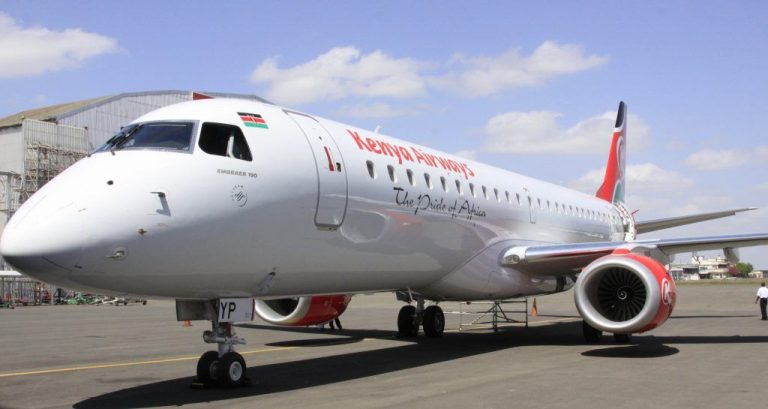
Kenya Airways operates a mixed fleet comprising aircraft suited to different markets. Its long-haul operations are primarily supported by wide-body Boeing 787 Dreamliners and Boeing 777s, while regional services are operated using Boeing 737s and Embraer E190 aircraft.

The disclosure comes as the airline faces continued financial pressure, with its net loss widening to Sh16.08 billion in the first six months of the current financial year.

The loss represented an increase of about Sh3.9 billion from the Sh12.2 billion loss recorded in the corresponding half-year period in 2025.

Kenya Airways’ operating loss also deteriorated during the period, rising to Sh10.64 billion from Sh6.24 billion previously.

Its earnings before interest, taxes, depreciation, amortisation and restructuring (EBITDAR) margin, a measure of underlying operational performance and profitability, fell to 8.4 per cent from 10.5 per cent.

The carrier attributed much of the weaker performance to rising operating expenses. Costs increased by 13.8 per cent to Sh91.9 billion, significantly outpacing the 9.1 per cent growth in revenue, which reached Sh81.3 billion.

The airline said revenue growth remained positive despite reduced capacity, but the faster increase in costs continued to weigh on its financial performance.

Cargo was among the areas that recorded stronger growth, with cargo revenue increasing by 17.5 per cent to Sh8.77 billion during the period.

Also Read: Kenya Airways flies into Sh16.1 billion half year net loss turbulence

Common job interview questions for graduates and how to answer them

Job interviews can be stressful, especially if it’s your first interview and you are trying hard to get the job opportunity.

However, a bit of practice and preparation can make you stand out in a crowd of candidates.

This means that you need to understand the kinds of questions you’ll likely be asked during a job interview so as to compose answers that best highlight your qualifications.

Simon Ingari, a Kenyan recruiter, shares some tips on how to answer some of the common interview questions.

Tell us about yourself

The interviewer is not interested in hearing stories; they simply expect to know your academic and professional achievements, your name and the institution you currently work for.

Take a minute to introduce yourself and state your recent academic qualification and your relevant experience (if any).

”My name is [Your Name], and I am a recent graduate of [University Name] with a Bachelor of Science in [Degree]. I am a highly motivated and adaptable individual with a passion for learning and growth.

I thrive in fast-paced environments and constantly look for ways to improve and take on new challenges.

In my previous role as a [Position Name] at [Company Name], I was responsible for [List of Responsibilities]. I have a proven track record of success in [List of Accomplishments].

I am excited to learn more about the [Position Name] position at [Company Name] and believe that my skills and experience would be a valuable asset to your team.”

Why do you think you are the best candidate?

The recruiter expects you to tell them about your professional achievements and the unique skills you possess that will add value to the organization.

If you are a Customer Care graduate, then you should tell them that you are a good listener and patient; these are the qualities the employer is looking for.

“I believe I am the best candidate for this customer care role because of my skills and experience, as well as my passion for helping others.

I have a strong academic background in customer care, and I have also gained valuable experience through my internships and volunteer work.

I am a good listener and I am patient, which are essential qualities for a customer care representative. I am also a team player and I am always willing to go the extra mile to help my colleagues and customers.

In addition to my customer care skills, I am also a highly motivated and adaptable individual. I am always willing to learn new things and I am always looking for ways to improve. I am also a quick learner and I am able to grasp new concepts quickly.

I am confident that I have the skills and experience necessary to be successful in this role, and I am eager to learn more about your company and how I can contribute to your team.

I am also passionate about helping others, and I believe that my customer care skills would be a valuable asset to your company.”

What are your weaknesses?

The question is not simple as it looks; most candidates go blank when they face this kind of question.

Take your time in explaining why you can’t leave the office before you complete a task. You can also inform them how you are quick to trust a person, which in most cases makes you a victim.

Perminus Wainaina: Why employers ignore Kenyan job seekers despite being qualified

For example, if you are interviewing for a customer care role, you might say that your weakness is that you are a perfectionist and that you sometimes have trouble letting go of tasks until you are absolutely sure that they are perfect.

You could then explain that you are working on this by setting deadlines for yourself and by delegating tasks to others when necessary.

Here are some other examples of weaknesses that you could mention in an interview:

Procrastination: “I sometimes procrastinate on tasks that I don’t enjoy, but I am working on this by setting deadlines for myself and by breaking down large tasks into smaller ones.”

Delegation: “I have difficulty delegating tasks to others, but I am working on this by learning to trust my colleagues and by giving them clear instructions.”

Communication: “I sometimes have difficulty communicating my ideas clearly, but I am working on this by practicing my communication skills with friends and family members.”

Organization: “I can be disorganized sometimes, but I am working on this by using to-do lists and by setting up systems to help me keep track of my work.”

Public speaking: “I get nervous when I have to speak in public, but I am working on this by taking public speaking classes and by practicing giving presentations to friends and family members.”

No matter what weakness you choose to mention, be sure to explain how you are working to improve it. This shows the interviewer that you are self-aware and that you are committed to personal growth.

What do you know about this company?

Before you enter the interview room, ensure that you go through the company website to read latest news, company profile, goals, management team, objectives, vision and mission; they will help you answer this question.

(where the company is unknown, do your research and be familiar with the business/industry you desire to build your career).

The question expects you to briefly describe what you read on their website and not what you imagine of the company.

Here is an example of how to answer the question “What do you know about our company?” for a customer care role at Google:

“I know that Google is a multinational technology company that specializes in Internet-related services and products.

It is one of the world’s most valuable companies, and it is known for its innovative products and services, such as the Google Search engine, the Android operating system, and the Google Cloud Platform.

I am also familiar with Google’s mission statement, which is to ‘organize the world’s information and make it universally accessible and useful.’

I believe that this mission statement is very important, and I am excited to learn more about how Google is working to achieve it.

I am particularly interested in working for Google because I am passionate about customer service. I believe that Google is a company that values its customers, and I am committed to providing them with the best possible experience.”

What is your salary expectation?

The question is tricky because as a fresh graduate you don’t have a clue what to be paid; simply ask them what they pay others of your level, if they fail to give a satisfactory answer then give them a reasonable range.

Ensure you do your research before you go to the interview room because you must be asked this question.

“I have researched salaries for similar positions in the area, and I have found that the average salary range is between Sh30,000 and Sh40,000 per month.

I am flexible on my salary expectations, but I would like to be compensated fairly for my skills and experience.”

Do you have any question to ask the panel?

This is usually the last question that the interview panel asks interviewees; if you fail to ask them questions, you will lose some marks, always have a question to ask no matter what.

Ask them whether they have plans to expand their business, whether they support employees to further their studies and how they motivate employees.

You can pull a surprise by asking when you would start, it shows confidence. Here are some questions you can ask the interviewer at the end of your interview:

– What are the biggest challenges facing your team right now?

– What opportunities are there for professional development and growth in this role?

– What is the company culture like?

– What are your expectations for the first 90 days in this role?

– What are the next steps in the hiring process?

You can also ask more specific questions about the company’s plans, products, or services. For example, you could ask:

– Do you have any plans to expand your business into new markets?

– Are there any new products or services in the pipeline?

– How do you measure success in this role?

Here is an example of how to ask the question “When would I start?” in a confident way:

“I am very excited about the opportunity to work at your company, and I am eager to learn more about the role. When would I start if I were offered the position?”

Also Read: Kenyan businesses remain optimistic amid rising costs and global risks

CBK July 2026 CEOs Survey: Kenyan businesses remain optimistic amid rising costs and global risks

0

Kenyan businesses remain cautiously optimistic about their growth prospects over the next 12 months despite rising operating costs, geopolitical tensions and uncertainty in the global economy, according to the Central Bank of Kenya (CBK) July 2026 CEOs Survey.

The survey, conducted between July 13 and 24, 2026, gathered views from chief executive officers on business confidence, economic prospects, financing, technology adoption, geopolitical risks and strategies for growth. The CBK conducts the CEOs Survey every two months ahead of Monetary Policy Committee meetings to capture private-sector perceptions of the business environment.

The findings point to a private sector facing significant cost pressures but continuing to identify expansion opportunities.

Businesses remain optimistic about growth

Despite heightened global risks, CEOs remained positive about Kenya’s growth prospects over the next 12 months.

Company-level growth prospects improved, supported by higher demand and orders, business expansion, market diversification, new product development, operational efficiency, government support, favourable weather and adoption of technology and innovation.

Average bank lending rate falls to 14.38pc as Citibank emerges cheapest lender

However, subdued demand, high operating costs, delayed tax refunds, financing constraints, raw-material shortages, supply-chain disruptions and global uncertainty remain major obstacles.

Most respondents expect sectoral growth to strengthen over the next year. Agriculture is expected to benefit from favourable weather, government support and export demand, while manufacturing could gain from stronger external demand and new markets. Financial services are expected to benefit from stable demand, fintech expansion, improved customer experience and new products.

Q2 business activity was mixed

Business activity in the second quarter of 2026 was mixed compared with the first quarter. CEOs reported stronger demand and orders, production volumes and sales as activity recovered from the post-festive-season slowdown.

The improvement was supported by better access to credit at lower lending rates, favourable rainfall, improved marketing, stronger demand in tourism, healthcare and construction, and increased government spending on infrastructure.

Nevertheless, higher fuel, energy and input costs, supply-chain disruptions and weaker consumer purchasing power continued to constrain businesses and put pressure on margins. Purchase prices generally increased while selling prices remained broadly stable in several sectors, limiting firms’ ability to pass higher costs to consumers. Employment remained largely unchanged.

Ecobank Kenya deepens commitment to empower SMEs through financial and non-financial support

Q3 outlook is broadly stable

CEOs expect business activity in the third quarter of 2026 to remain broadly stable, although many firms anticipate improvement compared with the May survey.

Expected drivers include higher demand, sales growth, increased production, peak tourism activity, agricultural harvests, production seasons, stronger marketing, business expansion and increased activity following government budget releases.

At the same time, high production and operating costs, weak consumer purchasing power, geopolitical tensions, commodity-price uncertainty and the high cost of living remain concerns.

Purchase prices are expected to remain elevated because of fuel, energy and raw-material costs. Although supply conditions are improving, companies have limited ability to increase selling prices because consumers remain price-sensitive. This could continue squeezing profit margins.

Most firms have spare capacity

A significant proportion of firms are operating below or near full capacity, meaning they could accommodate unexpected increases in demand.

Businesses cited idle capacity, additional work shifts, process optimisation, improved systems, available inventory and supplies, access to casual labour and better planning as factors that could enable them to scale production.

However, firms operating at or near capacity could face difficulties because of high costs, raw-material shortages, delivery delays, limited liquidity, expensive financing and shortages of specialised labour.

Inside Equity’s 2025 rise to most profitable bank in East and Central Africa

Geopolitical tensions remain a major risk

Geopolitical developments continue to pose risks to Kenyan businesses. CEOs expect trade tensions and policy changes to increase supply-chain pressures, import and shipping costs and production expenses.

They also identified potential effects on tourism, donor funding, foreign aid and consumer purchasing power. Conversely, de-escalation of tensions in the Middle East could reduce energy and freight costs and ease trade and supply-chain pressures.

71% of firms have adopted technology

Technology adoption has become a major component of business strategy. The survey found that 71 per cent of respondents had integrated automation, digitisation or technology into their operations, compared with 29 per cent that had not.

Firms are using automation, digital payments, cloud solutions, AI-enabled systems and integration with e-TIMS and other regulatory platforms to improve efficiency, customer service and cost management.

However, adoption is constrained by implementation and maintenance costs, skills gaps, integration challenges, rapid technological change, cybersecurity and data-privacy risks, network disruptions and uncertainty about returns on technology investment.

European Investment Bank partners with Central Bank of Kenya to unlock Climate Finance

Access to credit is improving

The majority of respondents reported moderate access to bank credit. Improved access was attributed to lower lending rates, digital loan processing, stronger bank-customer relationships and improved banking efficiency.

Specifically, 57.8 per cent described access to credit as moderate, while 15.7 per cent considered it easy and 5.9 per cent very easy. Meanwhile, 11.8 per cent described access as difficult and 8.8 per cent as very difficult.

Interest rates have also declined for some firms. Forty-six per cent of respondents reported lower bank-loan interest rates since August 2024, although some businesses said commercial lending rates remained sticky despite monetary policy easing.

The cost of doing business is the biggest challenge

The cost of doing business remains the leading domestic constraint on growth. Other challenges include increased taxation, regulatory issues, government policies, weak consumer demand, political uncertainty and supply-chain disruptions.

Externally, energy prices, geopolitical tensions and global macroeconomic volatility are among the principal threats because they can increase operating costs, disrupt supply chains, weaken demand and create inflationary pressures.

Policewoman conned Sh. 86k by man who promised her Central Bank job

Efficiency is becoming the priority

CEOs identified technological innovation, digitisation and automation as the leading drivers of firm growth, followed by customer centricity and improved operational efficiency.

Over the next three years, improved efficiency was the top strategic priority at 28 per cent, followed by sustainable business growth at 20 per cent, cost optimisation at 15 per cent, diversification at 14 percent and digital transformation at 7 per cent.

Businesses intend to respond to constraints primarily through managing costs and risks, adopting technology and innovation, and diversifying into new markets and products.

What businesses want from government

CEOs called for measures to reduce the cost of doing business, including lower levies, licensing and compliance costs, as well as reduced fuel, energy and input costs.

They also want greater tax and regulatory predictability, affordable financing for SMEs, reduced bureaucracy, timely settlement of pending government bills, stronger fiscal management, improved infrastructure and sustained public-private sector dialogue.

Do you know them? Career profile of CEOs of biggest Kenyan banks

Bottom line

The CBK July 2026 CEOs Survey portrays a private sector that remains optimistic but under pressure. Kenyan businesses see growth opportunities, yet high operating costs, weak purchasing power, geopolitical risks and global uncertainty continue to threaten margins.

The response from companies is increasingly centred on productivity: technology adoption, automation, efficiency, customer focus, diversification and better cost management.

For policymakers, the survey reinforces the importance of lowering the cost of doing business and creating a predictable regulatory and financing environment. For business leaders, it highlights a different imperative: growth must increasingly come from becoming more efficient, innovative and resilient.

Kenya’s ability to translate private-sector optimism into sustained investment, employment and economic growth will depend on how effectively businesses and policymakers address these constraints together.