

Home Blog Page 29

A Deposit Amount Matters: What To Know When You Top Up Your Non GamStop Casino Balance?

0

A deposit is an integral part of every player’s way to success in gambling. You can win real money without a deposit if you claim no deposit bonus, but you will still need to top up your balance and wager your cash prize for a stated number of times to finally withdraw it.

Therefore, there is no way to avoid a deposit when you join a Non GamStop casino and decide to play for real money, but players face one more important issue: how much to transfer? Many comparisons of best non gamstop casinos 10 deposit focus on finding platforms that offer an accessible starting point while still providing a wide selection of games and promotions. You can start with £10 or process a pretty sum immediately to make your fun of gambling longer. And the amount you choose for a deposit will have a direct impact on your casino experience. In what way, you may wonder? Let’s discover.

Psychological Impact

Every player has doubts about what deposit amount to process to play in an off GamStop casino. Experts advise starting with small sums, which are associated with less stress in case of losses and more cautious and insightful play based on strategy rather than emotions. A lower amount is also a guarantee of shorter playing sessions and less impressive winnings.

Making a more sizable deposit, some players face a false sense of security and dare to take bigger risks because of that. At the same time, large losses seem only a vision for some players and may later cause a serious depression and lead to impulsive decisions and actions when a player realizes the mistake done.

Choice Of Games & Winning Strategies

The amount of deposit has a very big influence on the choice of the game to play and a winning strategy to follow. When you top up an online casino outside GamStop with a tiny boost, you are likely to play low-stakes games with a high return to player. Low-deposit players also prefer more conservative strategies and don’t dare to risk everything they have.

How APIs are powering the next generation of online casino businesses

Highrollers aren’t limited when it comes to game variety, but they are more likely to hunt for jackpots and prefer high-volatility games where winnings happen less frequently, but their amounts are more impressive! Naturally, such non-GamStop casino players have a chance to test long-term strategies and apply the most effective ones.

Emotional State

Not every player has ever thought that the range of emotions they used to feel depended much on the deposit amount they made. If you transfer a small amount, you already understand that your gambling experience is limited, and it may cause some disappointment. However, even this amount is enough to experience more excitement per every new win, and the level of this joy can be compared with winning a jackpot as a high roller.

Players comparing none gamestop casino sites UK often consider how different deposit levels can influence both their playing style and overall gaming experience. Players who get around GamStop and don’t limit themselves in deposit limits are likely to suffer from emotional swings caused by winnings and losses. Such players can’t enjoy the thrill of winning fully and seem detached from the actual money value.

Time For Gambling

It seems predictable that the deposit amount is proportional to the time a player will spend in an online casino. Why do so many players want to process more money to their non-GamStop casino balances? Naturally, they want to enjoy gambling for a longer period of time and maximize their chances of winning impressive prizes.

However, large amounts also increase a player’s exposure to losses and fatigue caused by possible errors. At the same time, small deposits won’t guarantee hours of gambling if you place minimum bets, but they have one big benefit – they act as a natural stop-loss.

Risk Of Facing Gambling Problems

You may wonder how the deposit amount can influence the probability of gambling problems appearing, but there is a direct connection between these notions. When you have an opportunity to play with a pretty good sum of money, you immediately follow such great mistakes as chasing losses or feeling overly confident in your success. Naturally, you also have difficulty in stopping gambling until you run out of money on your off-GamStop casino balance, but sometimes you should do that much earlier.

Smaller deposits of £10 or around give more flexibility and benefit since you can easily maintain control over your expenses and treat gambling as a form of entertainment rather than a source of income.

Responsible Gambling

Many players forget that one of the major responsible gambling rules is setting the gambling budget limits and avoiding violating them. However, it isn’t the only thing to keep in mind when you decide to play responsibly in an online casino not on GamStop.

Players are recommended to follow the rule that the deposit size depends directly on disposable income. Experts emphasize that the best deposit amount is the one that you won’t regret losing, and it’s clear that it can’t be high!

All these ideas show that players of online casinos outside GamStop should remember about the necessity to make reasonable deposits and evaluate how their amounts influence their personalities and gambling experience. It will help to take control of the deposit process and make gambling a positive and regret-free experience!

How much teachers will earn as TSC implements new salary increases

0

Thousands of teachers across the country will begin earning higher salaries after the Teachers Service Commission (TSC) implemented the second phase of the 2025–2029 Collective Bargaining Agreement (CBA), introducing monthly salary increases of up to Sh2,055.

The revised salary structure took effect on July 1, 2026, and will remain in force until June 30, 2027.

The adjustments affect teachers across all job grades, with the amount of the increase varying depending on an officer’s grade and salary point.

In a circular dated July 16, TSC directed all regional, county and sub-county directors to immediately implement the revised salary scales agreed upon with the Kenya National Union of Teachers (KNUT), the Kenya Union of Post Primary Education Teachers (KUPPET) and the Kenya Union of Special Needs Education Teachers (KUSNET).

Under the new structure, teachers will retain their current job grades and designations but will transition to new salary points.

Those whose annual salary increment falls on July 1 will first receive their annual increment under the existing salary structure before moving to the revised scales.

“This Circular shall apply to all teachers in service as at July 1, 2026, except interns. This Circular is effective from 1st July, 2026 to 30 June, 2027,” reads the circular.

“Teachers converting into the new salary scales will retain their current incremental dates. However, where the incremental date falls on July 1, 2026, teachers will be granted their annual increment on the existing salary scales, then convert to the new salary points with effect from the same date.”

Teachers in Grades C2 and C3 are among the biggest beneficiaries of the review. Secondary Teacher I officers in Grade C3 will receive the highest monthly increase of Sh2,055, pushing their basic salary from Sh46,699 to Sh48,754.

On the other hand, Secondary Teacher II officers in Grade C2 will receive a monthly increment of Sh2,030, raising their basic salary from Sh39,070 to Sh41,100.

For school administrators, the revised salary scales also provide higher pay, although the increases are generally lower than those awarded to classroom teachers.

Headteachers and Deputy Headteachers in Grade D1 will also benefit from the revised salary structure, with their salaries adjusted upwards in line with the new scales.

Teachers in Grade D2, comprising Deputy Principals II and Senior Headteachers, will receive the smallest increase of Sh693, lifting their earnings from Sh93,190 to Sh93,883.

Principals and Deputy Principals I in Grade D3 will receive a monthly increment of Sh796. Under the new structure, they will earn between Sh107,634 and Sh131,405.

Senior Principals and Chief Curriculum Support Officers in Grade D4 will receive an increase of Sh887, bringing their salaries to between Sh120,016 and Sh148,480.

Chief Principals in Grade D5 will receive a monthly increase of Sh986, with their basic salary rising from Sh132,365 to Sh133,351.

TSC said the salary review does not affect teachers’ allowances, which will continue to be paid at the current rates.

The unchanged benefits include house allowance, hardship allowance, commuter allowance, baggage allowance, annual leave allowance and disability guide allowance, where applicable.

Also Read: Principals risk disciplinary action over unlawful school charges

NCBA Digital Personal Loan gives customers instant access to up to Sh1 million

Gone are the days when people had to borrow money from friends and relatives, visit bank branches to fill out lengthy paperwork or wait several days for a loan to be processed whenever an emergency struck.

Today, an unexpected medical bill, urgent school fees, a car repair or a business opportunity no longer has to disrupt your plans.

With digital banking transforming access to credit, customers can now secure financing within minutes without leaving their homes.

This is the convenience that NCBA Bank is delivering through its Digital Personal Loan, an unsecured facility that allows eligible customers to borrow instantly through the NCBA NOW App or via USSD *488#, with the money credited directly to their NCBA current account.

Unlike traditional loans that often require collateral and multiple visits to a branch, the digital personal loan is designed to eliminate paperwork while providing quick access to funds whenever they are needed most.

Customers can borrow from as little as Sh1,000 up to Sh1 million, depending on their approved limit, making the facility suitable for both small financial emergencies and larger planned expenses.

The loan comes with flexible repayment periods ranging from three to 12 months, allowing borrowers to choose a repayment schedule that best matches their financial situation.

One of the biggest attractions of the facility is that no security or collateral is required. Once an application is approved, the funds are transferred instantly into the customer’s NCBA account, enabling immediate access.

Who is eligible?

The loan is available to customers with an active NCBA personal current account who have maintained at least six months of consistent account activity and have a good credit history.

NCBA determines an individual’s borrowing limit based on factors such as account activity, banking behaviour and credit performance.

Customers with a healthy credit record may also qualify for periodic limit reviews, giving them access to higher borrowing amounts over time.

The bank notes that customers with poor credit standing or prolonged loan arrears may have their borrowing limits reduced or temporarily suspended until their accounts are regularised.

How to apply

To get started, customers are required to simply log into the NCBA NOW App, select NOW Loans, choose the desired loan amount and preferred repayment period, then submit the application.

Once approved, the money is deposited directly into their NCBA account. Borrowers also have the flexibility to select a repayment date that aligns with their salary or income cycle, provided the first instalment falls within 45 days from the date of application.

For customers seeking a smaller, short-term facility, NCBA also offers a Mobile Loan ranging from Sh2,000 to Sh70,000, repayable within one month.

Customers can conveniently monitor their outstanding balance through the NCBA NOW App under the personal loan menu.

Loan limits are reviewed periodically based on account performance and credit behaviour, giving financially disciplined customers the opportunity to access larger facilities over time.

To continue enjoying the service, borrowers are encouraged to maintain good banking habits, make repayments on time and preserve a positive Credit Reference Bureau (CRB) record.

Also Read: NCBA Insurance bets on marine cover as Kenya’s trade sector expands

Kamilisha overdraft: How you can access Sh100,000 instantly

Undoubtedly, everyone has occasionally found themselves a few shillings short when making important payments, like settling utility bills, paying suppliers or transferring money.

In such moments, people are forced to delay payments or look for alternative sources of cash. Traditionally, many people have relied on borrowing from friends and relatives, postponing transactions until their next salary or business income, or even making repeated deposits into their accounts before completing a payment.

While these options may work, they can be inconvenient, time-consuming and, in some cases, strain personal relationships.

The rapid growth of digital banking has transformed how customers manage their finances, making it possible to access banking services anytime and anywhere through mobile applications.

Banks are increasingly introducing solutions that ensure customers can complete transactions seamlessly, even when they encounter temporary cash flow constraints.

A good example of such products is the Kamilisha overdraft offered by the Co-operative Bank of Kenya.

Kamilisha, a short-term overdraft facility, is designed to help eligible customers complete transactions when they do not have sufficient funds in their accounts.

Available through the Co-op Bank App, the facility enables customers to proceed with bill payments or fund transfers without having to postpone important transactions because of a temporary shortage of money.

The product automatically tops up the amount required to complete eligible transactions, including bill payments and fund transfers initiated through the mobile banking application.

Eligible customers can access loan amounts ranging from Sh1 to Sh100,000, depending on their approved limit. The overdraft is repayable within a maximum period of 30 days, making it suitable for customers facing temporary liquidity constraints.

Kamilisha is available to both salaried and business customers who hold the appropriate accounts with Co-operative Bank.

To qualify for the facility, customers must have either a salary account or a business account with the bank. They are also required to register for and use the Co-op Bank App, through which the overdraft service is accessed.

Customers must first opt into the service before they can use it. This can be done by dialling *667# or *557#, selecting the E-loans option, then choosing Opt-in and confirming the request. Once activated, the approved loan limit is assigned to the customer and is refreshed every 30 days.

Those who no longer wish to use the facility can opt out by dialling *667# or *557#, selecting E-loans, choosing Opt-out, and confirming the request.

Also Read: Features of Co-op Bank’s premium account for executives and business leaders

Equity online simplifies payments, cashflow management for SMEs and farmers

Demand for fast, secure, and convenient digital financial services is rapidly reshaping the banking sector, as businesses increasingly seek solutions that enable them to manage cash flows, execute payments, and monitor accounts in real time.

With the rise of mobile banking, automated payments and integrated digital platforms, businesses are now prioritising banking tools that support efficiency, transparency and informed decision-making.

It is within this changing landscape that Equity Bank launched Equity Online for Business, a modern digital banking platform designed to transform how SMEs and agribusinesses manage their financial operations.

The platform enables business owners to access a complete view of their accounts in real time, allowing them to monitor balances, track transactions and download account statements whenever needed.

This gives entrepreneurs greater visibility over their finances, helping them plan expenditures, manage working capital and make informed business decisions.

For farmers and agribusinesses, timely payments are critical to maintaining smooth operations. Equity Online for Business allows users to pay suppliers, purchase farm inputs, settle transport costs and transfer funds between accounts without visiting a banking hall.

Businesses can also send money to other banks, make international transfers and pay directly to mobile money platforms, making transactions faster and more convenient.

The solution further simplifies compliance by enabling businesses to make statutory payments such as taxes, as well as utility bill payments, directly through the platform.

This helps enterprises avoid late payment penalties while reducing the administrative burden associated with manual processing.

For SMEs with growing workforces, the platform supports bulk payments, allowing businesses to process salaries, supplier payments and multiple tax or bill payments in a single transaction.

This not only improves efficiency but also minimises errors that may occur when handling numerous individual payments.

One of the platform’s key features is its transaction approval capability. Business owners and authorised managers can review and approve payments remotely, ensuring financial controls remain intact even when decision-makers are away from the office or business premises.

Equity Online for Business also helps enterprises strengthen cash flow management through real-time account monitoring and downloadable financial statements.

With instant access to transaction history and account activity, businesses can easily reconcile accounts, monitor incoming and outgoing funds, and identify financial trends that support better planning.

Beyond day-to-day banking, the platform provides access to financing and investment services. Customers can apply for loans, monitor repayment schedules and service existing credit facilities online.

They can also open and manage fixed or call deposit accounts, enabling businesses to optimise surplus funds while planning for future investments and expansion.

Larger organisations requiring automated financial processes can integrate their internal systems directly with the bank through host-to-host connectivity and API banking.

How to get started with Equity Online for Business

Equity Online for Business is accessible both through the web and a mobile application. The bank notes that the updated platform comes with a modernised look and feel, improved system performance and smoother connectivity to support daily business operations.

The service is available 24/7, including weekends and holidays, offering businesses uninterrupted access to banking services regardless of operating hours.

With real-time statements and analytics, organisations can make timely decisions based on up-to-date financial data.

The service targets a wide range of users within organisations, from top decision-makers such as business owners, CEOs, CFOs, finance managers, and corporate treasurers, to operational users including cashiers, accountants, and bursars.

Also Read: AfricaNenda supported by Gates Foundation partner with Equity Group

Principals risk disciplinary action over unlawful school charges

0

The Ministry of Education has cautioned school administrators against imposing unauthorised levies on parents, warning that principals found flouting government regulations will face disciplinary action.

Education Cabinet Secretary Migos Ogamba said schools must not introduce new charges without following the laid-down approval process, which requires the consent of parents and clearance from the Ministry of Education.

Speaking during Education Day celebrations at Mbiriri Comprehensive School in Kieni, Nyeri County, Ogamba said the ministry had already initiated disciplinary measures against several principals accused of imposing illegal levies.

“Where that happens, and it is brought to our attention, we are now taking action against the principals. Unless the levy has been approved, gone through the required process, accepted by parents and cleared under ministry protocols, it should not be charged,” he said.

The CS acknowledged that schools may require additional resources to finance development projects, but emphasised that any proposed contributions must first receive approval through the established procedures before parents can be asked to pay.

The directive comes amid growing concern over reports that some schools have been introducing extra charges outside the government’s approved fee structure, placing an additional financial burden on households.

Ogamba also called on school heads to prioritise dialogue with learners to address the underlying issues contributing to the recent cases of student unrest reported in several schools across the country.

He said fostering open communication between school administrators and students would help resolve grievances before they escalate into unrest, urging education managers to adopt consultative approaches that promote a conducive learning environment.

Also Read: First phase of smart board rollout to benefit 10,382 Junior Secondary Schools

NCBA Insurance bets on marine cover as Kenya’s trade sector expands

0

NCBA Insurance has reaffirmed its commitment to strengthening partnerships with insurance intermediaries as it champions greater awareness and adoption of marine insurance solutions amid growth in Kenya’s trade and maritime sectors.

Speaking during a broker engagement, NCBA Insurance Chief Executive Officer and Managing Director, Stella Njung’e, underscored the critical role that agents, brokers and bancassurance partners play in connecting customers to relevant insurance solutions, expanding insurance penetration and supporting the company’s growth.

“At NCBA Insurance, we are banking on belief. Belief in our people, our partners, and above all, belief in our intermediaries. Every day, you are the face of our business. You build relationships, earn customer confidence and help individuals and businesses make informed decisions about protecting what matters most. We do not take that responsibility or your contribution for granted,” said Stella Njung’e, MD & CEO NCBA Insurance.

She noted that the Coast region remains one of Kenya’s most strategic growth markets, driven by expanding tourism, logistics, trade, infrastructure development and the blue economy. These sectors continue to create new and evolving insurance needs, presenting intermediaries with opportunities to deliver solutions that protect businesses while supporting economic growth.

According to the Kenya National Bureau of Statistics (KNBS), Kenya imports goods worth more than KES 2.5 trillion annually, highlighting the growing need for marine insurance solutions that protect cargo and goods in transit. As Kenya’s principal gateway for international trade, the Coast region remains central to these trade flows. Recent regulatory reforms, including the rollout of a digital marine cargo insurance framework are strengthening compliance while creating new opportunities for insurance intermediaries to support importers, exporters and logistics providers.

NCBA, ePure motion partner to boost electric vehicle financing in Kenya

During the forum, held under the theme “Stronger Together: Building Tomorrow’s Partnerships,” Stella identified marine insurance as one of the key growth areas for both NCBA Insurance and its intermediary partners, noting that the company’s comprehensive solutions protect cargo, goods in transit, vessels and other maritime risks across the supply chain.

“As Kenya strengthens its maritime regulatory framework and places greater emphasis on compliance within the shipping and logistics sector, businesses are increasingly recognising the importance of comprehensive marine insurance protection. NCBA Insurance is well positioned to support importers, exporters, logistics providers and businesses operating within the blue economy through tailored marine insurance solutions that protect cargo, goods in transit and other maritime risks,” she added.

The engagement forms part of NCBA Insurance’s ongoing commitment to strengthening collaboration with its intermediary network through continuous engagement, knowledge sharing and investment in innovative insurance solutions. It also reflects the company’s focus on equipping partners with the expertise, products and support required to unlock new business opportunities while delivering greater value to customers.

As NCBA Insurance continues executing its growth strategy, the company remains focused on working closely with its intermediary network to increase insurance penetration, support Kenya’s growing maritime and logistics sectors, and build a stronger, more resilient insurance industry.

Kenya Airways restores Boeing 777 to London route, boosting capacity and global connectivity

0

Kenya Airways today restored its Boeing 777-300ER to the Nairobi–London Heathrow route, strengthening capacity on one of its busiest international services and marking an important milestone in the airline’s long-term growth and recovery strategy.

The aircraft, which begins daily operations between Nairobi and London from today, will increase passenger and cargo capacity while improving operational flexibility on a route that remains one of Kenya Airways’ most strategically important international connections.

Acting Group Managing Director and Chief Executive Officer Captain George Kamal said the return of the Boeing 777 reflects the airline’s commitment to building a stronger, more competitive and future-ready business.

“This is more than the introduction of an aircraft,” said Captain Kamal. “It reflects our continued commitment to building a stronger, more competitive and future-ready airline while connecting Africa to the world through reliable, efficient and world-class operations.”

Captain Kamal said the aircraft forms part of Kenya Airways’ broader fleet strategy to deploy the right aircraft on the right routes, improving efficiency, enhancing the customer experience and supporting sustainable long-term growth.

Cabinet Secretary for Roads and Transport Hon. Davis Chirchir said the aircraft’s return demonstrates Kenya’s commitment to strengthening its national carrier and the country’s aviation sector.

Pain of grounded Kenya Airways Embraer jets, Boeing Dreamliners

“The return of this Boeing 777 is a clear signal of resilience, recovery and renewed commercial ambition,” he said. “It provides immediate capacity where it is needed most, allowing Kenya Airways to meet growing passenger demand, expand cargo volumes and operate a more flexible and reliable schedule.”

The aircraft also supports Kenya Airways’ ambition to strengthen Nairobi’s position as a leading aviation hub by improving connectivity between Africa, the United Kingdom and the airline’s wider global network.

Chief Commercial and Customer Officer Julius Thairu said the aircraft will provide customers with greater choice and flexibility while supporting businesses that rely on Kenya Airways’ cargo network.

“Every flight is a bridge connecting families, businesses, opportunities and markets,” he said. “By strengthening our fleet, we are delivering greater reliability, more choice and stronger connectivity for our customers.”

The restoration of the Boeing 777 to the London route forms part of Kenya Airways’ continued investment in modernising its fleet and positioning the airline for sustainable growth as demand for international travel continues to recover.

US introduces sweeping changes to student visas, caps stay at four years

0

The United States has overhauled its student visa framework, ending a long-standing policy that allowed international students to remain in the country for as long as they maintained their academic status.

The U.S. Department of Homeland Security (DHS) announced on Thursday, July 16, that it had adopted a final rule replacing the nearly five-decade-old “duration of status” system with fixed admission periods and enhanced federal oversight for non-immigrant students, exchange visitors and foreign media representatives.

The changes are aimed at tightening immigration controls and addressing what U.S. authorities describe as widespread misuse of the student visa programme.

“For decades, foreign students have been admitted into the U.S. indefinitely, allowing thousands to abuse our immigration system by perpetually enrolling in courses to avoid having to leave the U.S.,” DHS Secretary Markwayne Mullin said.

“By implementing clear, finite limits on these visas, the United States is reclaiming its ability to properly screen, vet, and monitor individuals within our borders. This final rule ensures that foreign students remain focused on their primary purpose: completing their studies and returning home.”

Under the new regulations, holders of F student visas and J exchange visitor visas will be admitted for the length of their academic programme, subject to a maximum stay of four years.

The move marks the end of the “duration of status” policy, which has been in place since 1978 and allowed international students to remain in the United States indefinitely provided they continued to meet the conditions of their visas through their educational institutions.

Students who need additional time to complete their studies will no longer receive automatic extensions through their schools. Instead, they will be required to apply directly to the U.S. Citizenship and Immigration Services (USCIS) for an Extension of Stay (EOS).

According to DHS, all extension requests will be subjected to biometric screening, background checks and fraud assessments before a decision is made.

The department said the revised process restores federal authority over visa extensions, shifting responsibility away from academic institutions.

The changes also reduce the period students can remain in the United States after completing their studies.

While F-1 visa holders previously had 60 days to leave the country, transfer to another institution or seek a change of immigration status, the grace period has now been cut to 30 days.

In addition, DHS has introduced tighter restrictions on students seeking to change their academic programmes while studying in the United States.

The new policy will apply not only to future applicants but also to international students currently in the country under the previous “duration of status” arrangement.

DHS said those students will automatically transition to the new framework, with their authorised stay limited to a maximum of four years from the date the rule takes effect.

The final rule is expected to be published in the Federal Register in the coming days and will become effective 60 days after publication.

Also Read: U.S Supreme Court upholds birthright citizenship in historic ruling

Kenya takes major step towards awareness of Neurological Conditions

0

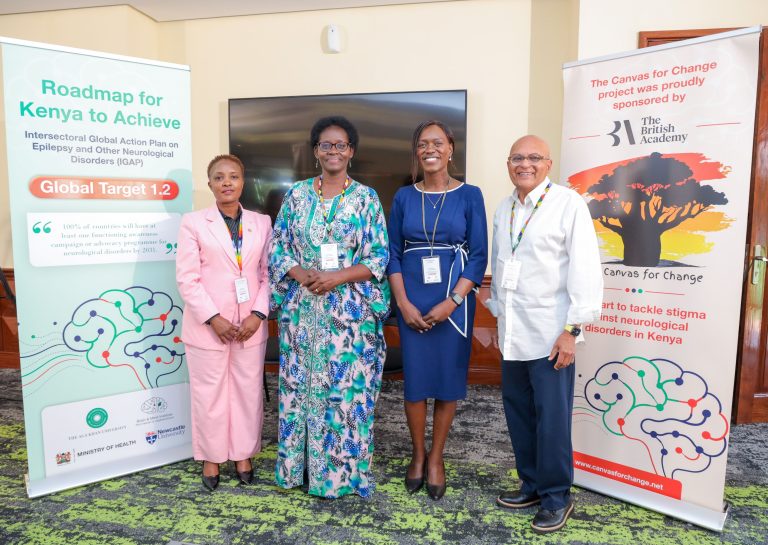
Neurological Conditions: Aga Khan University’s Brain and Mind Institute (BMI) and Newcastle University, in partnership with the Ministry of Health, begin development of a national roadmap to tackle stigma surrounding neurological conditions such as epilepsy, Parkinson’s disease and other neurological disorders.

The policy is expected to improve access to care and support for millions of people living with neurological conditions. Recent studies show that up to 9% of Kenyan children experience neurodevelopmental disorders, while epilepsy alone accounts for nearly 40% of neurological DALYs in rural populations. The initiative brings together policymakers, researchers, healthcare professionals, advocacy organisations, caregivers and people with lived experience to co-develop a shared roadmap that will guide efforts to reduce stigma around neurological conditions.

This is in line with Kenya’s efforts to implement the World Health Organization’s Intersectoral Global Action Plan (IGAP) on Epilepsy and Other Neurological Disorders, which calls on countries to establish national awareness and advocacy programmes by 2031.

Ministry of Health Emphasises Stigma Reduction as a Health Priority

Ministry of Health Director of the Division of Mental Health, Dr Mercy Karanja, said reducing stigma is fundamental to improving brain health in Kenya because fear of judgement often prevents people from accessing the care and support they need.

New study reveals high burden of PTSD in Kenya and opens genetic insights into trauma

“The Ministry of Health remains unwavering in its commitment to ensuring that every citizen, including those living with mental, neurological, and substance use (MNS) disorders, receives the quality care they deserve. This is not just a health policy goal; it is a constitutional right under Article 43(1)(a) of our Constitution (2010). The creation of this roadmap encourages multisectoral collaboration, which is our only viable path toward ensuring people living with neurological conditions are understood, supported and able to access the care they need,” she said.

Canvas for Change Research Shapes National Policy

The roadmap builds on findings from the British Academy-funded Canvas for Change project, led by Aga Khan University’s Brain and Mind Institute in collaboration with Newcastle University. The project used participatory theatre, documentary storytelling and community dialogue to understand how stigma affects people living with neurological conditions across Kenya. These findings will help identify priority actions, define stakeholder responsibilities and provide a coordinated approach to improving awareness and inclusion across Kenya.

Neurological conditions are among the leading causes of disability worldwide, yet stigma remains one of the greatest barriers to early diagnosis, treatment and social inclusion. Many people continue to delay seeking care because of discrimination, myths and fear of being ostracised, making stigma reduction a critical public health priority.

H. pylori: Silent infection that can lead to stomach cancer

Researchers Call for Evidence-Based Policy Action

Aga Khan University Brain and Mind Institute Director Prof. Merali noted that bringing together researchers, government, healthcare professionals, communities and people with lived experience creates the best opportunity for evidence to influence decisions that improve lives.

“Research should not end in academic journals. Its greatest value is realised when it informs policy and improves people’s lives,” he said.

Since 2024, the Ministry of Health has led a series of national consultations under the World Health Organisation’s Intersectoral Global Action Plan (IGAP) on Epilepsy and Other Neurological Disorders. Rather than starting a new conversation, the Naivasha meeting builds on priorities identified through those consultations. It combines them with fresh evidence from the Canvas for Change project to develop a practical roadmap for implementation.

“The stories we heard showed us that stigma can be as limiting as the condition itself. Seeing those experiences shape national policy is exactly what this project set out to achieve,” said Aga Khan University Brain and Mind Institute Implementation Scientist and Canvas for Change Principal Investigator Dr Mary Bitta.

Stakeholders Set Priorities for National Implementation

Over the course of the meeting, participants are expected to agree on the roadmap’s key priorities and establish the partnerships needed to drive implementation after reviewing the findings from the Canvas for Change study and hearing from the different stakeholders present.