
Home Blog Page 34

KRA to introduce web-based tax return filing as Excel forms are phased out

0

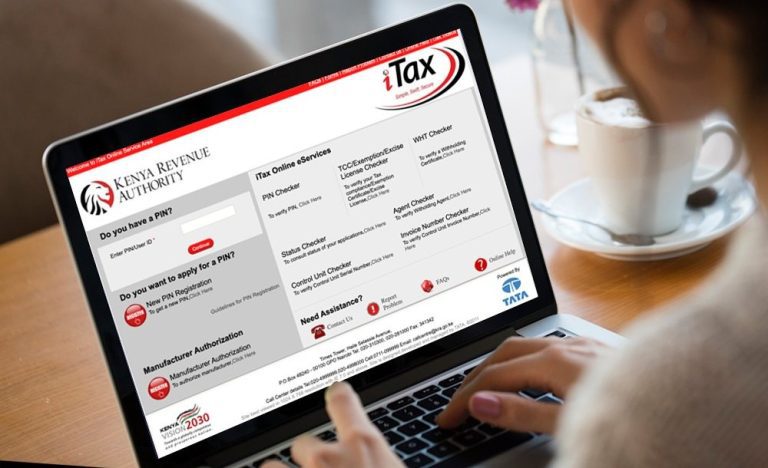
The Kenya Revenue Authority (KRA) has announced plans to replace its long-used Excel-based income tax return filing system with a fully web-based platform from 2027, marking a significant shift in how taxpayers submit annual returns.

The transition forms part of reforms introduced under the Finance Act, 2026, and is aimed at modernising tax administration while supporting a new staggered tax return filing calendar designed to ease pressure on the authority’s online systems.

Under the new platform, taxpayers will complete and submit their returns directly through an internet browser, eliminating the need to download, fill and upload Excel spreadsheets as is currently required.

KRA said the digital upgrade complements amendments to Section 52 of the Income Tax Act, which introduce different filing deadlines for various categories of taxpayers to reduce congestion on the iTax system.

“We have staggered returns in the Act so that the individual returns will be due by April and the persons, the non-natural persons will be due by June. That makes then the traffic not coming at the same time. And are we transferring the problem we had in June to April? No, because most of the filers are individuals,” KRA stated.

The tax authority said the reforms are expected to improve the efficiency and reliability of tax return processing by distributing filing activity across multiple deadlines rather than concentrating it within a single period.

“The first thing is we’re introducing web-based returns and these returns we’re not going to have to require you to fill the Excel anymore. It will be web-based,” KRA added.

Under the revised filing calendar, natural persons, including salaried employees whose income is taxed through the Pay As You Earn (PAYE) system, will be required to submit their annual income tax returns by April 30 following the end of their year of income.

Companies and other non-natural persons will have until June 30 to file their annual returns.

Meanwhile, taxpayers required to submit nil returns, including unemployed individuals, students, inactive Personal Identification Number (PIN) holders and those with no taxable income, will be expected to file by January 31.

The revised deadlines will take effect for returns relating to the 2026 year of income, with the first filings under the new timetable scheduled for 2027.

According to KRA, the staggered filing schedule is expected to significantly reduce the system congestion that has traditionally occurred when all taxpayers rushed to meet a single filing deadline, with the web-based filing platform set to streamline the return submission process and enhance taxpayers’ experience.

Also Read: Ex-EPRA boss Daniel Kiptoo stripped, tortured us over Sh96 million

Ochieng: I started furniture business with Sh7k, now I make up to Sh10k daily

0

Every successful business begins with a single opportunity. For William Ochieng, that opportunity came with little more than determination, practical skills and a commitment to start small.

Today, his furniture workshop in Kericho has grown into a flourishing enterprise employing several young people and serving a steadily expanding customer base.

The rhythmic sound of woodworking tools and sewing machines echoes through his workshop as artisans assemble sofa sets, beds, cupboards and customised furniture for clients.

Behind the thriving business lies a carefully planned journey built on discipline, patience and an unwavering belief in the value of craftsmanship.

Ochieng’s entrepreneurial journey began after his release from prison towards the end of 2024. Although he had acquired extensive vocational skills in joinery, carpentry, upholstery, tailoring and architectural design while incarcerated, freedom presented an entirely different challenge.

With limited employment opportunities and no capital to launch a business, he knew he had to begin wherever an opportunity emerged.

Rather than waiting for ideal circumstances, he secured employment with an established furniture maker in Kericho.

The work involved cutting timber, assembling furniture frames, stitching upholstery and learning the commercial side of the furniture industry.

While the wages were modest, the experience proved invaluable in sharpening his technical skills and understanding customer preferences.

His first earnings was Sh6,000 from furniture work and an additional Sh700 from upholstery stitching.

Instead of spending the money, Ochieng made a deliberate decision to save every shilling, viewing the income as seed capital for a future enterprise rather than immediate consumption.

The turning point came when two customers entrusted him with an order for a seven-seater sofa set worth Sh6,000.

Delivering the project successfully boosted his confidence and convinced him that he could operate independently.

Encouraged by the customers’ trust, he continued saving until he accumulated Sh7,000, enough to establish a small furniture workshop.

What started as a modest operation has since developed into a growing business serving clients across Kericho and neighbouring areas.

Today, Ochieng’s workshop produces an extensive range of furniture, including sofa sets, beds, cupboards and tailor-made pieces designed to suit individual customer specifications.

His reputation has steadily grown through referrals, with clients returning for quality workmanship and customised designs that distinguish his products from mass-produced alternatives.

A key driver of the business’s growth has been his ability to offer multiple services under one roof.

Unlike many furniture makers who specialise only in carpentry, Ochieng personally undertakes upholstery, stitching and interior finishing.

The business has also become a source of employment as he currently employs five workers, including skilled artisans and trainees undergoing industrial attachment.

Beyond creating jobs, he invests time in mentoring young people interested in furniture making, convinced that vocational skills offer a practical solution to unemployment.

“There is work everywhere if people are willing to learn,” he told KNA. “The problem is that many people want quick money before understanding the value of hard work.”

At least two trainees have already completed their training and moved on to pursue opportunities of their own.

Financially, the workshop continues to record steady returns despite fluctuations in customer demand. On productive days, the business generates between Sh5,000 and Sh10,000.

A single cupboard can earn about Sh3,000 in profit, while customised sofa sets attract higher returns depending on their design and materials.

Standard sofa sets retail for between Sh10,000 and Sh15,000, with premium designs selling for more than Sh20,000.

Ochieng attributes much of his success to a willingness to embrace even the smallest jobs. He believes consistent income comes from completing every assignment professionally, regardless of its value, because small projects gradually build both capital and customer trust.

Innovation has also enabled him to carve out a unique niche in the competitive furniture market. His workshop designs customised furniture inspired by football clubs, producing sofas upholstered in team colours and personalised to reflect customers’ favourite clubs.

The concept has become increasingly popular among football enthusiasts seeking furniture that mirrors their passion while giving his business a distinctive identity in the local market.

Looking ahead, Ochieng plans to expand beyond furniture manufacturing into construction and interior design by leveraging the architectural knowledge he acquired through vocational training.

His long-term ambition is to build a company capable of offering comprehensive construction, furnishing and interior solutions while creating more employment opportunities for young artisans.

Also Read: Kenya’s Top Startups & MSMEs Set to Compete at the GEC+ Africa Kenya Regional Pitch Competition

KUCCPS placement results: Step-by-step guide on how to apply for transfers

0

Students placed in universities and colleges through the Kenya Universities and Colleges Central Placement Service (KUCCPS) will have an opportunity to change their institutions or academic programmes once the 2026 inter-university and inter-institutional transfer window is opened.

This follows the completion of the placement of 2025 Kenya Certificate of Secondary Education (KCSE) candidates to universities and tertiary institutions by KUCCPS.

The transfer exercise allows students who are not satisfied with their placement to apply for a different institution, a different course, or both.

However, approval depends on whether they meet the academic requirements for the new programme and whether the institution has available spaces.

In a move aimed at giving students more time to make informed decisions, Education Cabinet Secretary Julius Ogamba announced that the transfer period has been extended from the previous two weeks to one month.

The extension is expected to allow applicants adequate time to review their placements, consult with their families and institutions, and complete the transfer process.

Requirement for inter-university transfer applications

Applicants wishing to change institution or programme must meet the minimum entry requirements, including the subject cluster requirements and cut-off points for the programme they intend to join.

In addition, the receiving institution must have available capacity before a transfer can be approved.

Eligibility is limited to students who were successfully placed by KUCCPS in universities, Technical and Vocational Education and Training (TVET) institutions or other recognised higher learning institutions.

During the application process, students may only apply for one preferred institution and one programme at a time.

Applicants are also required to provide a valid reason for seeking the transfer. Depending on the circumstances, KUCCPS or the receiving institution may request supporting documents to verify the grounds for the application.

How to apply for transfer

The entire transfer application is conducted online through the KUCCPS Student Portal. Applicants are required to log in to the portal using their KCSE index number and examination year before accessing the transfer section.

Once logged in, students should select their preferred institution and programme, ensuring they enter the correct programme code and confirm that they meet all admission requirements before submitting the application.

A non-refundable transfer processing fee of Sh1,000 is payable through the KUCCPS portal via eCitizen. The application proceeds for processing only after a successful payment has been confirmed.

Following submission, the request undergoes several stages of review. The institution the student wishes to join first determines whether it has sufficient capacity and whether the applicant qualifies for admission.

The institution where the student was initially placed then considers the request to release the student.

KUCCPS conducts the final assessment before communicating whether the transfer has been approved or rejected.

Also Read: KUCCPS releases 2025 university placement results

Ex-EPRA boss Daniel Kiptoo stripped, tortured us over Sh96 million

0
Four workers who were employed at Tarita Group Ltd in Eldoret have made police reports that they were stripped and beaten by ex-EPRA boss Daniel Kiptoo. The beating is said to have taken place at the company’s offices in Eldoret.

These offices are located on the fifth floor of the Tarita Centre. According to a report that appeared in the Daily Nation newspaper on Thursday July 9, 2027, the company is associated with Kiptoo, who accused the four of misappropriating Sh96 million. The beating is claimed to have occurred in late June 2027.

Apparently, the four had been summoned to the offices for bookkeeping and auditing in a meeting that lasted throughout the day on June 27.

Police reports quoted by the daily further claim that the four individuals were stripped beaten and forced to surrender millions of shillings and properties to Tarita Group in exchange for their freedom.

The police report is also quoted as stating that “the meeting went on up to 2100hrs where it was established that a sum of Sh96,000,000 was missing.”

The four victims reported to the police that four well-built men were ushered into the offices and instructed to deal with them! They were stripped naked and beaten, and forced to reveal the amount of money and wealth that they owned.

READ MORE: Private company making billions from SHA exposed

The report in the daily newspaper claimed that it had possessed a signed ‘deed of settlement, asset transfer undertaking and continuity support agreement’ between one of the four individuals and Tarita Group. This document is dated June 28, 2027, the newspaper reported.

The report further claimed that the company was eying a two-acre piece of land, three plots and a commercial hub from one of the four victims in a bid to recoup the money that was allegedly lost.

According to the report in the newspaper, the four individuals were tortured through the night into Sunday June 28 when one of them managed to alert his spouse to track them with the police and a lawyer. This communication, the newspaper reported, had been done under the pretext of contacting spouses who would come and give their signatures for the transfer of the title deeds that had been demanded by the company to be effected.

The police eventually managed to track and answer the victims’ distress calls. In the rescue process, the police arrested six suspects who were identified as Alfred Too, Edwine Gichia, Everline Choge, Joseph Njuguna, Stephen Ngigi and Martin Kamau.

The newspaper report quoted Turbo Sub-County Police Commander Patrick Wekesa saying that investigations into the incident were moving at a snail pace because of external pressures to have the incident settled out of court.

The newspaper stated that it had attempted to reach out to Daniel Kiptoo in vain.

Roja and Reds to colour Los Angeles

0

Everything can wait! Spain and Belgium will meet in the second Quarterfinal at the 2026 FIFA World Cup, set for the Los Angeles Stadium on Friday evening. La Roja overcame a major hurdle in the previous round, edging past Iberian rivals Portugal, and they face another stiff challenge in the shape of the Red Devils, who ended the dreams of co-hosts USA. Here’s the breakdown as Spain and Belgium head to the ‘City of Angels’.

Head-to-head

Matches played 23

Spain wins 12

Belgium wins 6

Draws 5

Spain goals 50

Belgium goals 27

Spain and Belgium have met in 23 previous matches, with La Roja claiming 12 wins compared to six for the Red Devils, while five games have been drawn. The teams have met twice in World Cup history: in the 1986 quarterfinals, Belgium won 5-6 on penalties after a 1-1, while a 1990 group stage clash saw Spain triumph 2-1.

Players to watch

Spain – Mikel Oyarzabal

Tournament stats

– Appearances: 5

– Goals: 4

– Assists: 1

– Yellow/red cards: 0/0

Mikel Oyarzabal was not considered among Spain’s most prominent and dangerous players prior to the World Cup, but a return of four goals and one assist from five appearances has marked him out as one to watch for this quarterfinal.

Goals, red cards, and live music: The 2026 world cup officially begins!

Belgium – Charles De Ketelaere

Tournament stats

– Appearances: 4

– Goals: 2

– Assists: 1

– Yellow/red cards: 0/0

Romelu Lukaku is Belgium’s all-time top scorer, but he is being kept on the bench by Charles De Ketelaere, whose selfless play was rewarded with two well-taken goals against the United States in the round of 16 – form he will look to continue against Spain.

Key stats

– 0 – Spain have yet to concede a single goal at the 2026 World Cup.

– 10.5 – Belgium have an xG (expected goals) of 10.5 at the tournament – a number bettered only by Brazil and France.

– 598 – Spain have averaged 598 accurate passes per match, second only to Argentina (629).

– 6 – Belgium have averaged 6 accurate crosses per match – a number bettered only by Canada (7.4) and Uruguay (7).

Tactical battle

Luis de la Fuente’s Spain will impose a 4-3-3 built on control, high pressing and positional rotations, with Rodri anchoring and wide threats like Lamine Yamal stretching play. Their defensive solidity (five straight clean sheets at the tournament) allows aggressive territorial dominance.

Rudi Garcia’s Belgium are more flexible, alternating between 4-2-3-1 and 3-4-2-1, seeking vertical transitions through Leandro Trossard and Charles De Ketelaere.

The key battle is Spain’s structured possession versus Belgium’s transitional efficiency: if Spain break Belgium’s shape, they control the game; if Belgium exploit spaces in transition, they can punish Spain’s high line.

Broadcast details

All Times CAT

Friday 10 July

21:00: Quarterfinal 2 – Spain v Belgium – LIVE on SuperSport World Cup Central

Kenya’s Top Startups & MSMEs Set to Compete at the GEC+ Africa Kenya Regional Pitch Competition

0

Uzuzi Hub, in partnership with NCBA Bank, GEC+ Africa, and GEN Kenya, will tomorrow host the GEC+ Africa Kenya Regional Pitch Competition, bringing together some of Kenya’s most promising startups and entrepreneurs for an afternoon of innovation, collaboration, and entrepreneurship.

The event, taking place on Thursday, 9th July 2026, at Hackhouse Africa, marks the culmination of the University Innovation Challenge, Uzuzi Hub‘s innovation program that serves as Kenya’s pipeline for identifying, mentoring, and preparing high-potential startups for regional and continental opportunities in partnership with NCBA Bank.

This year’s challenge attracted 52 applications from innovative startups and MSMEs across Kenya. Following a rigorous screening process, the Top 10 finalist teams have been selected to pitch innovative solutions addressing challenges across sectors, including healthcare, financial services, agriculture, energy, manufacturing, and e-commerce.

Ahead of the competition, the finalists participated in a bootcamp session to strengthen their business models, refine their investor pitches, and prepare for the next stage of growth.

Uzuzi Hub Takes the Global Stage in Innovation

Held under the theme “Connecting Africa,” the event will feature startup pitches, thought-provoking panel discussions, mentorship, networking opportunities, and an awards ceremony, bringing together entrepreneurs, investors, corporates, ecosystem builders and development partners committed to advancing entrepreneurship across Africa.

The competition is designed to showcase Kenya’s entrepreneurial talent while creating meaningful connections between startups and the partners, mentors, investors, and ecosystem leaders who can accelerate their growth. Outstanding startups will also gain increased visibility within the GEC+ Africa ecosystem, opening doors to regional collaboration and continental entrepreneurship opportunities.

About Uzuzi Hub

Uzuzi Hub is a youth-focused innovation and entrepreneurship hub dedicated to equipping young people and entrepreneurs with the skills, networks, and opportunities needed to build sustainable businesses. Through innovation challenges, entrepreneurship programs, mentorship, digital skills development, and strategic partnerships, Uzuzi Hub empowers innovators to transform ideas into impactful ventures.

About GEN Kenya

GEN Kenya is the Kenyan chapter of the Global Entrepreneurship Network (GEN), working to strengthen the country’s entrepreneurial ecosystem by connecting entrepreneurs with mentors, investors, policymakers, and strategic partners. Through collaborative programs and ecosystem-building initiatives, GEN Kenya supports entrepreneurs at every stage of their journey.

About NCBA Bank

NCBA Bank is one of Africa’s leading financial institutions, committed to supporting entrepreneurship, innovation, and sustainable economic growth. Through strategic partnerships and innovative financial solutions, NCBA continues to empower startups and SMEs to grow, scale, and create lasting impact.

About GEC+ Africa

The Global Entrepreneurship Congress Africa (GEC+ Africa) is a pan-African platform connecting entrepreneurs, investors, policymakers, corporates, and ecosystem leaders to advance entrepreneurship across the continent. Launched in 2017, GEC+ Africa forms part of the Global Entrepreneurship Network’s global movement to strengthen entrepreneurial ecosystems worldwide. By fostering collaboration, investment, and knowledge exchange, GEC+ Africa is helping build a more connected and thriving entrepreneurial ecosystem across Africa.

KCB boosts islamic banking through Mastercard partnership and Sahl card launch

0

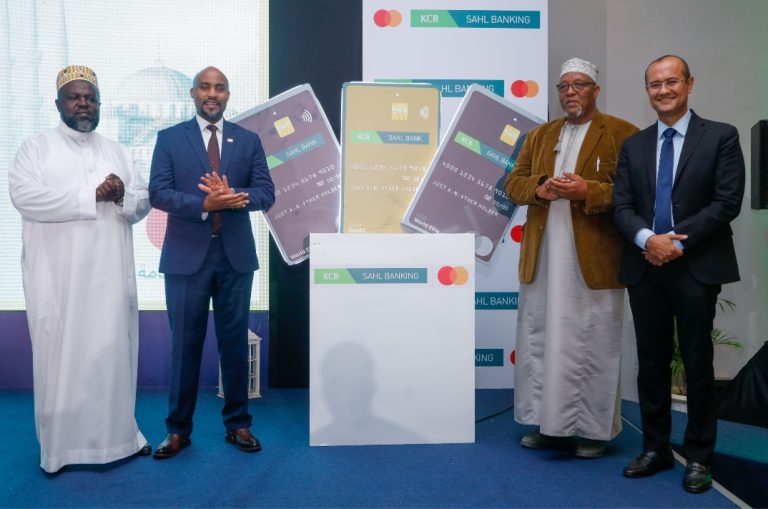
KCB Bank has partnered with Mastercard to deploy an Islamic finance paymentssolution for customers under the Sahl Banking offering.The Bank has rolled Sahl Card to give customers a convenient and secure, platform to manage their spending while accessing exclusive lifestyle and travel benefits.Additionally, KCB has unveiled the Sahl Agency banking network which will allow customers to deposit funds, withdraw cash, make payments and access essential banking services through agents

The solutions are developed in line with Islamic finance principles, with the card allowing customers to make everyday purchases and payments while remaining aligned with their values and financial preferences.”We remain committed to developing financial solutions that reflect the diverse needs and aspirations of our customers.

The Sahl card represents an important step in expanding access to Shariah-compliant banking solutions by providing customers with a secure, convenient, and values-driven payment option that supports their everyday financial and lifestyle needs, ” said Mark Mwongela,

KCB Group shareholders approve Sh22.5 billion dividend payout

KCB Group Director, Strategy & Innovation. The Sahl Card offers a range of benefits tailored to modern lifestyles, particularly for customers seeking Muslim-friendly travel and lifestyle experiences. Mastercard World Elite and Gold Credit Cardholders will enjoy access to exclusive offers on accommodation, dining, shopping, and leisure experiences enabled through Mastercard’s global network. Shehryar Ali, Senior Vice President and Country Manager for East Africa and Indian Ocean Islands, Mastercard said: “We are actively powering an inclusive digital economy where every individual and community can pay with confidence.

Our collaboration with KCB gives consumers a payment solution built around their values and lifestyle. By combining our global network with KCB’s deep local expertise, we are connecting the Islamic banking community to the experiences and passions that matter most to them.”Eligible cardholders will have access to The Mastercard Collection, a premium suite of curated dining, travel, and lifestyle experiences available to World Elite Mastercard cardholders.

Through this offering, customers can enjoy exclusive privileges, including access to exceptional culinary moments, unique travel benefits, and handpicked experiences designed to enrich their everyday lives, both locally and globally, where available. Additional features include spend management controls, transaction alerts, concierge services, and an Islamic-themed card design that reflects the values of its target market.

KUCCPS releases 2025 university placement results; how to check

0

Thousands of students are set to begin their higher education journey after the Kenya Universities and Colleges Central Placement Service (KUCCPS) released the 2025 placement results for candidates who sat the Kenya Certificate of Secondary Education (KCSE) examination.

Education Cabinet Secretary Julius Ogamba announced the results on Wednesday, July 8, confirming that 293,869 applicants had been successfully placed in universities, Technical and Vocational Education and Training (TVET) institutions and other tertiary colleges for the 2025/2026 academic year.

The placement marks a significant increase compared to previous years, when the annual average stood at about 70,000 students.

According to the Education Ministry, 202,133 candidates secured places in degree programmes, while 28,246 were admitted to the Kenya Medical Training College (KMTC).

Another 500 students were placed in Diploma in Law (Paralegal) programmes, 765 joined Kenya Utalii College and 875 secured admission to secondary Teacher Training Colleges (TTCs).

Ogamba also disclosed that 8,915 students who attained the minimum university entry grade opted to pursue TVET programmes instead of enrolling in degree courses, reflecting the growing preference for skills-based training.

KUCCPS said the placement process was conducted in line with the Universities Act, 2012, which requires admissions to be based on merit while considering applicants’ course preferences, KCSE performance and the available capacity in institutions.

To give students greater flexibility, the Cabinet Secretary announced that the inter-institution transfer window has been extended from two weeks to one month.

The extension will allow successful applicants who wish to change their institutions or courses additional time to submit transfer requests.

He further directed universities and colleges to begin processing admissions immediately and issue admission letters and joining instructions to successful candidates to ensure a seamless transition into higher education.

At the same time, the Higher Education Financing portal has been reopened for first-time applicants, enabling newly placed students to apply for government scholarships and student loans ahead of admission.

KUCCPS has urged all applicants to check their placement status through the KUCCPS Student Portal.

How to check placement results

To access the results, students should log in using their KCSE index number as the username, select the 2025 examination year and enter their birth certificate number as the password.

Once logged in, the portal will display the institution and course to which the applicant has been admitted.

Candidates whose placement details are not immediately available have been advised to keep checking and refreshing the portal as the system continues to update.

Also Read: KNEC announces recruitment of 2026 KCSE assessors; how to apply

How APIs are powering the next generation of online casino businesses

0

If you’ve been in the online casino industry for a while now, you might remember what launching one used to look like. An operator would need to negotiate individually with every game studio whose content they wanted to carry. They would need to build their own payment infrastructure, identity verification systems, and customer data tools. Each piece would often require months of technical work before the platform could even begin accepting players.

And while this model still exists to some extent, it’s becoming increasingly rare. This is because a new generation of specialist providers has turned each of those components into a service that you can simply plug in. With a modern casino API provider, you can integrate thousands of games, multiple payment solutions, customer management tools and compliance services through a single connection.

And simple as it may sound, these services are actually powerful. Just try to think about what an operator entering a new market might require. A decade ago, that meant rebuilding significant parts like payments from scratch. But today, the same API infrastructure stretches across borders. A payment gateway that handles card processing in Europe can route mobile money payments in East Africa through the same connection. As such, the expansion decision becomes a business question rather than a technology crisis.

The beauty of launching and expanding faster

Who wouldn’t want to add a new feature to their platform if it promises significant benefits? Well, of course, most operators would want to. But the challenge has never been identifying useful additions. The challenge has always been implementation. If you were to add, say, a new payment method, you’d require months of development work. And by the time everything is in place, market conditions could already have changed.

Remember, the online casino industry is one of the fastest-moving sectors. In fact, Custom Market Insights recently valued the global market at $19.7 billion and projected it would surpass $56 billion by 2033. That’s a more than threefold increase in less than a decade! And in such an environment, you never want to be left behind.

This is where APIs come into play. With them, operators can integrate entire categories of functionality through a single connection. Need to introduce live dealer games from another provider? An API can handle that integration without requiring a complete overhaul of the existing platform. Want to access a larger game portfolio? A single integration can sometimes unlock content from dozens of providers.

The impact of this flexibility becomes clear when you consider how quickly player preferences evolve. A transaction method that barely existed five years ago can suddenly become the preferred option for millions of users. New game formats can emerge and gain traction almost overnight. This is why you want to take advantage of APIs to avoid missing out on those opportunities.

Personalization is becoming a major competitive advantage

Personalization is now a common preference among many shoppers. Contentful published several statistics along these lines, claiming that 76% of users get frustrated when businesses fail to personalize. Imagine frustrating almost eight in ten of your customers. At a time when acquiring just one customer is already expensive, that’s a dangerous position to be in.

Thankfully, online casinos understand this reality very well. Two players might enjoy the same platform for completely different reasons. One may spend most of their time playing live dealer blackjack, while another logs in exclusively for slots tournaments. Sending the same promotions and recommendations to both users simply doesn’t make much sense.

APIs help address this issue by allowing various systems to communicate in real time. Customer relationship management platforms, loyalty programs, gaming platforms and analytics tools can continuously exchange information, helping operators better understand player behavior. And when operators understand their customers better, they can significantly improve customer engagement rates. Data from Twilio supports this, reporting that “80% of consumers spend more when they receive tailored interactions.”

Casino Games in Kenya: Every Category Available to Kenyan Players in 2026

Security and compliance are becoming easier to manage

It’s almost impossible to talk about success in the online casino industry without mentioning the importance of maintaining proper security measures. Every day, operators process numerous financial transactions and manage enormous amounts of sensitive customer information. And it is this very information that online malicious actors are seeking. That’s a big part of why cyberattacks have been increasing.

And as a strategic casino, you never want to fall victim to these incidents. But again, building every security function internally can be a lot of work. Cyber threats are continually evolving, and regulatory requirements vary across jurisdictions. In the long run, keeping up with both can quickly become a full-time responsibility in itself.

But with a reputable API provider, you can integrate specialized services for areas such as identity verification without having to build each system from the ground up. Better yet, these providers spend all day focusing on their specific area of expertise. Their teams monitor emerging threats with the aim of identifying vulnerabilities before they become major problems for their clients.

Because of such factors, forward-thinking casinos no longer consider APIs a mere technical decision. They think about them as a strategic advantage, where the ability to connect with the right services can directly influence long-term competitiveness.

How to increase your Fuliza limit as Safaricom outlines simple application process

1

Safaricom has outlined the process customers can follow to request a higher Fuliza limit, while encouraging timely repayments and frequent use of the overdraft facility to improve their chances of qualifying for larger borrowing amounts.

The telecommunications firm said customers seeking a review of their Fuliza limit should dial *334#, select 00, and then choose the “Refresh My Limit option.

“Wadau. Hii maneno ya limit wacha twende step by step. Ku refresh ama ku request a limit increase for your Fuliza limit, dial *334#, select 00, and select Refresh My Limit. Kumbuka, paying on time and using it often ndio limit yako itazidi,” it explained.

Fuliza M-PESA is an overdraft facility that enables M-PESA users to complete transactions even when they do not have sufficient funds in their mobile money accounts. Customers can access the overdraft multiple times, provided they remain within their approved borrowing limit.

To minimise loan defaults, Safaricom automatically deducts the full outstanding overdraft from a customer’s M-PESA account immediately after funds are deposited.

Since its introduction in 2019, Fuliza has become one of the country’s most widely used short-term credit products, providing millions of Kenyans with quick access to funds for everyday expenses and emergencies.

How to activate Fuliza

Customers must first be registered on M-PESA and have an active Safaricom line before accessing the service. Activation is done by dialing *234#, selecting the Fuliza M-PESA option, and opting into the service.

Once enrolled, customers can gradually increase their borrowing limit by consistently using Safaricom and M-PESA services and repaying overdraft balances on time.

Safaricom determines individual Fuliza limits using several factors, including a customer’s repayment history, Credit Reference Bureau (CRB) status, savings held in M-Shwari and KCB M-PESA accounts, and their overall usage of Safaricom financial services.

Also Read: Government to release Sh3 billion to 122,000 youth under Nyota programme