
Home Blog Page 36

Private company making billions from SHA exposed

0
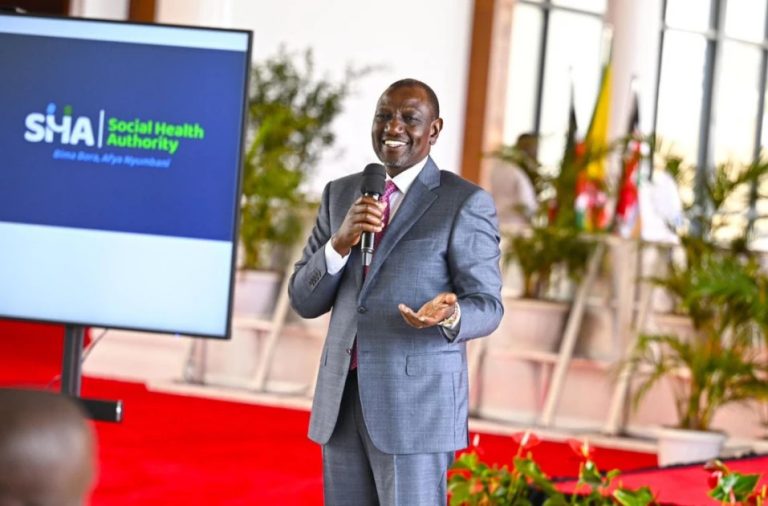
A private company has been making billions of money from the Social Health Authority (SHA) that was controversially started by President William Ruto to replace the National Health Insurance Fund (NHIF).

According to a report that was published by the Daily Nation on Monday July 6, 2026, the company has been identified as Finsprint. It’s offices are located in Kilimani, Nairobi.

The report by the newspaper has laid out what appears to be a layered chain of firms and subcontractors, all who are involved in the SHA system.

The report shows that the SHA system works through the Digital Health Agency (DHA) which is a semi-autonomous government agency that was set up to oversee the development, operationalization and maintenance of a Comprehensive Integrated Health Information System (CIHIS).

According to the report, the system set up by the DHA operates as a one-stop shop for all health data in the country, controlling the payment system for health providers and onboarding of new health services providers.

Under DHA is the consortium of firms that include Safaricom, Konvergenz Network Solutions and Apeiro Limited which is firm from the United Arab Emirates (UAE). This is the consortium was engaged for the supply of the digital system whose estimated cost was a staggering Sh104 billion.

“Apeiro was given control of e-claims processing by Safaricom under a contract worth more than Sh5 billion. It runs the system that links SHA payments to hospital bank accounts,” the newspaper reported.

The report details that payment claims from hospitals are first sent to SHA for an initial review. They are reviewed by doctors and clinical officers who are paid by SHA but supervised by the DHA. If these claims are approved, they are then pushed forward to Konvergenz for another set of approvals. However, this is not the company that makes the payments.

Instead, Konvergenz sends them over to Finsprint which it has subcontracted. Once this firm receives the amounts due to each hospital, it allegedly deducts 2 percent before remitting the balance to the hospital bank accounts. Apparently, this firm claims that these deductions are done to cover “logistical costs”.

The report in the newspaper estimated that Finsprint may have pocketed as much as Sh2.9 billion since the inception of SHA if it has handled all the Sh146 billion that has reportedly been paid out to hospitals for health services rendered.

At the same time, the report shows that Finsprint was incorporated as a private company on July 12, 2020 with a nominal share capital of Sh100,000. The company has two directors who were identified as Issa Sheikh Mohamed of Nairobi and Abdulhakim Ibrahim Sheikh of Mombasa.

Out of the 1,000 company shares, 575 shares are held by a company that is known as Impactsoft Technologies Group Limited. Registration documents indicate that this company is a Kenyan entity but has no known address.

The remaining 425 shares are held by Abdulhakim who is also one of the owners of Konvergenz Network Solutions.

Read More: How Ruto’s family and allies make profits from sending Kenyans to Saudi Arabia 

According to the report, Finsprint is colleting Sh2 from every Sh100 that Kenyans contribute to SHA. In addition, this private firm is collecting Sh5 for every Sh100 that is claimed by hospitals. The consortium involved in this deal also charges 1.5 percent for what has been termed as tracking services.

The replacement of NHIF by SHIF brought on board a new format in salary deductions, with SHA’s Social Health Insurance Fund (SHIF) deductions being larger in comparison to the old NHIF deductions. Under SHIF, all workers get deducted 2.5 per cent of their salaries.

SHA has been dogged by controversies, with multiple cases of patients being turned away from hospitals or hospitals refusing to accept SHIF from admitted patients reported widely in the media since the program went into force in October 2024.


2023 Most Profitable Businesses in Kenya According to CBK Report

0

Profitable businesses in the agriculture, transport, tourism, ICT, and service sectors are projected to have more opportunities for growth in 2023.

This is according to the latest report by the Central Bank of Kenya (CBK) titled CEO’s Survey March 2023. The survey featured 1,000 Chief Executive Officers drawn from private sector firms.

The Apex bank noted that in the three months to March 2023, businesses in the Services sector reported higher sales growth compared to other sectors.

Most of the firms that reported increased sales were in the security, tourism, and ICT sectors. Increased demand, particularly for financial and security services, was credited for the growth.

40 most profitable businesses to start in Kenya

‘’Nonetheless, respondents rued the reduced consumer demand as well as limited availability of foreign exchange,’’ said CBK.

While the agriculture sector reported low production in the first quarter of the year, demand remained high. The low production was attributed to the prolonged dry season and the weakening of the Kenya Shilling, which indirectly led to higher prices of goods sold.

“Seasonal factors supported some firms to sell more but at lower prices. Overall, while purchase prices softened, inflation remained a key concern,” read part of the report.

CBK projects increased production volumes in the agriculture sector in the next 12 months hence higher sales. The projected growth will be supported by adequate rainfall and seasonal factors.

Businesses in transport and storage anticipate a boost in demand due to seasonal factors. Nevertheless, purchase prices are expected to remain elevated.

The most profitable ventures you can do with sh 5,000

CBK said firms that reported possible difficulty in expanding their operations cited the high cost of doing business, a constraining business environment, and the high cost of credit.

Other factors cited for holding back firms’ expansion include reduced consumer demand, financing challenges, internal operational constraints, and supply chain challenges.

For instance, in the manufacturing sector, CBK said that the limited availability of the US Dollar made firms unable to source raw materials on time.

Additionally, due to global and domestic inflation, several value chains have been affected, leading to price increases and hence reduced purchases.

Businesses in the manufacturing sector anticipate a decline in sales and production due to increasing energy and electricity costs as well as a weakening Shilling.

To mitigate the factors constraining the expansion of firms, the CEOs proposed various internal solutions, including management of costs and risks, increased sales and marketing, diversification of their operations, talent retention, lobbying with relevant stakeholders, and enhanced use of technology.

Jubilee Health targets uninsured communities with pay-in-instalments health insurance model

0

Jubilee Health Insurance is expanding an instalment-based premium payment model in Nairobi as part of a broader effort to make health insurance more accessible to uninsured and underinsured Kenyans.

The move is informed by customer feedback showing that many people value health insurance but struggle to pay annual lump-sum premiums.

Through its Linda Afya Leo – Lipa Pole Pole model, Jubilee Health is promoting a payment program that allows customers to activate health cover from the first payment and spread premiums over up to 10 monthly instalments.

The campaign targets individuals, families, first-time insurance buyers and small and medium-sized enterprises with between three and 50 employees.

Plans start from KSh3,256 per month, offering KSh200,000 inpatient cover and KSh40,000 outpatient cover, while higher-tier options provide up to KSh10 million in inpatient cover.

Jubilee insurance buys Sh. 1.1 billion Coca-Cola offices

Jubilee Health Insurance Chief Executive Officer Njeri Jomo said the scale-up is designed to address affordability and enrolment barriers that continue to limit private health insurance penetration in Kenya. Lump-sum annual premiums, alongside other household financial obligations, prevented many willing households from taking up cover.

“Many Kenyans remain uninsured not because they do not value health insurance, but because cover is often seen as expensive and complex.” said Ms. Jomo. “This is about much more than changing how customers pay. It’s about changing how customers access health insurance. Whether you’re buying your first health plan, protecting your family, caring for ageing parents or covering your employees, there should be a Jubilee Health solution that’s right for you, and getting covered should be simple, convenient and affordable.”

The campaign will launch in Nairobi through Afya Mtaani, bringing Jubilee’s health advisors directly into communities, before expanding to other regions around the country.

Insurance Regulatory Authority Commissioner and Chief Executive Officer Godfrey Kiptum said solutions that reflect consumer cash-flow realities would be key to improving insurance penetration.

“Improving insurance penetration requires solutions that respond to the realities of consumer cash flow, especially among informal sector workers and underserved households,” said Mr Kiptum. “Approaches that support affordability, accessibility and consumer understanding are important in broadening inclusion and strengthening confidence in insurance.”

The initiative forms part of Jubilee’s broader growth strategy in health insurance and supports its ambition to provide cover to one million lives by the end of 2027.

For more information, customers can visit https://jubileeinsurance.com/ke/lipa-pole-pole/ to buy cover or, SMS “Afya” to 40643 for a callback, or visit Jubilee Health Insurance’s official channels. To get more affordable offers dial USSD *706*2#.

Mabani Aljazeera invests in Jabali Towers, strengthening Saudi-Kenya investment ties

0

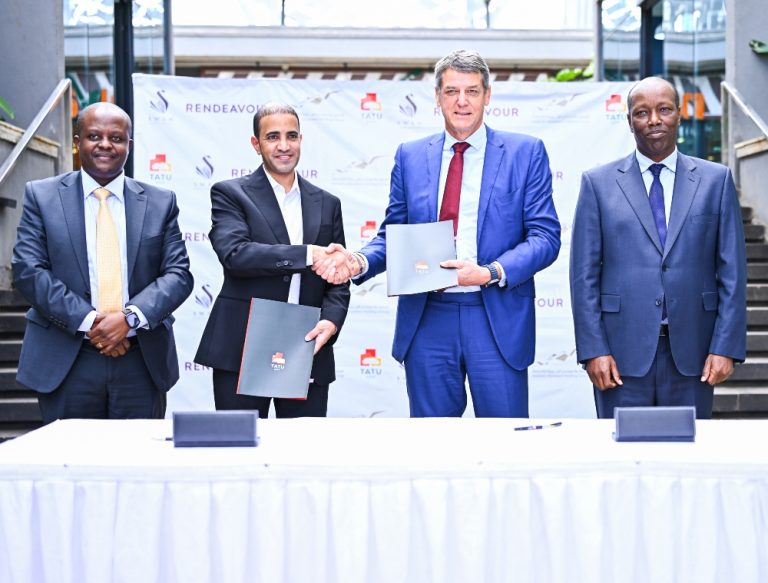
Mabani Aljazeera Holding Group, a leading private Saudi Arabian construction and investment company, will invest in Jabali Towers, the premier mixed-use development located at the heart of Tatu City Special Economic Zone (SEZ). The equity investment by Mabani – through its subsidiary, Swan Properties – marks a major milestone for East Africa, representing a significant vote of confidence by a major Saudi investor and highlighting Tatu City SEZ’s record attraction of foreign direct investment to Kenya.

Speaking during the signing ceremony, Hon. Lee Kinyanjui, Cabinet Secretary for Investment, Trade, and Industry, said, “This investment sends a strong signal to investors in Saudi Arabia and beyond that Kenya is indeed a destination of choice for investment on the African continent. It is a remarkable project that reflects growing investor confidence in Kenya and demonstrates that solutions to our housing challenges can be developed locally through strategic partnerships and innovation. With the right policies and an enabling investment environment, Kenya will continue to attract quality investments that drive economic growth, create jobs and improve livelihoods.”

Jabali Towers, whose 25- and 36-storey towers soar over Tatu City, includes exclusive amenities for residents and 35 restaurants and shops open to the public. The first tower is more than 80% sold. Earlier this week, Tatu City appointed China Road and Bridge Corporation as the main contractor for the 88,000/m2 development.

“Mabani Aljazeera Holding Group and Swan Properties are delighted to invest in the landmark Jabali Towers development at Tatu City,” said Abdullah AlMalki, Chairman of Mabani Group. “A combination of our skills, construction materials and capital will make Jabali Towers the preeminent real estate development in Africa.”

Swan Properties will receive 50% minus one share for its investment in the Jabali Towers development company, with Rendeavour, Tatu City’s owner and developer, as the majority shareholder.

Tatu City launches Porini Point, a modern hillside residential enclave

The joint venture was lauded by the Saudi Export Import Bank, which aims to promote the development and diversification of Saudi exports and increase their ability to compete in global markets.

Stephen Jennings, Founder and CEO of Rendeavour, said: “Mabani Aljazeera Holding Group and Swan Properties’ investment in Tatu City and Kenya is underpinned by Rendeavour’s 20-year track record of delivering on its promises in Africa. Every year, Tatu City attracts more than half of all foreign direct investment in Kenya. We are engaging with numerous Saudi investors ready to invest in Kenya and are delighted that Swan Properties is the pioneer.”

Jabali Towers offers studio, one-, two- and three-bedroom apartments starting from KES 10.2 million (USD 78,200), providing homeowners and investors with an opportunity to own a residence in Kenya’s leading mixed-use SEZ. Jabali Towers is supported by more than 15 years of infrastructure investment in Tatu City, including 24-hour potable water, 99.7% power uptime, high-speed fibre internet connectivity and more than 70 kilometres of international-standard roads, providing the infrastructure expected of a modern global city.

The long-term appeal of Jabali Towers is reinforced by Tatu City’s unique live-work-play ecosystem. Wellington College International Kenya, scheduled to open in 2028, will further enhance the city’s appeal among Kenyan families, expatriates and professionals seeking world-class education within a secure, master-planned environment.

Residents also enjoy more than 100 kilometres of walking and cycling trails, parks, lakes and expansive green spaces, while the Tatu Wildlife Sanctuary, the world’s only urban wildlife sanctuary, opens at the end of 2026, delivering Tatu City’s vision of integrating nature with modern urban living.

Developed by Rendeavour, Africa’s new city builder, Tatu City is the continent’s fastest-growing urban destination. Home to more than 7,000 residents with a population growing by over 40% annually, the city welcomes more than 35,000 people every day who live, work, learn and recreate within its integrated ecosystem. With development valued at more than USD 3.5 billion, Tatu City hosts over 110 businesses, schools educating more than 6,000 students, and 3,500 mixed-income homes that are either occupied or under development.

Minecraft Seed Viewer: Find Structures Before You Explore

0

Structures change the game. A stronghold within 500 blocks of spawn is the difference between a quick End run and a two-hour expedition. A woodland mansion on the map means planning, not luck.

A minecraft seed viewer for finding structures shows every structure coordinate before you leave spawn. You plan the route, not the search.

Many players use a seed viewer to save time during the early stages of the game. Instead of exploring random areas, they can focus on locations that contain useful resources and important structures.

How to Find the Seed of a Minecraft Server

Before you can use a viewer, you need the seed. Here’s how to find the seed of a minecraft server depending on your access level:

  1. If you have operator permissions: type /seed in chat — number appears instantly
  2. If you own the server: check server.properties file, look for level-seed
  3. If you’re a regular player: ask the server owner or an admin
  4. On Bedrock: world settings show the seed in the Game tab

The Internet’s Annual Blocky Civil War: Inside the Minecraft Mob Vote

Minecraft confirms that the /seed command requires operator level 2 permissions on most server configurations. If the command returns nothing, permissions are likely restricted.

Once you have the number, the viewer does the rest.

After entering the seed, the tool quickly generates a full overview of the world. This allows players to see important locations before they even start exploring. It makes early-game planning much faster and more efficient.

Minecraft Seed Viewer: Find Structures Before You Explore
chatgpt.com

What Structures the Viewer Reveals

A lot of players check their seed before starting because it helps them understand the world much faster. The viewer highlights important places, nearby biomes, and useful structures that could otherwise take hours to discover. You still get to explore everything yourself, but you spend less time searching without direction.

When you find the seed of a minecraft server and run it through a viewer, you get the full structure map:

  • Strongholds — end portal rooms and exact coordinates
  • Villages — all variants including plains, taiga, savanna, and desert
  • Pillager outposts — useful for bad omen raids
  • Ocean monuments — for elder guardians and sponge rooms
  • Woodland mansions — rare and usually far from spawn
  • Ancient cities — deep dark biome, high-risk high-reward
  • Nether fortresses and bastions — visible once you enter the Nether

Using tools to find server seed minecraft makes it possible for every player on the server to access the same shared map through the viewer.

Why Minecraft Feels Completely Different With Modpacks

Why Knowing the Seed Changes Multiplayer Strategy

On shared servers, structure knowledge becomes a resource. Who gets to the stronghold first. Which village is closest to each player’s base. Whether there are multiple monuments worth raiding.

Find the seed of a minecraft server before the session starts and you arrive with a plan instead of a guess. That’s true whether you’re playing casually or in a competitive SMP context.

Minecraft streamer Technoblade — one of the most decorated competitive players in the game’s history — always emphasized preparation: “Knowledge is the most powerful weapon in any game.” Seed maps are exactly that kind of knowledge.

Minecraft Seed Viewer: Find Structures Before You Explore
chatgpt.com

Server Performance Affects Structure Exploration

Looking at the structure map before starting a multiplayer session also helps teams plan their exploration. Players can choose different routes, avoid searching the same areas, and reach important locations more quickly by working together.

Traveling to distant structures loads new chunks constantly. On a healthy server, this is seamless. On an underpowered one, every fast journey creates lag spikes.

The viewer gives you the coordinates. A stable server makes sure the chunks are there when you arrive. Both matter. Neither works without the other.

KRA reintroduces Tax Amnesty Programme to support Kenyan businesses and SMEs

0

The Kenya Revenue Authority (KRA) has reintroduced the Tax Amnesty Programme under the Finance Act, 2026, offering businesses and taxpayers an opportunity to eliminate outstanding tax penalties, interest and fines accumulated up to 31st December 2025.

The six-month programme runs from 1st July 2026 to 31st December 2026 and is expected to provide significant financial relief to thousands of businesses, particularly micro, small and medium-sized enterprises (MSMEs) struggling with historical tax obligations.

The previous two tax amnesty programmes proved highly successful, enabling KRA to recover KSh 80.9 billion in principal tax payments while helping thousands of taxpayers regularize their tax affairs.

What is the KRA Tax Amnesty Programme?

The Tax Amnesty Programme is a government initiative that waives 100% of penalties, interest and fines attached to eligible tax debts, allowing taxpayers to focus on settling the principal tax owed.

The programme is designed to encourage voluntary tax compliance while giving businesses a fresh financial start.

Court battle over KRA VAT “Special Table” becomes one of Kenya’s largest tax disputes

Key Benefits for Kenyan Businesses and SMEs

For many SMEs, accumulated tax penalties and interest often exceed the original tax owed, making compliance difficult. The reintroduced amnesty provides several important advantages.

1.⁠ ⁠Automatic Waiver for Businesses That Already Cleared Principal Tax

Businesses and individuals who have fully paid their principal tax liabilities by 31st December 2025 will automatically receive a complete waiver of all related penalties and interest.

No application is required, making the process simple and efficient.

2.⁠ ⁠Relief from Late Filing Penalties

Businesses that have no outstanding principal tax but face penalties for late filing of returns also stand to benefit.

Once all outstanding tax returns are submitted, KRA will automatically waive the applicable late filing penalties.

This presents an excellent opportunity for SMEs that fell behind on statutory filings to restore full tax compliance.

3.⁠ ⁠Immediate Waiver Through Full Payment

Businesses with unpaid principal taxes accrued before 2026 can obtain an immediate waiver by paying the outstanding principal amount in full during the amnesty period.

Once the principal tax is settled, the corresponding penalties and interest will be written off.

For businesses with adequate cash flow, this represents one of the fastest ways to clean up historical tax liabilities.

4.⁠ ⁠Flexible Payment Plans for Cash-Constrained SMEs

Recognizing that many SMEs may not have sufficient cash to pay their taxes in one instalment, KRA has introduced structured payment plans through the iTax system.

Eligible taxpayers can apply for a payment arrangement, provided the principal tax is fully settled by 31st December 2026.

This flexibility allows businesses to manage their cash flow while still qualifying for the tax amnesty.

KRA drops taxpayers from the infamous ‘Special Table’

Financial Benefits for SMEs

The programme could generate substantial financial benefits for small businesses by:

•⁠ ⁠Eliminating costly interest and penalties that have accumulated over several years.
•⁠ ⁠Improving cash flow by reducing the total tax burden.
•⁠ ⁠Helping businesses regain tax compliance.
•⁠ ⁠Enabling companies to obtain Tax Compliance Certificates more easily.
•⁠ ⁠Improving eligibility for government tenders, financing and investment opportunities.
•⁠ ⁠Reducing legal and enforcement risks associated with unpaid taxes.
•⁠ ⁠Allowing business owners to focus resources on growth rather than historical tax obligations.

Important Exclusions Businesses Should Know

Despite its broad scope, the amnesty does not apply to every tax liability.

Tax Debts After 1st January 2026 Are Not Covered

Any tax obligations arising from 1st January 2026 onwards remain fully payable.

Businesses must continue meeting their current tax obligations, including principal tax, penalties and interest where applicable.

Businesses with Ongoing Tax Disputes

Businesses currently involved in tax litigation should consider using KRA’s Alternative Dispute Resolution (ADR) framework.

Resolving disputes through ADR may enable taxpayers to agree on principal tax liabilities and subsequently benefit from the amnesty.

Inside Tax: What you need to know about KRA’s Turnover Tax

Why SMEs Should Act Early

Waiting until the final weeks of December could create unnecessary delays due to increased demand on KRA systems and support services.

Businesses should review their tax position immediately, determine whether they qualify for the amnesty, and begin the payment or application process as early as possible.

Early action also provides sufficient time to resolve any outstanding return filings or documentation issues before the deadline.

How to Benefit from the Tax Amnesty

Eligible businesses should:

1.⁠ ⁠Log into the KRA iTax Portal.
2.⁠ ⁠Review outstanding tax liabilities.
3.⁠ ⁠Confirm whether principal taxes qualify under the amnesty.
4.⁠ ⁠Pay eligible principal taxes in full or apply for a structured payment plan.
5.⁠ ⁠File all outstanding tax returns where applicable.
6.⁠ ⁠Complete all requirements before 31st December 2026.

A Timely Opportunity for Business Recovery

The reintroduction of the Tax Amnesty Programme reflects the Government’s commitment to supporting voluntary tax compliance while easing financial pressure on Kenyan businesses.

For SMEs that have struggled with mounting tax penalties, this six-month window offers an opportunity to restore compliance, improve financial health and position themselves for future growth. Businesses that act promptly stand to save significant amounts in waived penalties and interest while strengthening their credibility with lenders, investors, suppliers and government agencies.

KeNHA announces free training programme for form four leavers

1

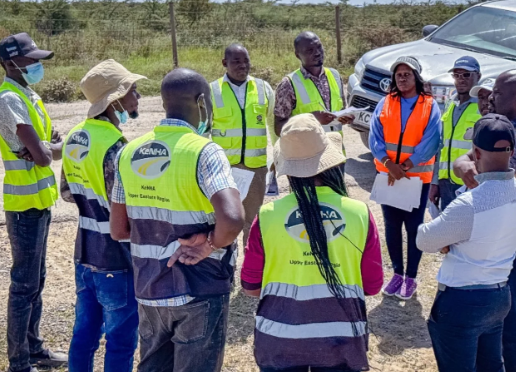
The Kenya National Highways Authority (KeNHA) has opened applications for a fully sponsored one-year technical skills training programme targeting unemployed Form Four leavers from four counties.

The initiative is financed by the World Bank through the Horn of Africa Gateway Development Project and will support the second cohort of the Technical Capacity Development through Training programme.

The programme targets unemployed youth, including those affected by the ongoing construction of the 740-kilometre Isiolo-Mandera highway, and persons living with disabilities from Isiolo, Meru, Wajir and Garissa counties.

According to KeNHA, the programme is designed to equip participants with practical artisan-level skills that will improve their employability and create opportunities for self-employment and income generation.

Successful applicants will be trained in a wide range of technical and vocational fields, including masonry, plumbing, electrical installation and electronics, automotive engineering, welding and fabrication, carpentry and joinery.

Others are hairdressing and beauty therapy, fashion and design, food and beverage production, computer and mobile phone repair, information and communication technology (ICT), motor vehicle mechanics, tailoring and dressmaking, as well as pastry and bakery.

The one-year artisan and craft-level courses will be offered at Nkabune Technical Training Institute, North Eastern National Polytechnic, Bishop Locati Training Institute, Sensei Institute and Meru National Polytechnic.

Requirements and how to apply

To qualify, applicants must be aged between 18 and 35 years, be residents of Meru, Isiolo, Wajir or Garissa counties, and meet the academic requirements for their preferred course.

While most programmes require a Kenya Certificate of Secondary Education (KCSE), some courses accredited by the National Industrial Training Authority (NITA) do not require formal academic qualifications.

“KeNHA now invites suitable applicants to submit their applications for the training. Interested applicants should give information proving that they meet the minimum prerequisites to be accepted for the technical training. The minimum requirement is a KCSE certificate (any grade),” KeNHA said.

Applicants must also possess a valid Kenyan National Identity Card. Those seeking admission to the Plant Construction Mechanics course will additionally be required to present a valid driving licence.

The authority said priority will be given to applicants living with disabilities, orphans, youth from single-parent families, and young single parents.

Application forms can be obtained free of charge from KeNHA regional offices in Isiolo and Garissa, Area Chiefs’ offices, County Commissioners’ offices in the four target counties, or downloaded from the KeNHA website.

“Application forms must be signed and stamped by the Area Chief or Assistant County Commissioner as proof of the residency status of the applicant,” the Authority added.

Completed applications must be submitted by Thursday, July 23, 2026, at 5 p.m.

Also Read: Ministry of Interior announces 67 job vacancies; how to apply

Moi University announces mass layoff amid Sh18 billion debt burden

0

Moi University has announced plans to cut its workforce, including lecturers, as it undertakes a fresh restructuring programme aimed at restoring its financial stability after more than a decade of mounting debt and operational challenges.

The institution’s Acting Vice Chancellor, Kiplagat Kotut, told the National Assembly’s Education Committee on Thursday that the university is carrying out a workload analysis to identify employees whose services may no longer be required.

Kotut said the exercise is intended to streamline operations and eliminate positions where staff members have little or no workload.

“We realised some of the lecturers have not been teaching. They are parasitising on others, so we are saying that since they do not have anything to do, we will release them,” he told the committee.

The announcement comes as the university battles a severe financial crisis, with accumulated debts exceeding Sh8 billion and pending bills now standing at more than Sh10 billion.

According to Kotut, the pending bills stem from budget deficits that have accumulated since 2014, placing immense pressure on the institution’s operations.

He appealed to lawmakers to allocate an additional Sh1.9 billion in the 2026/27 financial year to support the university’s recurrent expenditure and ease its financial strain.

“The issue of pending bills remains a major concern for us. We request that this committee consider adding Sh1.9 billion to support recurrent expenditure for 2026/27,” he said.

However, members of the Education Committee challenged the university’s management to demonstrate the measures taken to restore confidence in the institution and reverse concerns over its financial sustainability.

In response, Kotut said the administration had focused on rebuilding trust among students and parents by ensuring academic programmes run on schedule, students graduate on time, and long-standing challenges such as missing examination marks are resolved.

He noted that the reforms are beginning to bear fruit, citing a steady rise in student enrolment over the past three years.

According to the Acting Vice Chancellor, student admissions increased from 5,000 in 2024 to 6,800 in 2025, with enrolment projected to reach 10,000 this year.

The planned layoffs mark the latest phase of the university’s restructuring efforts following a series of redundancy exercises undertaken in 2025 as part of an aggressive cost-cutting strategy.

In March last year, the institution terminated the contracts of 324 employees working in security, cleaning, hostel and library services. Two months later, it issued redundancy notices to 892 employees, including about 120 lecturers, in one of the largest workforce reductions in the university’s history.

Moi University has faced sustained scrutiny in recent years over its financial management, with allegations of misuse of public funds, irregularities in construction projects, unpaid obligations and other transactions that have contributed to substantial financial losses.

Lillian Ngala: The HR Leader restoring hope to widows and orphans

0

For many people, success in the corporate world marks the pinnacle of achievement. But for Lillian Ngala, a distinguished human resource executive, professional success has become a platform to transform the lives of some of society’s most vulnerable people.

As the Human Resource Director at DTB Bank, Ngala leads strategic talent and people management initiatives at one of the country’s leading financial institutions.

Away from the corporate boardroom, however, she is equally committed to a different mission—helping widows, orphaned children, young people and persons with disabilities regain dignity and build sustainable livelihoods.

The inspiration behind this work is rooted in her own childhood.

Ngala’s father died while she was still in high school, leaving her mother to shoulder the responsibility of raising the family under difficult circumstances.

Following the loss, the family relocated to a modest home in Homa Bay, where her mother worked tirelessly as a tailor to provide for them.

She sewed school uniforms for a missionary school, which in return waived the family’s school fees, enabling the children to continue with their education despite the financial hardships.

Those early struggles continue to influence her work today through the Lillian Ngala Foundation, a non-governmental organisation dedicated to restoring dignity and empowering vulnerable members of society.

One of the foundation’s flagship programmes supports widows in Homa Bay by helping them secure decent housing and providing seed capital to establish small businesses.

Beneficiaries also receive entrepreneurship training to equip them with the skills needed to manage and grow their enterprises.

According to Ngala, the interventions go beyond improving economic well-being by rebuilding confidence and self-worth among the women.

“Poverty makes widows hide; they don’t want to be seen. But the moment you give them a decent house, they come out. They walk into the market with their heads high. The transition is everything,” she says.

Through the initiative, more than 100 widows have already benefited from improved housing and economic empowerment.

The foundation also offers school bursaries to orphaned and vulnerable children, helping keep them in school despite financial challenges.

It further invests in youth empowerment programmes, which Ngala believes create lasting benefits for communities by equipping young people with opportunities to become productive members of society.

For persons with disabilities, the organisation works to eliminate barriers that limit their participation and inclusion, enabling them to live more independent and fulfilling lives.

Ngala’s philanthropic work complements a distinguished career spanning more than two decades in human resource management.

She joined DTB Bank in 2012 and has steadily risen through the ranks to become the institution’s Human Resource Director, where she oversees strategic human capital initiatives and talent management.

She holds a Master of Business Administration in Strategic Management from Jomo Kenyatta University of Agriculture and Technology and is a certified professional trainer accredited by the Institute of Human Resource Management.

Beyond her corporate responsibilities, Ngala serves on several professional boards, including the Kenya Institute of Bankers, the African Human Resource Congress and the Kenyan Network Information Centre (KeNIC).

She also leads the Lillian Ngala Network, an initiative focused on mentoring and nurturing the next generation of leaders.

Also Read:Why some investors are always making profit and others losses

Namsia: Why some investors are always making profit and others losses

When it comes to making profit from investments, there is no asset class that is inherently good or bad. What matters is the person, the strategy, the timing, the execution, and the discipline behind it.

There are people who have made millions in the stock market, and there are others who have lost millions in the very same market.

There are people who have built enormous wealth through real estate, while others have seen years of savings wiped out by poor location choices, excessive leverage, or unrealistic expectations

There are people who have created substantial passive income portfolios through bonds and fixed-income investments, while others have dismissed them as “low-return” assets because their focus is only on growth while ignoring perhaps the value of stability, preservation, and predictable cash flows.

This I’ve seen a lot while consulting with those in high turnover businesses. They are used to cash moving in and out so much that having Sh1million in bonds is “making money idle” according to them, even if the businesses aren’t making them anything.

There are people who are entrepreneurs and have built thriving businesses worth millions, and there are many whose businesses consumed capital, time, and energy without generating sustainable returns for them.

There are founders who have struck gold with startups, and there are countless others who have watched promising ideas fail despite significant investment.

There are people who are farmers and agribusiness investors who have built fortunes from the land, while others have suffered losses due to weather, disease, market fluctuations, poor planning, or operational challenges

There are professionals who are quietly building wealth through disciplined saving and investing while employed, and there are others earning high salaries yet struggling financially month after month.

My point is; there are several different dynamics to all asset classes that affect profits and losses.

Wealth is not created by an asset class.

Wealth is created by understanding the dynamics of an asset class and managing them well.

Rhina Namsia: What is wrong with being in the Middle Class in Kenya?

Every investment comes with its own set of risks, opportunities, cycles, skill requirements, capital needs, liquidity characteristics, and behavioral challenges. What works exceptionally well for one person may be completely unsuitable for another.

Investment conversations should move away from statements such as “Real estate is the best investment, Stocks are too risky, Bonds don’t make you enough money, Business is the only way to become wealthy, Employment can never make you rich, etc.”

Such statements oversimplify a much more complex reality.

A better question for anyone should be, “do I understand the risks, rewards, and success factors of this particular investment well enough to participate in it successfully?”

The highest returns often don’t come from chasing the best asset class but from finding the asset classes that align with your knowledge, temperament, capital base, goals, and ability to stay invested through difficult periods.

Many investors spend their lives searching for the perfect investment while overlooking the more important task of becoming a better investor.

At the end of the day, the same market that creates millionaires also creates losses. The difference is rarely the asset itself but the decisions made before, during, and after the investment.

Rhina Namsia is the founder and chief executive officer of The Acemt Consulting, a training and consultation company that provides financial planning and investment advisory.