Home Blog Page 38

Ruto government loses Sh16 billion in rush to sell Safaricom stake

0
The government of President William Ruto has sold a 15 percent Safaricom stake to South Africa’s Vodacom Group. This sale took place barely three days after the Court of Appeal lifted orders that had been issued by the High Court barring the sale until a matter challenging the transaction was heard and determined.

In this rush, the government has missed out on Sh16.1 billion that it could have received in Safaricom dividends had the sale taken place after August 4 this year. Safaricom is now expected to close its books on the payment of a final dividend of Sh1.15 per share on August 4.

The multi-billion transaction was conducted on the Nairobi Securities Exchange (NSE) on Tuesday June 30, as a block trade. It became the largest single transaction that has ever been conducted on the local bourse. The deal was worth some Sh204 which came from the sale of 6 billion shares at a price of Sh34 per share.

This sale reduced the government’s shareholding in Safaricom from the previous stake of 35 percent to a stake of 20 percent.

In addition to the Sh204.3 billion that the government collected from the sale, the government will take Sh40.2 billion in advance dividend to bring its total earnings to Sh244.5 billion. This advanced dividend payout amounted to a dividend pay at a rate of about Sh6.69 per share.

Besides this transaction, South Africa’s Vodacom Group purchased a 12.5 percent stake that is currently held by Vodafone International Holdings in Vodafone Kenya for Sh68 billion.

This pushed Vodacom’s interest in Safaricom to 55 percent while giving the company total ownership of Vodafone Kenya.

“The acquisition by Vodacom of the Vodafone Kenya Shares for a consideration of Sh68.1 billion, resulting in Vodacom owning 100 percent of Vodafone Kenya’s share capital directly and approximately 55 percent of Safaricom’s share capital indirectly.”

READ MORE: Kenyans flee South Africa to escape xenophobic attacks

Prior to this acquisition, Vodacom has been holding a 40 percent stake in Safaricom while the government has been holding a 35 percent stake. The public has been holding shares equivalent to a stake of 20 percent.

At the same time, Vodafone Kenya which has been holding 16 billion shares equivalent to 39.93 percent in Safaricom has been jointly owned by Vodacom and Vodafone. Vodacom, which is headquartered in Midrand, South Africa, is listed on the Johannesburg Securities Exchange (JSE).

Vodafone on the other hand is a private limited liability company which is headquartered in Netherlands. Vodacom and Vodafone are both subsidiaries of the Vodafone Group Plc which is an international telecommunications company that is headquartered in Newbury, England. It operates in 15 countries and is listed on the London Stock Exchange (LSE).

The sale of the Safaricom stake by the government followed the recent Privatization Act of 2025 that was signed into law on October 21, 2025. In this new law, the government has been allowed by Section 74 to sell or dispose part or all of its shares in a government-linked corporation with the approval of the Cabinet following a recommendation from the National Treasury.

NCBA insurance strengthens youth mentorship through ASSK actuarial competition

0

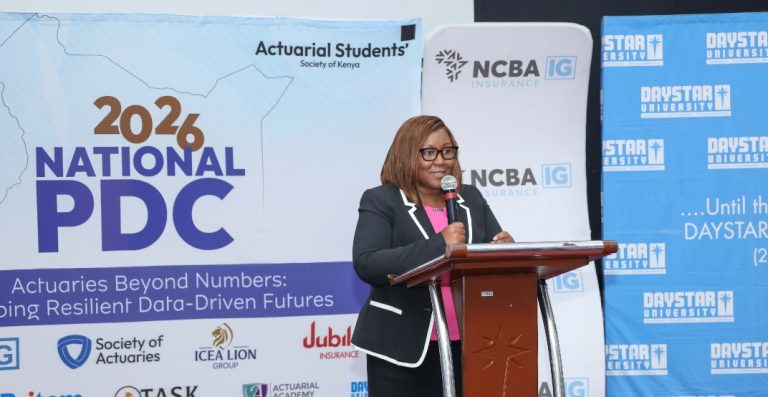
NCBA Insurance proudly served as the Platinum Sponsor of the Actuarial Students Society of Kenya (ASSK) Product Development Competition, bringing to life its new purpose: Banking on Belief, Empowering Ambitions – Ubuntu Spirit. This sponsorship reflects NCBA’s unwavering commitment to youth empowerment, mentorship, and sustainable skill-building, particularly for young professionals and in the financial services sector.

The competition brought together actuarial students from universities across Kenya, challenging them to apply their problem-solving skills to real-world industry issues. Participants developed innovative solutions in insurance, risk management, financial services, and economic resilience, demonstrating the critical role actuarial science plays in shaping sustainable financial futures.

ASSK continues to serve as a vital bridge between academic training and professional practice, connecting students with industry leaders and creating opportunities for mentorship, practical learning, and career development.

NCBA expands solar leasing and easy build solutions

Speaking on NCBA Insurance’s role, Stella Njung’e, CEO and Managing Director of NCBA Insurance, emphasized the company’s belief in nurturing talent:

“Actuaries today are innovators and strategic thinkers who help organizations navigate complexity. By sponsoring this competition, we are not only investing in the future of insurance but also living our purpose Banking on Belief, Empowering Ambitions. We believe in the collective strength of mentorship, collaboration, and inclusivity to build a sustainable future for youth and women across Africa.”

Through the NCBA Change the Story initiative, the company continues to champion education, mentorship, and innovation. Its Sponsorship of the ASSK Product Development Competition underscores NCBA Insurance’s dedication to creating meaningful opportunities for young professionals to gain practical experience, build industry connections, and contribute fresh ideas that drive positive change.

This year’s competition highlighted the transformative potential of actuarial science in advancing financial inclusion, resilience, and sustainability. By fostering mentorship and skill-building, NCBA Insurance is helping shape a generation of professionals ready to lead Africa’s insurance and financial services industry with purpose and impact.

Karen to host BNI Nairobi south business & innovation expo 2026

0

More than 1,000 entrepreneurs, business leaders, investors and innovators from across Kenya are expected to converge at Karen for the highly anticipated BNI Nairobi South Business & Innovation Expo 2026. This East Africa’s premier business networking expo is designed to accelerate business growth through driving strategic partnerships, Innovations and Investment opportunities.

In the midst of Kenya’s tough economic environment, businesses across the region increasingly seek sustainable growth opportunities, this expo aims to provide a platform where meaningful business connections translate into positive measurable financial outcomes. Organized by BNI Nairobi South, the expo will bring together businesses from diverse sectors including technology, finance, manufacturing, property, professional services and trade under the theme “Accelerate, Innovate, Lead”.

“Business growth today is increasingly driven by referrals, collaboration and strategic partnerships. The BNI Nairobi South Business & Innovation Expo is designed to create an environment where decision-makers can meet, exchange ideas, learn, discover opportunities and build relationships that generate real business value, both nationally and regionally,” stated Perminus Kariuki, Executive Director, BNI Nairobi South.

The daylong event will feature more than 40 exhibitors showcasing products, services and innovations across key sectors that drive Kenya’s economy. Attendees will have access to keynote addresses, expert panel discussions, live demonstrations and product launches, networking sessions and exclusive business matchmaking opportunities.

Abojani holds 5th Economic Empowerment Conference in Nairobi

One of the highlights of the event will be a panel discussion featuring industry leaders who will share practical insights on transforming business relationships into revenue-generating opportunities. “The aim of this expo is to deliver real business outcomes; hence this year’s theme being centred around Leveraging referrals for business acceleration, innovation for navigating emerging market trends and leadership to foster trust,” said Antony Njenga, Executive Director, BNI Nairobi South.

According to BNI Global, “members in 2024 generated more than USD 21.3 billion in business revenue through referrals”, demonstrating the growing importance of trust-based networking as the game changer for economic growth. In addition to showcasing innovations and facilitating deal flow, the event seeks to strengthen Kenya’s position as a regional hub for entrepreneurship, investment and business collaboration.

Hosted at the Waterfront Karen, the event is expected to attract business owners, corporate executives, investors, startups, SMEs, consultants, financial institutions and industry stakeholders looking to expand their networks and unlock new growth opportunities. Guided by the day’s program, an array of activities is set to take place including a networking breakfast, keynote presentations, industry panel discussions, innovation showcases, exhibitor engagements, business networking sessions and an exclusive evening cocktail reception designed to foster high-level connections among participants.

As East African businesses continue to adapt to changing market dynamics and technological revolutions, the BNI Nairobi South Business & Innovation Expo 2026 is set to become one of the region’s most influential platforms for business development, innovation and strategic growth.

Kenyans shift rapidly to 4G and 5G as mobile data usage hits 800M GB

0

Overall mobile data consumption rose by 6% to 800 million GB in the first quarter of 2026, underscoring growing demand for faster internet and smartphone adoption.

Kenyans’ appetite for faster and more reliable internet connectivity continues to grow, driving a significant shift away from legacy mobile technologies and increasing pressure on telecommunications companies to expand and modernise their networks.

According to the latest sector statistics report released by the Communications Authority of Kenya, subscriptions to 2G and 3G mobile technologies continued their downward trajectory in the third quarterly statistics report, while adoption of 4G and 5G services maintained steady growth.

The regulator’s data shows that 2G subscriptions declined from 10.4 million in December 2025 to 9.7 million by March 2026. Similarly, 3G subscriptions fell from 5.6 million to 5 million over the same period. In contrast, 4G subscriptions increased from 44.1 million to 45.9 million, while 5G subscriptions rose from 1.7 million to 1.9 million.

Data firm Sama to lay off 1,108 Nairobi employees after Meta deal ends

The migration to faster networks is being driven by growing smartphone adoption and rising demand for data-intensive services. As more consumers upgrade their devices, mobile data consumption has surged, with Kenyans using approximately 800 million gigabytes of data during the quarter, a six per cent increase from the previous three months.

The increased consumption is also evident at the individual level. According to the Communications Authority, average mobile broadband usage per subscription rose from 14.6GB to 15.1GB during the quarter, with 5G users recording the highest average consumption at 53.5GB.

The transition to more advanced mobile technologies has coincided with a significant rise in smartphone penetration, with smartphones now outnumbering feature phones in the country. As of March 2026, Kenya had more than 50 million smartphones in use, compared with 28.5 million feature phones, highlighting the rapid pace of the country’s digital transformation.

For telecommunications operators, the growing demand for high-speed connectivity presents both an opportunity and a challenge, requiring substantial investment in network infrastructure and capacity expansion.

Safaricom has remained at the forefront of network investment, spending more than KSh500 billion in capital expenditure over the past decade. During the financial year ended March 2026, the company invested KSh55.8 billion in capital expenditure, with KSh38.6 billion directed towards network expansion and modernisation.

Beyond Banking: Equitel offers Voice, SMS and Data services to customers

The Communications Authority also reported strong growth in fixed broadband services. Total fixed internet subscriptions increased from 2.5 million to 2.7 million within three months, with fibre optic connections accounting for the largest share at 1.5 million subscribers.

Industry efforts to reduce installation costs and adopt more open network strategies have contributed to a doubling of fixed broadband speeds since May, a development expected to further accelerate growth in the sector.

The increased demand for fixed broadband services has also been supported by growth in international internet bandwidth capacity, which expanded to 28,130.3 Gbps during the quarter.

“This growth was driven by increasing user demand for more capacity and faster internet speeds,” the Communications Authority said in its report.

The latest figures underscore Kenya’s ongoing digital transformation, with consumers increasingly embracing smartphones and high-speed connectivity, while telecommunications operators face mounting pressure to invest in the networks that will support the country’s next phase of economic and technological growth.

Kenya unveils Shs1.08T agri-food investment framework to transform agriculture

0
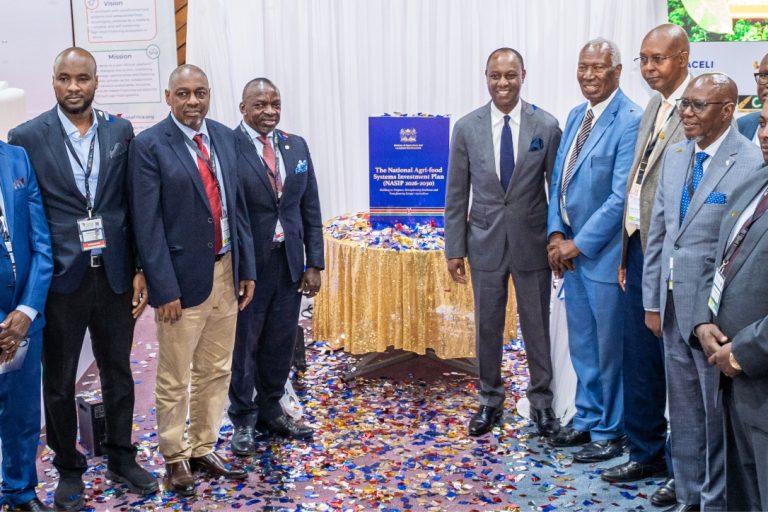
The Ministry of Agriculture and Livestock Development in Kenya, has today launched a landmark KES 1.081 trillion Kenya National Agri-food Systems Investment framework that will help guide the country in its agricultural transformation in the next five years, as part of the second phase of implementing the Agricultural Sector Transformation and Growth Strategy (ASTGS 2019-2029).
The launch, which was presided over by Jonathan Mueke, Principal Secretary, Ministry of Agriculture and Livestock Development on behalf of the Cabinet Secretary for Agriculture Hon. Mutahi Kagwe took place during the official opening of the Financing Agri Food Systems Sustainably (FINAS) Summit 2026 at KICC, Nairobi.
The Investment Plan is aimed at building resilient food systems, modernizing agricultural value chains, expanding irrigation, strengthening food security, creating more than 2 million jobs within the period while increasing farmer incomes, and positioning Kenya as a competitive regional hub for sustainable agrifood investment.
“I am equally proud that the 2026 FINAS Summit provides the platform for the official launch of the National Agri-food Systems Investment Plan (NASIP 2026–2030). At the heart of NASIP is a fully costed investment framework of KES 1.081 trillion over the next five years.” said PS Mueke.
“This investment will be mobilized through a strategic partnership in which the Government of Kenya, together with County Governments, will contribute 35 percent. I am calling on the commitment of the County Governments, through the Council of Governors, to achieve this goal.  The private sector is expected to contribute 45 percent, and the Development and bilateral partners’ share is 20 percent of the total investment envelope.” added PS Mueke.
The launch of NASIP 2026 – 2030 coincided with the call for the accelerated implementation of the Comprehensive Africa Agriculture Development Programme (CAADP) Kampala Declaration during the opening ceremony.
The summit comes at a pivotal moment as African countries begin implementing the 2026–2035 CAADP Kampala Strategy and Action Plan, which seeks to strengthen sustainable food production, agro-industrialisation, trade, investment, climate resilience, inclusivity and food systems governance across the continent.
Held under the theme “Towards Sustainable Financial Architecture for Africa’s Food Systems,” the summit features high-level discussions on blended finance for agri-food systems, climate-smart investment pathways, innovative agri-finance solutions, and country case studies from Kenya, Nigeria, and Ethiopia, among others.
FINAS Summit Director, Dr. Charity Mutegi noted that the summit champions moving from dialogue to delivery, rallying behind key stakeholders to advance the agri-food systems in Africa. She said: “In its third edition, FINAS 2026 has continued to advance sustainable finance as a lever for meaningful change in Africa, laying ground for the unveiling of a private-sector-led agriculture finance working group.”, Dr. Mutegi said.
At FINAS 2026, delegates from across Africa will also explore practical tools such as the Food and Agriculture Organization’s (FAO) Monitoring and Analysing Food and Agricultural Policies (MAFAP) expenditure reviews and the World Bank–IFAD Financial Flows to Food Systems (3FS) framework to help diagnose financing gaps and mobilise greater public and private investment.
Speaking during the opening session, H.E. Ms. Caitríona Ingoldsby, Ambassador of Ireland to Kenya, underscored the importance of international partnerships in advancing Africa’s food systems transformation. She said: “Africa’s food systems transformation requires strong partnerships that bring together governments, development partners, the private sector and smallholder farming communities. Ireland remains committed to supporting inclusive and sustainable partnerships on improving Africa’s agri-food systems.” she said.
Prof. Hamadi Iddi Boga, Vice President for Programme Delivery at AGRA, called on stakeholders to move from dialogue to implementation in achieving the ambitions of the Kampala Declaration. “Africa has no shortage of strategies or commitments. What is needed now is implementation at scale. We must move with urgency to translate the Kampala Declaration into practical investments, stronger institutions and measurable outcomes that improve the lives of farmers and strengthen food systems across the continent.” he said.
Maren Kneller, Head of Development Cooperation at the German Embassy in Kenya, urged African governments and development partners to strengthen efforts to catalyse financing for sustainable agri-food systems. “Achieving sustainable and resilient food systems will require significantly greater investment from both the public and private sectors. Governments have an important role to play in creating enabling environments that reduce risk, attract capital and accelerate innovation across agricultural value chains.” she said.
The Summit is also placing strong emphasis on demand-driven, climate-smart finance, recognising the need to align agricultural financing with climate adaptation and mitigation goals. Rashmi Pillai, CEO of FSD Kenya, underscored the importance of innovative financial models:
“As a sector, we need inclusive finance for sustainable agri-food systems. These systems should work for MSMEs and small scale farmers to get a financial support which works for them. Together, let’s work towards building a system that truly works for Africa and let’s continue keeping farmers at the center of the conversations and the future we are creating.” said Rashmi Pillai, CEO, FSD Kenya.
The Summit comes at a time when there is growing momentum around agri-food systems transformation across Africa. Governments are increasingly prioritizing agriculture through budget allocations and policy reforms, while private sector players and development finance institutions are expanding investments into sustainable agriculture and food systems.

U.S Supreme Court upholds birthright citizenship in historic ruling

The U.S Supreme Court has ruled to uphold birthright citizenship. In what will be seen as a mega loss for U.S President Donald Trump, the U.S Supreme court declared birthright citizenship as the right to have rights!

President Trump had signed an executive order attempting to end birthright citizenship just hours after his return to the White House in January 2025.

The court’s Justices voted 6-3 in favour of birthright citizenship.

In the ruling, U.S Supreme Court Chief Justice John Roberts, who wrote for the majority, ruled that the language of the amendment which was passed shortly after the end of U.S civil war is clear that all persons born or naturalised in the United States and subject to the jurisdiction thereof, are citizens of the United States.

“The Framers of the Fourteenth Amendment extended that promise to ‘every free-born person in this land.’ We keep that promise today,” Chief Justice Roberts ruled.

Chief Justice Roberts wrote the opinion that included both conservatives and liberals. Three conservative justices Clarence Thomas, Samuel Alito and Neil Gorsuch dissented from the majority decision.

Justice Thomas ruled that ut was wrong for the court to reject President Trump’s executive order ending birthright citizenship. He claimed that his colleagues’ decision devalued U.S citizenship as it was understood by the framers of the 14th Amendment.

“I am not sure that today’s opinion will stand the test of time,” said Justice Thomas.

“The Citizenship Clause ‘added greatly to the dignity and glory of American citizenship.’ Today’s opinion devalues that citizenship. I respectfully dissent,” he said.

In a related report, the BBC reported Justice Thomas, who is black, as arguing that the 14th Amendment was now being  repurposed for political projects’ that go beyond its ‘sad history’ of securing equal rights for freed slaves.

Read More: Kenyans flee South Africa to escape xenophobic attacks

He claimed that freed slaves were entitled to U.S citizenship because they were Americans with no other homeland or allegiance to another foreign power.

More to follow…


Kenyans flee South Africa to escape xenophobic attacks

Kenyans fearing for their lives have joined other African nationals who are fleeing South Africa to escape xenophobic attacks that have gone out of control.

According to Diaspora Affairs Permanent Secretary Roseline Njogu, the government has repatriated 26 Kenyans with another 64 Kenyans expected to land home on June 30th.

This came as vigilante groups in South Africa protesting against the presence of other Africans in the country took to the streets on June 30.

The vigilante operations were previously conducted by members of the Dudula gang led by one of its founders who is known as Zandile Dabula. This gang went door to door, hospital to hospital kicking out black people who are not South African citizens from their houses, businesses, and even from their hospital beds.

However, this gang appears to have grown with various groups such as March & March of black South Africans now targeting any black person who does not hold South African citizenship, regardless of whether they are in the country legally or illegally.

In videos that have gone viral on social media, black South Africans have been recorded attacking businesses and demanding to be hired regardless of whether they qualify for the jobs or not, and regardless of whether they have relevant education or not.

According to a report that appeared on the BBC, Nigeria flew out 269 of its citizens on June 29th, bringing to around 600 the number evacuated by the country.

In May, Ghana evacuated close to 400 people over xenophobic attacks that were being perpetuated on its citizens. Malawi, Mozambique and Zimbabwe also repatriating their citizens by plane or bus. Malawi is reported to have repatriated close to 7,000 nationals from South Africa.

According to the BBC, anti-migrant marches were authorized by the South African government in Durban, Johannesburg and other major cities.

READ MORE: SA deports Kenyans processing white South Africans’ refugee applications for US

The protestors claim that black people from other African countries are finishing up their medicines, and using their health facilities for free, taking up their jobs, and even marrying their girlfriends.

They also claim that other Africans who are in the country are the reasons why their children have become addicted to drugs such as cocaine and crystal meth.

“To tell you the truth, I hate [African] foreigners. How I wish they could just pack and go and leave our country,” a woman known as Dimakatso Makoena told the BBC in a previous interview. She blames Africans who moved to the country from Sub-Saharan countries for her son’s addiction to crystal meth.

“He started smoking drugs when he was 14 years old,” she says, explaining how her son often goes out to steal things to feed his habit. One day he had tried to take some power cables to sell when he got electrocuted and burned.”

In an interview with the BBC, Dudula’s leader Dabula had first claimed that she and her gang are chasing illegal Africans from their country. But when she was challenged that many of her gang’s victims were legal immigrants, she claimed that regardless, ‘original’ South Africans needed to be prioritized over other black people in the country.

The xenophobic protests against migrants have seen black people being attacked and killed in broad daylight. In late May, for instance, two Mozambican men were killed in Mossel Bay, a coastal town in the Western Cape.

A Malawian man was also killed by black  locals at an informal settlement in the city of Pietermaritzburg, near Durban city. In 2008, 62 people were brutally murdered in the country for being black and from other African countries.

Six reasons why aircraft selection is economics, geography, and strategic patience 

0

Aircraft selection: The return of Kenya Airways’ iconic Boeing 777-300 has, unsurprisingly, generated considerable interest across Kenya’s aviation sector. With a capacity for roughly 400 passengers, the aircraft arrives at an opportune moment: the industry’s peak travel season. Its reintroduction also helps ease pressure on a fleet stretched by delays in aircraft returning from scheduled maintenance.

Such delays are hardly unique to Kenya Airways. Across the industry, airlines have found themselves at the mercy of supply-chain bottlenecks that have lengthened maintenance turnaround times and constrained available capacity. These are challenges over which carriers have rather less control than passengers hope.

The aircraft’s return has also revived a perennial debate about fleet composition and the logic behind selecting one aircraft type over another. Fleet decisions are seldom matters of sentiment, even when iconic aircraft are involved. They are shaped by a complex interplay of commercial, operational and strategic considerations.

The following are six factors that typically inform the selection of aircraft types within an airline fleet:

1.⁠ ⁠Demand and capacity requirements

Demand is the first, and usually the least negotiable, determinant of fleet composition. Forecast passenger numbers dictate seat capacity required on a route, compelling airlines to strike a delicate balance between load factor (percentage of seats occupied over total available seats) and revenue. An aircraft that departs fully is gratifying; one that departs profitably is rather more useful.

Jet A-1 is not Kerosene and other interesting facts

Aircraft are engineered for distinct capacity ranges, making the choice of equipment (aviation jargon for aircraft) more consequential than merely assigning metal to a route. Too many seats leave an airline carrying upholstery. Too few leave paying passengers behind, which is a rather expensive demonstration of popularity.

At Kenya Airways, for instance, routes attracting around 100 passengers are typically served by smaller jets. Markets requiring between 200 and 250 seats are better suited to the Boeing 787 family, while consistently stronger demand may justify deploying Boeing 777-class aircraft. In aviation, as elsewhere, size matters chiefly when it is matched to purpose.

2.⁠ Network, reach and operational range

Route length is among the first constraints in fleet selection as it narrows the range of suitable aircraft. Regional jets are generally deployed on short-haul routes, whereas wide-body aircraft are reserved for long-haul operations. Employing an aircraft beyond its intended range is rarely economical; the inevitable refuelling tends to delight neither passengers nor accountants.

Kenya Airways illustrates this point in practice. Its fleet employs the Embraer 190 and Boeing 737 on shorter regional sectors while the Boeing 787 Dreamliner and the recently reintroduced 777-300 serve intercontinental routes, where their range and capacity can be exploited to better effect.

Grounded in error – Ten fallacies about Kenya Airways (Part one)

3.⁠ ⁠The economics of fleet selection

Airlines seek the aircraft that delivers the required range and passenger capacity at the lowest sustainable cost, a pursuit that is less glamorous than it sounds and is considerably more expensive when misjudged.

Performance characteristics, including fuel burn, structural weight, engine efficiency and onboard technology, shape both operating costs and commercial viability. Lighter airframes and more efficient engines consume less fuel, extend range and improve profitability. Comparing these metrics across competing aircraft types enables airlines to assess cost per seat, route economics and long-term financial returns. In aviation, sentiment rarely survives contact with the fuel bill.

4.⁠ ⁠Airport infrastructure compatibility

Airports do not merely accommodate aircraft; they determine which ones can operate there at all. Runway length, pavement strength and elevation all influence take-off and landing performance as well as the maximum permissible operating weight. Nairobi, for instance, sists at a considerably higher altitude than Mombasa. The thinner air reduces engine and aerodynamic performance, requiring greater thrust during take-off and, in turn, increasing operating costs.

Such constraints shape engine selection and, in some cases, aircraft choice itself. Airlines must therefore ensure that an aircraft is compatible with the capabilities and limitations of both the departure and destination airports. At smaller or more specialised airports, the menu of viable aircraft can be surprisingly short; a reminder that aviation, for all its technological sophistication, remains beholden to geography.

Grounded in error – Ten fallacies about Kenya Airways (Part two)

5.⁠ ⁠Commonality and operational synergies

Operating aircraft within a single family yields benefits that are as practical as they are pecuniary. Commonality reduces training requirements, simplifies spares inventories, enables aircraft to be swapped with minimal friction and ultimately lowers operating costs; advantages that tend to appeal to accountants and schedulers in equal measure.

Within the Boeing 737 family, for instance, transition training typically takes days rather than weeks or months required for a leap to a different aircraft family. The shared cockpit philosophy across Boeing types further reduces cognitive strain on pilots, which may explain KQ’s historical inclination towards a near mono-fleet strategy.

Fleet commonality thus offers more than operational tidiness. It proves a useful buffer against seasonality, enhances flexibility in deployment and keeps costs from wandering off on their own adventure. As such, it remains a strategic consideration (quietly influential, occasionally decisive) in any fleet acquisition programme.

6.⁠ ⁠Fleet acquisition and financing strategy

Aircraft procurement is not so much a purchase decision as a prolonged exercise in strategic patience. Fleet requirements may be studied for up to a year before conviction is reached; actual commitment, however, can take as long as seven. Manufacturers, for their part, are in no hurry either: production slots are allocated years in advance within the comfortable rhythms of the Boeing-Airbus duopoly.

In practice, placing a firm order today may result in an aircraft arriving only around a decade later, by which point both the airline’s strategy and business cycle may have developed entirely new opinions on the matter.

In summary, fleet planning is one of the most consequential decisions an airline makes. Every aircraft represents a commitment that can shape an airline’s network, finances and customer experience for decades. Behind every new aircraft announcement lies years of forecasting and strategic planning, much of which is invisible to the passengers but fundamental to every journey they take.


Airtel Kenya appoints Djibril Tobe as new Managing Director

0

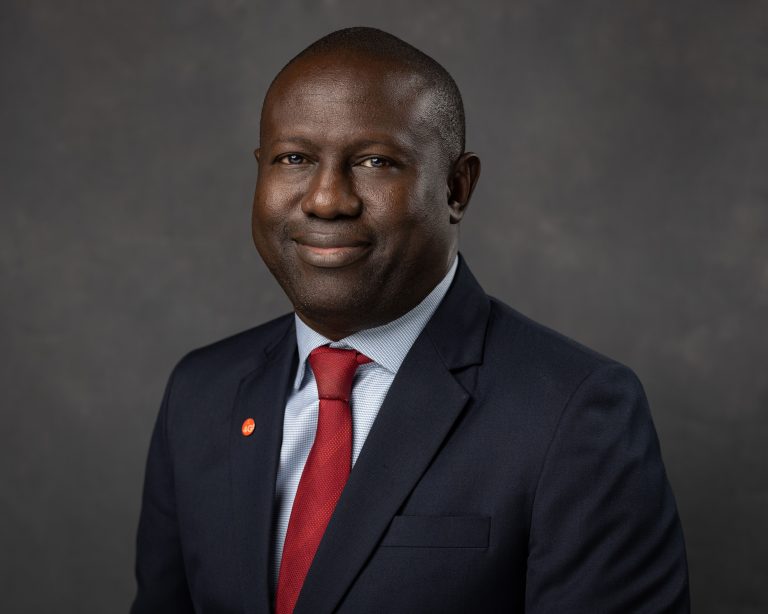
Airtel Kenya has appointed Djibril Tobe as its new Managing Director, taking over from Ashish Malhotra, who has been promoted to Chief Executive Officer of Indus Towers Africa after serving at the helm of the Kenyan business for four years.

The appointment, announced by the Board of Airtel Networks Kenya Limited, ushers in a new chapter for the telecommunications firm as it seeks to build on recent growth in its network, subscriber base and digital financial services.

Tobe brings more than two decades of leadership experience spanning the telecommunications, fast-moving consumer goods and consulting sectors across several African markets. He joins Airtel Kenya from Airtel Congo B, where he has served as Managing Director since May 2023.

His career within the Airtel Group also includes stints as Managing Director of Airtel Chad and Commercial Director at Airtel Burkina Faso. Before joining Airtel, he served as Chief Executive Officer of Expresso Guinea and held leadership positions at Ernst & Young and Coca-Cola.

The Board said Tobe’s experience in driving business transformation and commercial growth across Africa positions him well to lead Airtel Kenya through its next phase of expansion.

He succeeds Malhotra, whose tenure was marked by significant growth for the telecommunications operator. Under his leadership, Airtel Kenya undertook the largest network expansion in the company’s history, rolling out more than 2,000 network sites to enhance connectivity and support greater digital and financial inclusion.

During the four-year period, Airtel Money’s market share grew from 2 per cent to 11 per cent, while the company’s subscriber base increased from 16 million to more than 24 million customers. Airtel Kenya also doubled its revenues over the same period.

Malhotra also oversaw the introduction of several customer-focused innovations, including 5G services, eSIM technology, fibre connectivity solutions, Spam Alert services and the rollout of the Home & Office Smart Connect broadband platform.

In a statement, the Board thanked Malhotra for his contribution to the company’s growth and expressed confidence in Tobe’s ability to sustain the momentum.

“We welcome Djibril Tobe to his role and are confident that his expertise will steer Airtel Kenya to the next level as we continue delivering innovative and relevant solutions. We would like to commend Ashish for his immense contribution to Airtel Kenya’s growth journey and wish him success in his new role,” the Board said.

The Board added that it expects Tobe to lead Airtel Kenya’s next phase of growth, innovation and customer-centric transformation, building on the progress achieved over the past several years.

Also Read: Ruto government loses Sh16 billion in rush to sell Safaricom stake

TSC: All teachers to renew their licenses every 5 years

All TSC teachers serving or licensed by the Teachers Service Commission (TSC) will be required to renew their teaching licenses every five years. This is according to new proposals that are contained in a new draft policy by the TSC.

According to Acting TSC Chief Executive Officer Evaleen Mitei, this will be done through the new Teacher Professional Development (TPD) programme  that the TSC programme will offer to teachers for free.

She claimed that this new programme has been designed in collaboration with teachers and other stakeholders in the education sector.

 “The purpose of TPD is to improve teachers’ competencies. Like other professions, the teaching service must also be licensed. That is why the five-year programme will lead to the renewal of your teaching licence,” said Ms Mitei.

According to Ms Mitei, renewal will be tied to the successful completion of the TPD programme over each five-year cycle.

This policy, she said, is supposed to enhance professionalism, keep teachers updated with evolving educational practices, and align teaching with other licensed professions.

The policy is part of the proposed reforms contained in the draft Teachers Service Commission (Amendment) Regulations, 2026.

She added that Kenya developed a Teacher Mobility Policy to facilitate teachers seeking employment abroad, but many have encountered challenges because the Kenya does not have a formal teacher license renewal programme after continuous professional development.

Read More: Details of new TSC promotion reforms for all teachers in Kenya

Ms Mitei further said that the TPD digital platform that is being developed by the TSC will enable teachers and school administrators in the country to access learning modules remotely. This will be done in a bid to cut down on travel costs that are incurred by teachers.

However, classroom teachers and school administrators will be required to take separate modules. In the module to be designated for classroom teachers, the modules will facilitate teachers to focus on strengthening pedagogical skills and classroom practice.

On the other end, administrators such as principals and deputy principals will take training in leadership, financial management, governance and school administration.

At the same time, Ms. Mitei said that the TSC is currently reviewing teacher staffing norms to align them with the requirements of the curriculum based education (CBE).

The TSC is also implementing the Teacher Induction, Mentorship and Coaching framework to support newly recruited teachers while providing continuous professional guidance to experienced educators.

It is also implementing the Teacher Performance Appraisal and Development (TPAD) system for classroom teachers and performance contracts for heads of institutions to improve accountability and institutional performance.

This comes amidst upcoming promotion reforms that the commission has draw as part of the 2026 Career Progression Guidelines (CPG).

In these reforms, the TSC has slashed the amount of time that is required for teachers to reach the highest grade from 30 to 18 years.

The reforms indicate that the teachers commission shall introduce separate career tracks to cater for classroom teachers and teachers who hold leadership and administrative roles. Under these tracks, teachers will move up within a unified grading structure that shall range from Teacher 9 to Teacher 1. Teacher 9 represents the entry-level grade while Teacher 1 represents the highest-level grade.

TSC teachers in primary school level will start their progression from Teacher 9 while those in secondary schools who hold diploma qualifications will start off at Teacher 8. According to the TSC, this shall mean that a diploma qualification will attract the same entry grade regardless of whether the teacher practices at primary school or secondary school.

For the second track catering for secondary school teachers, the majority will start off at Teacher 7. This group will mainly be made up of teachers who hold university degrees.

The proposed reforms show that this category of teachers will benefit from the first common cadre promotion of Teacher 6. After Teacher 6, subsequent promotion will primarily be based on the teacher’s demonstrated competency and performance instead of the current mode of automatic advancement.