
Home Blog Page 10

From Lake Victoria fisherman to 480-acre sugarcane entrepreneur

0

The shores of Lake Victoria are beautiful, but for fisherman Radido Otieno Peter, they were also unforgiving.

For six years, Peter cast his nets into the lake, living with the uncertainty of the catch and the constant gamble against changing weather and tides. Then, in 2010, he made a decision that would change the course of his life: he left fishing behind and turned to farming.

“I decided to leave the fishing nets behind,” Peter recalls. “I wanted to start farming. I wanted to plant something on the earth and watch it grow.”

He began with just three-quarters of an acre in Ywaya, Siaya County, planting sugarcane with little more than hope, patience and determination.

When the first harvest came in, Peter was surprised by what the crop had yielded. Rather than spend the proceeds, he saved almost every cent and leased three more acres. That decision marked the beginning of an extraordinary journey.

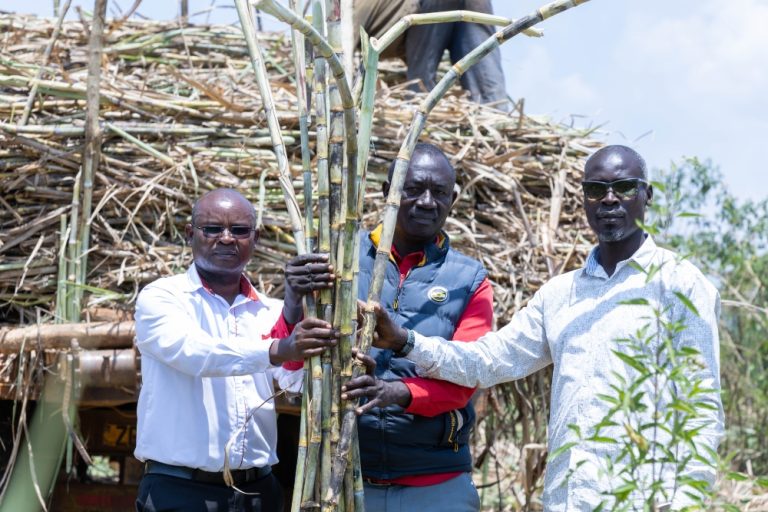
Today, the small piece of land he started with has grown into a 480-acre sugarcane enterprise, making Peter one of the leading individual suppliers of sugarcane in the region. He delivers approximately 6,000 metric tonnes of cane every year.

Peter attributes his growth to three critical partners: himself as the farmer, West Kenya Sugar Company as the miller, and Equity Bank as the financier.

It is a relationship that has evolved over more than a decade.

“Peter has grown from one acre to nearly 500 acres,” says Titus Ondigo, Head of Agriculture at West Kenya Sugar Company, who has followed Peter’s journey for 15 years. “In our company, we don’t call him a farmer; we call him a stakeholder. He gives us thousands of tonnes of cane every year. That is not an ordinary farmer. That is someone the entire value chain relies on.”

With annual turnover exceeding Ksh30 million, Peter’s story demonstrates the potential of agriculture to create sustainable wealth. But farming at scale also comes with a fundamental challenge: sugarcane can take up to 18 months to mature, while the farmer’s financial needs continue throughout the production cycle.

“Cane takes time, but life does not stop,” Titus explains. “A farmer with a five-month-old crop still has school fees and medical bills. Without support, they might harvest early and lose profits. That is where Equity Bank steps in to bridge the gap, keeping the farmer’s life moving while the crop grows.”

For Nelson Otieno Ogon, Branch Manager at Equity Bank Mumias, Peter’s journey illustrates what sustained, relationship-based banking can achieve at the grassroots level.

“Peter has been banking with us for more than ten years,” says Nelson. “When you analyse his account, you see the beautiful story of steady, disciplined growth. He started with an unsecured loan of Ksh 500,000. As his business grew, we walked with him to Ksh 800,000, then Ksh1 million, and recently we financed his agrovet shop for about Ksh2 million.”

Simple organic remedies for farmers wishing to cut pesticide costs

The relationship has also enabled Peter to invest in the tools needed to grow his agricultural enterprise.

A Ksh3.4 million tractor, acquired through Equity’s asset finance, now sits on his farm. “Now, I can plough my farms easily and on time,” Peter says, gesturing towards his fields. “Whether it is early morning or late in the evening, I just start my tractor and go. It has changed everything.”

The financing has extended beyond Peter’s own farm. Through his agrovet business, he is also supporting other farmers in the surrounding community with access to agricultural inputs.

For Equity Bank, the relationship reflects how its Africa Recovery and Resilience Plan (ARRP) can translate into tangible support for entrepreneurs and farmers at community level – from financing agricultural inputs and mechanisation to supporting businesses that serve farmers along the value chain.

Peter’s growth has also created employment. His farm provides work for between 150 and 160 casual labourers every day, from tractor operators to workers involved in harvesting and loading cane.

“I look at these 480 acres and know I cannot consume all this wealth alone,” Peter says with a laugh. “This farm belongs to the community; it keeps our local economy moving.”

For Peter, however, the impact of his farming enterprise is measured in more than acreage, tonnes and turnover.

The proceeds from his sugarcane business have helped educate his six children in university and four in high school, turning the farm into an investment in his family’s future.

His influence also extends into the wider community. As patron of a local women’s group, Peter has encouraged members to embrace formal banking. The group is now exploring financing through Equity for a passenger van to support local transport.

Peter’s journey from fishing on Lake Victoria to managing hundreds of acres of sugarcane is ultimately a story about recognising an opportunity, reinvesting patiently and building the right partnerships.

What began as a three-quarter-acre experiment has become a thriving enterprise, creating jobs, supporting families and demonstrating the economic potential of agriculture in rural Kenya.

Peter left the lake in search of a more predictable future. On the land, he found much more than a livelihood he found an enterprise capable of transforming an entire community.


What Betting Apps Reveal About Building for Low-End Android

0

Kenya’s betting platforms are not usually discussed as engineering case studies. They should be. Few categories of consumer software face the same combination of constraints: mass adoption on inexpensive hardware, expensive and intermittent data, and traffic that spikes violently around fixed events.

Whatever you think of the industry, the technical problems it has been forced to solve are the ones every consumer product in the region eventually runs into.

The device reality

The typical user is not on a flagship phone. They’re on an entry-level Android device with limited RAM, modest storage, and a browser that struggles with heavy JavaScript.

This produces a specific engineering discipline. Storage constraints mean app size is a genuine acquisition barrier — every additional megabyte costs installs. It’s why so many Kenyan platforms ship a stripped-down ‘lite’ variant alongside the main app, and why those lite versions often see more usage than the full ones.

Kenya’s Top Betting Platforms with Welcome Offers

It also means client-side rendering has real costs. A page that composes itself in the browser feels instant on a test device and sluggish on the hardware most users actually own.

Data cost as a design constraint

Mobile data in Kenya is bought in small bundles and consumed carefully. Users notice when an app burns through their allowance, and they uninstall the ones that do.

The practical consequences are visible if you look for them: aggressive image compression, minimal use of video, live scores delivered over lightweight polling rather than heavy persistent connections, and interfaces that degrade rather than break when the connection drops mid-request.

That last point is the hardest to get right and the most important. On an unstable network, the question isn’t whether a request fails — it’s what the interface does when it does. Platforms that handle this badly generate support tickets; platforms that handle it well are simply described by users as ‘fast’.

The traffic spike problem

Most consumer apps have diffuse usage patterns. Betting doesn’t. Load concentrates brutally around kickoff times, jackpot deadlines and the final minutes before a major fixture.

This is a genuinely hard infrastructure problem, because the peak is many multiples of the baseline and it’s non-negotiable — a platform that slows down in the ninety seconds before a deadline has failed at the only moment that mattered.

It’s also where user-facing quality gets judged. Complaints about Kenyan platforms cluster around two things: the app struggling at peak times, and withdrawals taking longer than expected. Both are infrastructure problems presented as product problems, and reviews that examine them specifically — like this GameMania review covering payout processing alongside the app experience — capture something feature comparisons miss entirely.

The M-Pesa integration layer

Nearly every Kenyan betting platform runs on M-Pesa, and that integration is more complex than it appears from the outside.

Payments are asynchronous: a request is initiated, the user confirms on their handset, and confirmation arrives via callback. Handling that cleanly means dealing with delayed callbacks, duplicate notifications, and users who close the app mid-transaction — while keeping balances correct.

Add statutory deductions applied at both deposit and payout, and reconciliation becomes genuinely non-trivial. Platforms that get this wrong produce the worst possible user experience: money that left an account and hasn’t appeared where it should.

What generalises

Three lessons apply well beyond gambling.

App size is an acquisition metric, not just an engineering one. On storage-constrained devices, every megabyte is a conversion cost.

Failure states matter more than happy paths. On unreliable networks, most of your users’ worst experiences happen when something goes wrong, and that’s the flow least likely to have been designed carefully.

Payment reliability is the product. Users forgive a plain interface. They do not forgive money that goes missing, and no amount of feature work compensates for a cashier that doesn’t work.

Betting is a contested industry with real social costs, and none of the above is an endorsement. But as a technical case study in building for the constraints that define the region’s actual internet, it’s more instructive than most.

Why Asset Finance Is the Smartest Growth Strategy for Your Business

Asset Finance: How one farmer used the facility to transform his business

For six years, Elisha Kibet was a small-scale farmer managing a six-acre farm in Uasin Gishu County that he had inherited from his late maternal grandfather. He kept dairy cattle, poultry and sheep.

“I was utilizing two acres of the farm. I kept two dairy cows, 50 chickens, 10 ewes and five rams,” says the 46-year-old father of three.

From selling milk, eggs, chicken and wool, Kibet earned about Sh21,000 per month.

“I was not making much, but since I didn’t pay rent, my income was enough for my family and me,” he says.

Equity Group net profit rises 32pc to Sh45.5 billion in six months

A business growth opportunity hidden in idle land

In 2023, Kibet began thinking about expanding his farming enterprise.

“I had an extra four acres that I was not using. If I was making Sh21,000 from two acres, I thought I could raise my income to at least Sh60,000 by utilizing the remaining four acres,” he says.

His first idea was to lease out the idle land. He spread the word throughout his village but abandoned the plan after receiving disappointing offers.

“Most customers offered Sh15,000 per year, which translated to Sh60,000 for all four acres. That would only have increased my monthly income by about Sh5,000. It simply wasn’t worth it.”

Instead, his wife, Doris Kibet, a teacher at a local primary school, encouraged him to expand his own farming operations.

“She believed I would earn much more by utilizing the land myself. She suggested growing maize, wheat and beans.”

The asset finance decision marked the transition from small-scale to medium-scale farming.

Equity Bank and Inchcape Kenya announce strategic asset finance partnership

How asset finance made expansion possible

To expand successfully, Kibet needed modern farm machinery and quality farm inputs. His first target was a New Holland 4WD TT75 tractor valued at Sh3.5 million.

“My wife had saved Sh220,000 in her chama while I had Sh170,000 in my Equity Bank account. That was nowhere near the Sh3.5 million required,” he recalls.

“I would probably have given up were it not for my wife, who encouraged me to share my business idea with my bank.”

When Kibet visited his Equity Bank branch in Eldoret, he discovered that purchasing the tractor did not require raising the full amount upfront.

“Out of the Sh3.5 million, the bank agreed to finance up to 90 per cent. That meant I only needed to raise Sh350,000,” he says.

After presenting his bank statements alongside his wife’s payslips, the financing package was approved.

Within less than two weeks, the asset finance was finalized through a partnership between the bank and the tractor dealer.

“In less than two weeks, the tractor was already tilling my land.”

From cattle to crops: How Equity Bank is helping farmers manage farming risks

Higher productivity, higher income and faster growth

The investment immediately transformed Kibet’s business.

His dairy herd has grown from two cows to five. He now keeps 100 chickens and 16 sheep, comprising nine ewes and seven rams.

“My farm is now known as Kibet Mashambani Farm,” he says proudly.

His crop yields have also improved significantly.

Two acres now produce at least 38 bags of maize per acre, each weighing 90 kilograms. The remaining two acres produce nine 90-kilogram bags of beans per acre.

Beyond farming his own land, Kibet also hires out his tractor to neighbouring farmers.

“I have been tilling and harrowing farms in my community for hire, which has increased my income and enabled me to accelerate my loan repayments.”

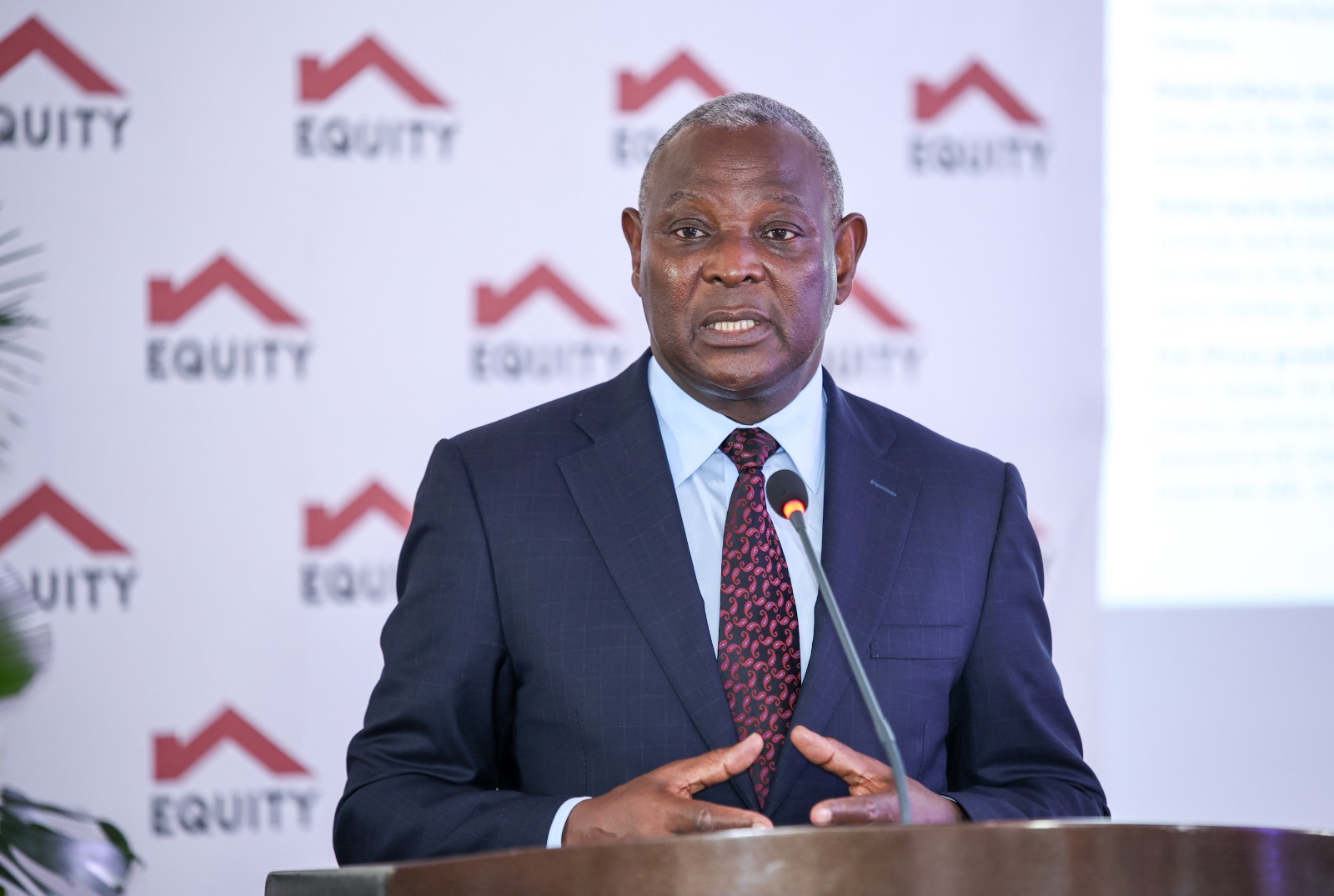
Equity Group Holdings CEO Dr James Mwangi

Using business assets to unlock more financing

Kibet’s success has encouraged him to plan his next investment.

He recently approached Equity Bank asset finance to explore financing for an Isuzu FRR truck that would transport produce from his farm and neighbouring farms to markets in Eldoret, Nakuru and Nairobi.

One of the advantages of asset financing, he says, is flexible collateral requirements.

“I used my tractor as collateral. If I get the Isuzu truck, the bank will also allow me to use it as collateral.”

Boostika targets everyday cash flow gaps for Equity customers

Why are more SMEs choosing asset finance?

A spot check by Bizna Kenya shows Kibet’s experience is far from unique. Equity Group has been boosting its asset financing packages to grow small and medium businesses across the country. The lender has financing packages that are tailor-made for various assets. Equity Group has a wide array of asset financing solutions to support the growth of small businesses across Kenya.

The lender provides financing for:

  • Agricultural equipment and machinery
  • Commercial vehicles
  • Construction equipment
  • Industrial plant and machinery
  • Office equipment
  • IT infrastructure
  • Entrepreneurs and agri-preneurs also benefit from flexible collateral arrangements, including using the financed asset itself as security.

Flexible financing designed for business growth

Equity has packages offering the full 100 per cent financing. This includes 100 per cent financing for farm equipment such as tractors, lorries, pick-up trucks and even matatus.

The facilities come with:

  • Up to 84 months (seven years) repayment period
  • A 90-day repayment holiday
  • Up to Sh1 million working capital support for qualifying agri-preneurs and SMEs

Although Kibet received a repayment period of up to five years, he has chosen to clear his loan much earlier.

“I have opted to accelerate my repayments and expect to finish the loan in less than three and a half years. But even if I wanted to utilize the full five years, the repayment period gives me enough breathing room.”

Equity leaders program sends African scholars to global universities

Equity Bank’s growing support for SMEs and agriculture

Equity’s focus on financing productive sectors continues to strengthen.

In 2025, the lender topped Kenya’s banking industry after disbursing Sh90.7 billion to micro, small and medium enterprises (MSMEs). This represented 28 per cent of the Sh326.5 billion advanced to the sector that year.

“We are not just a conventional lender to small businesses. We come in as a strategic partner who facilitates your success,” says Equity Group CEO Dr James Mwangi.

Dr Mwangi notes that Equity has committed to continue increasing its financing of the agriculture, manufacturing and MSMEs sectors.

By 2030, Equity plans to allocate:

  • 30% of its loan book to agriculture
  • 65% to micro, small and medium enterprises
  • 15% to manufacturing

Asset financing is changing the future of Kenyan SMEs

Business development analyst MaryAnne Nyabuto says the bank’s strategy presents significant opportunities for entrepreneurs and farmers seeking sustainable growth.

“Most financial institutions have historically underserved the agricultural and MSME sectors,” she says.

“What we are now seeing is a shift from that trend, with Equity Group opening up affordable asset financing to farmers and small business owners who want to grow.”

For entrepreneurs like Elisha Kibet, access to asset finance has done more than purchase equipment—it has unlocked productivity, expanded income streams and accelerated business growth. His experience demonstrates that for many SMEs, the smartest investment is not waiting until enough capital has been saved, but leveraging asset financing to build productive capacity today.

Apply for Equity Bank Asset Financing HERE.

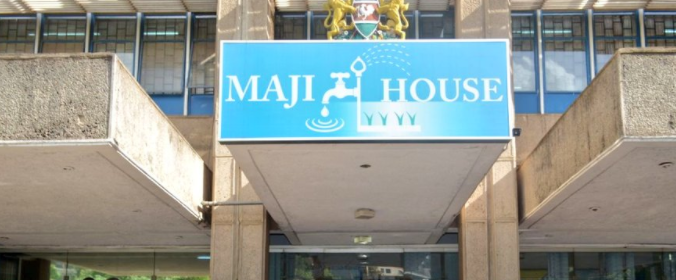
Ministry of Water announces 12-month paid internships for 65 graduates

0

The Ministry of Water, Sanitation and Irrigation has opened applications for a 12-month paid internship programme targeting 65 young graduates.

In a notice published in the MyGov newspaper on Tuesday, September 1, 2026, the ministry said the internship programme would be implemented during the 2026/2027 financial year.

The programme is coordinated by the Ministry of Water, Sanitation and Irrigation and managed by the Regional Centre on Groundwater Resources (RCGW).

The second cohort of the programme is expected to begin work in January 2027 under the Horn of Africa Groundwater for Resilience Project (HoAGW4RP), funded by the World Bank through its International Development Association (IDA).

The HoAGW4RP seeks to improve access to groundwater and promote its sustainable management in the Horn of Africa borderlands.

The ministry said the internship initiative would provide young professionals with an opportunity to gain hands-on experience while contributing to the implementation of the groundwater resilience project.

Who is eligible?

The opportunity is open to graduates aged between 25 and 35 who obtained a relevant Bachelor’s degree from a recognised institution of higher learning not more than two years before the date of the advertisement.

Applicants must not have previously benefited from another internship programme funded by the Government of Kenya. They must also not have secured formal employment in their area of specialisation after graduation.

The ministry is seeking graduates from a wide range of disciplines, including geology, hydrogeology, environmental science, natural resources management and water-related civil engineering.

Other eligible fields are sociology, gender and development studies, Geographic Information Systems (GIS), remote sensing, Information and Communication Technology (ICT), communication, data science, chemistry, hydrometeorology and climate analysis, hydrology, economics, finance and other water-related engineering disciplines.

Internship terms

Successful candidates will serve for 12 months on a non-renewable basis and will receive a monthly stipend in line with prevailing Government guidelines for the Public Service Internship Programme and other applicable policies and circulars.

At the end of the internship, participants will receive certificates upon successful completion of the programme.

The interns will be deployed to various agencies and counties participating in the HoAGW4RP. They may also be required to undertake field assignments in the five counties targeted by the project.

The ministry said successful applicants should be willing to work at any relevant office or workstation where an internship position is available within institutions implementing the project.

During the placement, interns will perform duties assigned by their supervisors and mentors, participate in mentorship activities and document the skills and experience gained.

They will also be expected to comply with monitoring and evaluation requirements as well as the rules and regulations governing the public institutions where they are posted.

Documents required

Candidates selected for the programme will be required to provide additional documents before taking up their placements.

These include a valid personal accident insurance cover for the entire internship period, a Certificate of Good Conduct, a copy of their Kenya Revenue Authority (KRA) PIN certificate and bank account details.

The ministry warned that an internship placement could be terminated in cases of gross or disorderly conduct, poor performance or involvement in a criminal offence.

An intern who wishes to leave the programme may terminate the agreement by giving the required notice through their supervisor and the head of the public institution where they have been posted.

How to apply

Interested graduates are required to submit the official internship programme application form alongside a cover letter, copy of their identification card, curriculum vitae, relevant academic certificates and other supporting documents.

Applications should be submitted by email to [email protected] using the subject line “APPLICATION FOR THE HoAGW4RP INTERNSHIP 2027.”

The application deadline is Friday, September 18, 2026.

Also Read: TSC re-advertises 1,631 promotional posts for serving teachers

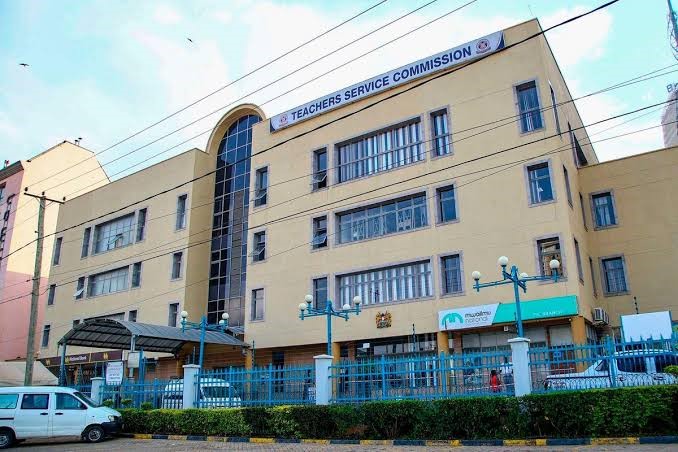
TSC re-advertises 1,631 promotional posts for serving teachers

0

The Teachers Service Commission (TSC) has re-advertised 1,631 promotional positions for serving teachers, giving eligible educators another opportunity to compete for leadership positions in primary and secondary schools.

The vacancies, announced in the MyGov edition published on Tuesday, September 1, 2026, include positions of Deputy Headteacher II, Deputy Principal III and Senior Master II.

TSC said the recruitment is being conducted under the Career Progression Guidelines for Teachers.

The bulk of the vacancies are 1,470 positions for Deputy Headteacher II at Grade C4, T-Scale 9. The positions have been listed under Advert No. 110/2026.

The Commission has also advertised 132 vacancies for Deputy Principal III at Grade D1, T-Scale 11, under Advert No. 108/2026.

A further 29 positions for Senior Master II, also at Grade D1 and T-Scale 11, are available under Advert No. 109/2026.

Eligible serving teachers have been directed to submit their applications through the TSC online recruitment portal. The application window will close at midnight on Monday, September 14, 2026.

TSC has emphasised that applications must be submitted electronically through the designated recruitment portal, with manual applications not accepted.

Teachers who applied for the same positions during the previous advertisement and successfully submitted their applications will not be required to apply again.

Successful candidates will be deployed to schools and institutions with existing vacancies. Consequently, teachers selected for promotion may be posted to stations different from their current workplaces.

The Commission has reiterated its commitment to equal employment opportunities and encouraged persons with disabilities who meet the requirements to apply.

“The Teachers Service Commission is an equal opportunity employer. Persons with disabilities are encouraged to apply.”

Also Read: HELB announces Sh500,000 training loans for civil servants

Inside Uhuru’s high-end livestock farm: How much cattle, sheep, and goats cost

0

Gicheha Farm, an expansive agricultural enterprise associated with former President Uhuru Kenyatta, has put a wide range of pedigree livestock on the market, offering farmers an opportunity to acquire breeds selected for milk production, meat, wool and adaptability to local conditions.

The farm, located about a kilometre off the Nakuru-Eldoret highway, covers more than 4,000 acres and is home to over 1,000 animals, with a significant proportion of the livestock reportedly imported from South Africa.

Animals available for purchase range from high-yielding dairy cattle and specialised goats to sheep, pigs, and poultry, with prices varying by breed and other characteristics.

Among the most expensive animals listed are Girolando cattle, a breed known for its ability to withstand heat while maintaining high milk production.

The farm says the animals can produce between 50 and 60 litres of milk a day, with high butterfat content. Prices range from $900 (about Sh116,505) to $2,200 (Sh284,790).

Friesian cattle, another popular dairy breed, are listed at between $850 (Sh110,033) and $2,500 (Sh323,625). The breed can produce between 25 and 40 litres of milk daily.

Ayrshire cattle, which are considered well suited to pasture-based farming systems, cost between $800 (Sh103,560) and $2,000 (Sh258,900).

Jersey cows, meanwhile, are priced from $750 (Sh97,088) to $1,900 (Sh245,955). The breed is particularly sought after for its rich milk, which typically contains butterfat levels of between five and six per cent.

Other dairy breeds available include Guernsey cattle, which are favoured for butter production. They are listed at between $820 (Sh106,149) and $2,100 (Sh271,845).

Brown Swiss cattle, valued for their longevity and suitability for cheese production, cost between $950 (Sh122,978) and $2,300 (Sh297,735).

Dairy goats

Gicheha Farm’s goat section features several dairy breeds aimed at farmers seeking alternative sources of milk.

Saanen goats, regarded as high-producing dairy animals, are listed at between $140 (Sh18,123) and $260 (Sh33,657). The breed can produce about five to six litres of milk per day.

Alpine goats, known for their grazing ability, cost between $150 and $280, while Toggenburg goats, valued for their tolerance to colder conditions, range from $145 to $270.

German Alpine goats are priced between $160 and $290, while Nubian goats cost between $170 and $300.

Sheep for meat and wool

The farm also offers sheep breeds selected for different production purposes.

The locally adapted Red Maasai, recognised for its ability to withstand harsh conditions and resist disease, starts at $120 (about Sh15,534).

For farmers interested in wool production, Merino sheep command higher prices, reaching up to $420 (Sh54,369).

Dorper sheep, a popular meat breed that does not require shearing, are available for between $180 (Sh23,301) and $400 (Sh51,780). Lambs are also available, with prices starting from $39 (Sh5,049).

Pigs and poultry

The farm’s livestock catalogue also includes several pig breeds, ranging from Yorkshire to Berkshire.

Berkshire pigs, known for producing premium pork with a distinctive dark flavour, are priced between $250 (Sh32,363) and $700 (Sh90,615).

Poultry forms another component of the farm’s agricultural operations.

Layer chickens are priced at between $6 (Sh777) and $12 (Sh1,553) each, depending on the breed. The available varieties include Kuroiler, Sasso, White Leghorn, Hyline Brown, ISA Brown, Lohmann Brown and Rhode Island Brown.

For broiler production, the farm lists Kuroiler, Sasso, Arbor Acres, Hubbard, Ross 308 and Cobb 500. The birds are priced at between $5 (Sh648) and $7 (Sh907) each.

According to farm manager Jackson Odongo, who has overseen the farm’s export operations for more than 18 years, buyers receive documentation confirming the health status of the animals.

He said livestock is supplied with verified health certificates and complete vaccination records, while buyers also receive after-sale support.

Also Read: How Equity Bank is helping farmers manage farming risks

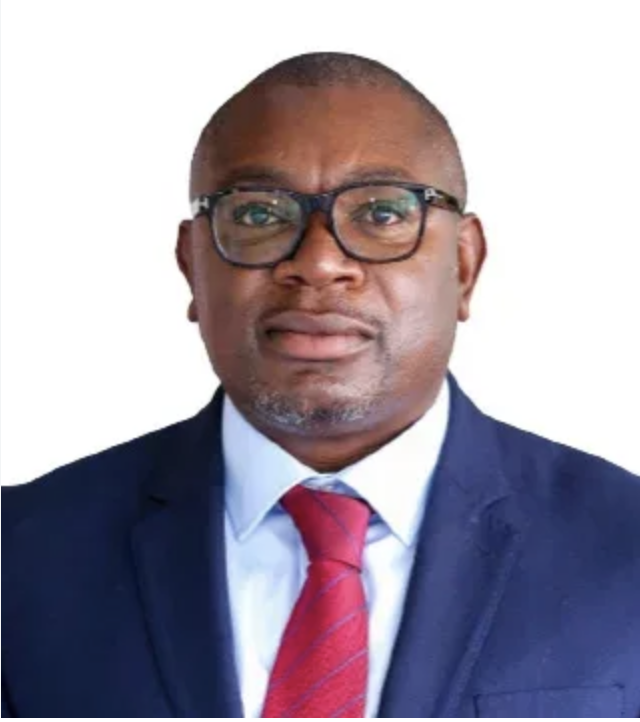
Kenya Airways appoints Habil Waswani as acting Group Managing Director and CEO

0

Kenya Airways PLC (KQ) has announced a leadership transition at the top of the airline, with Capt. George Kamal is resigning as Acting Group Managing Director and Chief Executive Officer for personal reasons.

The airline’s Board of Directors said Kamal will remain in service for a 30-day transition period before formally exiting on September 30, 2026.

Habil Waswani appointed Acting CEO

The Board has appointed Habil Waswani, Kenya Airways’ Company Secretary, Director of Legal Services and Regulatory Compliance, as Acting Group Managing Director and CEO.

His appointment takes effect on September 15, 2026.

Waswani will lead the airline during the interim period as the Board undertakes a competitive recruitment process to identify a substantive Group Managing Director and CEO.

The leadership change comes as Kenya Airways continues implementing its turnaround strategy, with the airline seeking to improve operational reliability, restore sustainable positive financial performance and achieve its growth ambitions.

Mohamed Hersi: How mess at JKIA affects Kenya Airways

George Kamal’s tenure at Kenya Airways

Capt. George Kamal joined the airline’s executive leadership as Chief Operating Officer (COO), a position he held for three years.

He subsequently became Acting Group Managing Director and CEO, where he helped lead the airline through its latest executive leadership transition and continued to oversee implementation of the ongoing turnaround strategy.

In announcing his resignation, the Board recognised Kamal for his commitment, dedication and extensive aviation experience.

The Board said his contribution included helping stabilise Kenya Airways’ operations during his tenure as COO and subsequently leading the company through an executive leadership transition.

Kamal will formally leave the airline on September 30, 2026, following the transition period.

Who is Habil Waswani?

Waswani brings more than 24 years of corporate and commercial legal experience to the acting CEO position.

He has worked at Kenya Airways for more than five years, where he has been responsible for aviation and airline-related legal matters, as well as corporate and commercial law.

Before joining Kenya Airways, Waswani held senior positions in the legal and corporate governance functions of leading banking and insurance institutions.

His professional background also includes corporate governance and regulatory compliance, areas that are particularly relevant to the management of a publicly listed company.

Allan Kilavuka leaves KQ, Captain George Kamal named new Acting CEO

Education and professional qualifications

Waswani holds a Bachelor of Laws (LL.B) degree from the University of Nairobi and a Diploma in Law from the Kenya School of Law.

He is also a Certified Public Secretary.

He completed a Global Executive Master of Business Administration (GEMBA) programme offered by United States International University in collaboration with Columbia Business School at Columbia University in New York.

Waswani is a member of the Law Society of Kenya, the Institute of Certified Secretaries of Kenya and the Institute of Directors of Kenya.

He has also been recognised in The Legal 500, reflecting his standing and experience within the legal profession.

Kenya Airways continues its turnaround strategy

The leadership transition comes at a critical stage for Kenya Airways as the national carrier continues working to strengthen its financial and operational position.

The airline’s Board said the turnaround strategy remains focused on three major objectives: improving operational reliability, returning the company to sustainable positive financial performance and achieving targeted growth ambitions.

The appointment of an acting CEO provides continuity while the Board searches for a permanent executive to lead the airline.

For Kenya Airways, the substantive appointment will be significant because the incoming CEO will be expected to balance operational performance, financial sustainability, customer experience, fleet and network considerations, and the broader strategic direction of the national carrier.

Five reasons for Kenyans to keep flying Kenya Airways (KQ)

What the leadership change means for Kenya Airways

The immediate priority is likely to be continuity rather than a change in strategic direction.

The Board has indicated that the airline remains committed to its existing turnaround strategy. Waswani therefore assumes leadership at a time when execution, operational discipline and financial performance remain central to the company’s recovery.

His extensive experience in legal, regulatory and corporate governance matters could also provide continuity in managing the airline’s relationships with regulators, commercial partners, shareholders and other stakeholders during the transition.

The longer-term direction of Kenya Airways, however, will ultimately depend on the substantive CEO who is appointed following the competitive recruitment process.

Kenya Airways leadership transition at a glance

Item Details
Outgoing Acting CEO Capt. George Kamal
Reason for resignation Personal reasons
Formal exit September 30, 2026
Incoming Acting CEO Habil Waswani
Effective date September 15, 2026
Recruitment Competitive search for substantive CEO underway
Waswani’s experience More than 24 years
Kenya Airways tenure More than 5 years
Current role Company Secretary, Director Legal Services & Regulatory Compliance
Key focus Operational reliability, financial sustainability and growth

Kenya Airways said the Board and management are grateful to Capt. Kamal for his service and leadership, and wished him well in his future endeavours.

The Board also expressed its support for Waswani as he assumes the airline’s executive leadership during the interim period.

For Kenya Airways, the next substantive CEO appointment will be closely watched as the airline seeks to convert its turnaround strategy into sustained operational and financial performance.

Mohamed Hersi: How mess at JKIA affects Kenya Airways more than other airlines

0
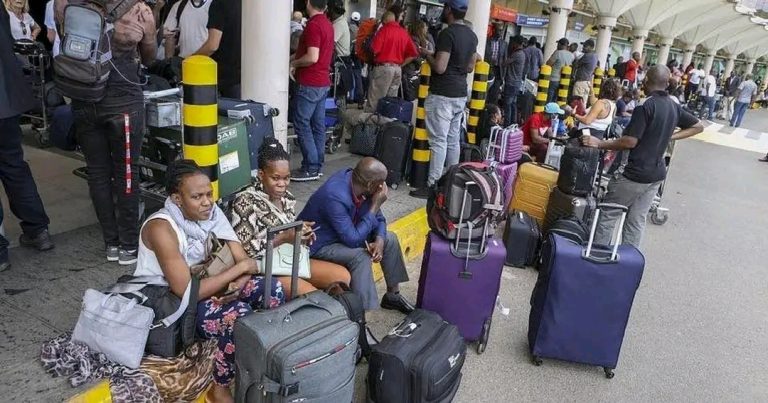
Every time our air traffic controllers threaten industrial action, the public picture is always the same exhausted travellers sitting on their suitcases at Jomo Kenyata International Airport (JKIA), staring at departure boards full of delays.

That image, as painful as it is, is only the tip of the iceberg. The real damage happens quietly, thousands of kilometres away, in the operations rooms of airlines in London, Amsterdam, Dubai and Doha, long before any of those planes even leave the ground and nobody pays a heavier price for this than our own national carrier, Kenya Airways.

So what exactly Is a “Go-Slow”?

Most people assume a strike means workers walk out and the airspace shuts down. A go-slow is far more subtle, and in some ways more damaging.

Nobody walks off the job instead, air traffic controllers follow every single safety rule and regulation to the absolute letter, with none of the normal flexibility and judgement that keeps traffic moving efficiently.

In ordinary operations, controllers use experience and confidence to compress the gaps between landing and departing aircraft, while still keeping everyone safe.

During a go-slow, that flexibility disappears controllers double the spacing between arriving planes, take the maximum allowed time to issue every clearance, and stop using the shortcuts that keep traffic flowing.

If JKIA can normally handle 20 arrivals an hour, a go-slow can quietly strangle that down to five. Aircraft end up circling for hours in holding patterns, or sitting on the tarmac waiting endlessly for a departure clearance.

Why airlines cancel flights before they even take off. This is the part most Kenyans never see, a foreign airline does not need to wait until its plane is stuck over Nairobi to feel the pain of a go-slow.

The moment global flight-tracking systems show that JKIA’s acceptance rate for incoming aircraft has slowed down, alarm bells go off at airline headquarters on the other side of the world.

Hersi: How Kenya Airways pilots sabotage the loss-making national airline

Three things make this an unacceptable risk for any serious carrier:

✅️1. Fuel and diversions. A pilot cannot simply hope for the best. If Nairobi is delaying arrivals, an inbound aircraft will burn through its reserve holding fuel while circling. Once it hits its minimum safe fuel level, it has no choice but to divert, often to Mombasa or Kilimanjaro. That single decision triggers unscheduled landing fees, emergency hotel bookings for hundreds of passengers, and total chaos across the airline’s onward network.

✅️2. Crew running out of legal hours. Pilots and cabin crew operate under strict legal limits on how long they can stay on duty. If a flight is stuck waiting for a landing slot, or held on the ground at its point of origin because Nairobi cannot guarantee it a slot, the crew can simply “time out.” Once that legal limit is hit, they are not permitted to fly, full stop, and there is rarely a spare crew sitting nearby to take over a multi-million-dollar aircraft in a foreign country.

✅️3. A grounded aircraft earns nothing. Long-haul aircraft are built to keep moving. A plane flying Amsterdam to Nairobi is usually scheduled to turn around and fly straight back within a few hours. If a go-slow traps that aircraft on the ground in Nairobi for six hours, it misses its return flight entirely. That single missed rotation then cascades into cancelled or delayed flights across the airline’s entire global network, often affecting routes that have nothing to do with East Africa at all.

Faced with the choice between risking a $200 million aircraft in an unpredictable operational environment or simply cancelling the Nairobi flight altogether, foreign airlines almost always choose the second option. The painful part cancellation happens at the destination’s expense, not theirs.

Why this hits Kenya Airways hardest

All foreign carriers can absorb a cancelled Nairobi rotation by simply shuffling one aircraft in a fleet of hundreds. Kenya Airways does not have that luxury, and this is where the real national tragedy of a go-slow lies.

KQ’s whole network runs through JKIA. Unlike KLM, Emirates or Qatar Airways, which can reroute a single aircraft around a problem hub, Kenya Airways operates a hub-and-spoke model built entirely around Nairobi.

Almost every regional and long-haul KQ flight touches JKIA at some point in its rotation. When JKIA slows down, it is not one route that suffers, it is the entire airline’s schedule that unravels at once, because there is no alternative hub to fall back on.

A far smaller fleet means far less room to recover. International carriers can absorb a stranded aircraft because they simply have more aircraft to substitute. Kenya Airways operates a comparatively small fleet.

Losing even two or three aircraft to diversions, crew timeouts, or missed rotations during a go-slow can knock out a meaningful share of the airline’s entire flying capacity for that day, with knock-on delays lasting for days afterwards as the schedule is rebuilt.

KQ absorbs costs that foreign airlines simply pass on.

When a foreign carrier cancels its Nairobi flight, the cost and inconvenience largely lands on Kenya. lost tourists, lost cargo revenue, damaged reputation but when the disruption instead forces Kenya Airways itself to divert, rebook passengers, and pay penalty costs, those costs hit the national carrier’s own balance sheet directly.

KQ, an airline that has spent years fighting to return to profitability, simply cannot afford self-inflicted disruptions of this scale.

KQ’s own aircraft get stranded abroad, unable to come home. This is perhaps the most painful part of all, and one the public rarely hears about.

A go-slow does not just disrupt flights trying to land in Nairobi, it also traps Kenya Airways aircraft on tarmacs in London, Amsterdam, Guangzhou or Mumbai, unable to depart because they have no confirmed landing slot back home.

❗️1. . Every hour that a KQ aircraft sits idle on a foreign apron costs the airline real money. Parking fees charged by the foreign airport.

❗️2. landing and handling charges that keep accumulating the longer the aircraft overstays its slot.

❗️3. Hotel accommodation for a full crew that is now stuck in a foreign city, and per diem allowances that keep running regardless of whether the plane ever takes off that day.

❗️4. Meanwhile that same aircraft was very likely scheduled to operate two or three more sectors before the day was out, so every hour stuck abroad quietly cancels flights and revenue further down the schedule.

Unlike a foreign carrier, which can simply leave a delayed aircraft in Nairobi and fly a spare plane home while sorting out the mess later, Kenya Airways typically has no spare aircraft waiting in London or Amsterdam to plug the gap. The stranded jet is the only jet, so the airline has no choice but to wait, and to keep paying, until Nairobi’s skies clear.

❗️Reputational damage falls hardest on the home team. When international passengers experience a cancelled or delayed flight because of a Nairobi go-slow, many will simply blame “flying to Kenya” in general and quietly switch their booking to a codeshare partner or a completely different route next time but it is Kenya Airways, as the flag carrier permanently associated with Nairobi in the public mind, that carries the reputational scar longest, even when the disruption was never the airline’s own fault.

❗️Regional connectivity ambitions take the biggest hit. Kenya Airways has worked hard to position Nairobi as the preferred East African hub for onward connections across the continent. A go-slow undermines exactly that pitch.

Every delayed or cancelled connection through JKIA quietly reminds international travel agents and cargo forwarders that alternative regional hubs like Addis Ababa, Kigali or Dar es Salaam might be a steadier bet.

The bigger picture , an ATC go-slow is often treated as an internal labour dispute between the Kenya Civil Aviation Authority, the Kenya Airports Authority, and their staff. That framing is dangerously narrow.

In reality, a handful of controllers following the rulebook too literally can freeze aviation confidence in Nairobi on the other side of the planet within hours, and it is Kenya Airways, our national carrier and one of our proudest continental brands, that absorbs the deepest and most lasting damage.

If we are serious about protecting Kenya Airways’ recovery and about positioning Nairobi as Africa’s premier aviation hub, then resolving labour disputes at KCAA and KAA before they escalate into go-slows cannot be treated as an afterthought. It must be treated as a matter of direct national economic interest.


This article was written and published by Kenyan hotelier and aviation enthusiast Mohammed Hersi.

Ziidi Trader explained: Investment opportunities for M-PESA customers on My OneApp

As digital technology continues to reshape how Kenyans manage their finances, convenience has become an increasingly important part of everyday transactions.

My OneApp is helping meet this demand by bringing a range of financial services together on a single digital platform, enabling customers to carry out transactions without the need to navigate multiple channels.

From managing day-to-day financial needs to accessing a growing range of financial services, the app is designed to make transactions faster and more convenient.

Customers can access services from their mobile devices, reducing the time and effort traditionally associated with routine financial transactions.

Beyond everyday payments and money management, My OneApp is also expanding the ways customers can participate in Kenya’s financial markets.

The platform provides access to investment products that allow users to put their money to work, bringing investment opportunities closer to ordinary consumers through a familiar digital environment.

Among the investment options available is ZiiDi Trader, a service that enables eligible M-PESA customers to buy and sell shares listed on the Nairobi Securities Exchange (NSE) directly from the My OneApp.

ZiiDi Trader allows customers to trade NSE-listed shares electronically, with transactions executed in real time during market hours.

Trading is available from 9:30 am to 3 pm, Monday to Friday, in line with the operating hours of the stock market.

The service is available to M-PESA customers aged 18 and above who have completed the required onboarding and verification processes.

One of the features designed to simplify the trading process is that customers do not need to open an individual Central Depository and Settlement Corporation (CDSC) account before trading.

Instead, trades are executed through an omnibus account operated by a licensed broker. This structure removes one of the potential barriers for first-time investors and allows customers to access the equities market through an existing digital financial platform.

Getting started with ZiiDi Trader

Activating the service is completed within the My OneApp. To get started, customers are required to select Financial Services, choose ZiiDi Trader, accept the applicable terms and conditions, and complete account verification and the required risk acknowledgement.

Activation is then confirmed using the customer’s M-PESA PIN, after which a confirmation notification is sent.

Once activated, customers can access the ZiiDi Trader mini-app and select the Trade option to begin buying or selling shares.

For a purchase, an investor selects the security they wish to acquire, chooses the “Buy” option and enters the desired price and number of shares.

The transaction details are then reviewed before the customer proceeds to confirm the purchase using their M-PESA PIN.

The entry point for investors is also relatively low. Customers can purchase as little as one share, with the amount payable depending on the prevailing price of the selected security and the applicable transaction charges.

Selling shares follows a similar digital process. The customer selects the security from the Trade section, chooses “Sell”, enters the price and quantity, reviews the transaction and confirms it using their M-PESA PIN.

According to Safaricom, once a customer’s shares have been successfully sold under Ziidi Trader, the proceeds are credited to their M-PESA account by the end of the same day. The service charges a 1.5 per cent commission on trades.

There is also no stated limit on the number or total value of shares a customer can hold in their ZiiDi Trader portfolio, allowing investors to build their holdings according to their individual investment objectives and available resources.

For customers who choose to discontinue using ZiiDi Trader, the process can also be initiated within the service by selecting Account, choosing Opt Out, and confirming with an M-PESA PIN.

Customers who still hold securities must first consent to having those securities sold at the best available market price. Once the proceeds have been credited to their M-PESA account, they can complete the opt-out process.

Also Read: The accidental upgrade that changed how I use Safaricom services

From cattle to crops: How Equity Bank is helping farmers manage farming risks

0

Agriculture remains a vital pillar of livelihoods and economic activity, supporting millions of farmers through crop production, livestock keeping, and other related enterprises.

Yet, farming is also one of the most risk-prone economic activities, with farmers often operating under conditions beyond their control.

From unpredictable weather patterns and prolonged droughts to excessive rainfall, disease outbreaks, fire, theft and accidental losses, farmers face a range of threats that can wipe out months or years of investment.

Livestock farmers, for instance, can suffer significant financial losses when animals die from disease, accidents or natural calamities, while crop farmers may lose entire harvests following adverse weather or pest and disease attacks.

This is why every farmer needs an insurance policy from a reliable insurer to protect their agricultural investments and strengthen their ability to recover from unexpected losses.

Equity Bank is one of the reliable insurers farmers can partner with to cushion their enterprises against specified perils and improve their resilience when disaster strikes.

The Bank offers a range of agricultural insurance products designed to address some of the risks facing farmers across different areas of the sector.

Livestock Insurance

For farmers who depend on livestock for income, animals represent a significant investment. Losing even a few high-value animals can substantially impact a farming enterprise.

Equity Bank’s Livestock Insurance cover provides protection against the loss of specified livestock resulting from unavoidable or uncontrollable circumstances.

The policy is available for a range of animals, including dairy and beef cattle, poultry, pigs, goats, sheep and horses, as well as other livestock with economic value.

The value of the livestock insured is determined through a veterinary valuation report, providing a basis for establishing the cover.

Among the risks covered under the policy are accidental death, including death caused by lightning, as well as internal and external injuries. The cover also provides protection against losses associated with fire and windstorms.

Farmers can further obtain protection against certain dangerous attacks, including snake bites and flooding, while diseases of a terminal nature are also covered under the specified terms. The policy additionally provides for emergency slaughter where applicable.

Theft is another risk addressed by the livestock cover. This includes theft involving the use of force while animals are in a paddock or under zero-grazing systems.

The policy also covers epidemics occurring before an official government declaration, as well as complications arising during calving and farrowing.

Livestock may also be covered against transit-related risks within a radius of 250 kilometres, providing an additional layer of protection when animals are being transported.

Crop Insurance

Crop production is particularly vulnerable to weather-related risks, making insurance an important consideration for farmers seeking to protect their investments.

Equity Bank provides Index-Based Weather Insurance (IBWI), which protects listed crops against specified weather-related risks, particularly excessive rainfall and drought.

The product is designed to provide a financial cushion when adverse weather conditions affect agricultural production.

Farmers seeking broader protection can also consider Multi-Peril Crop Insurance, which covers crops against several risks. These include drought, excessive rainfall, hailstones, fire and disease.

Greenhouse Insurance

As greenhouse farming becomes increasingly important for farmers seeking greater control over growing conditions and improved productivity, protecting the physical infrastructure supporting this form of agriculture is equally important.

Equity Bank’s Greenhouse Insurance provides cover against loss, destruction or damage to the insured property resulting from specified perils.

These include fire, lightning and explosion; earthquake; storms and tempest; flooding; and the bursting or overflowing of water tanks, apparatus or pipes.

The policy also covers damage caused by aircraft or other aerial devices and objects dropped from them, accidental impact damage, subterranean fire, and losses arising from riot and strike, subject to the policy terms and conditions.

The greenhouse policy incorporates several areas of protection.

Fire and related perils: The cover includes fire and specified perils, including wind damage as well as riot and strike. For wind damage, an excess of 10 per cent applies to each loss, with a minimum excess of Sh10,000 per loss.

Burglary: Farmers can obtain protection against theft from the greenhouse after it has been erected at the farm. The cover also includes malicious damage, riot and strike, subject to the applicable policy conditions.

Goods in transit: The policy can also protect the greenhouse while it is being transported from the seller’s premises to the farmer’s property following purchase.

To get started with any of the insurance products, farmers can visit the nearest Equity Bank Branch countrywide or download the application form available on the Equity Bank website.

Also Read: Boostika targets everyday cash flow gaps for Equity customers