
Home Blog Page 27

5 CEOs pocket Sh1.53 billion as strong corporate earnings lift pay

0

Kenya’s corporate sector delivered another year of robust financial performance in the 2025/26 financial year, with strong profitability translating into higher executive compensation across leading institutions.

The improved earnings saw chief executives of some of the country’s largest companies receive increased remuneration, reflecting their institutions’ strong results.

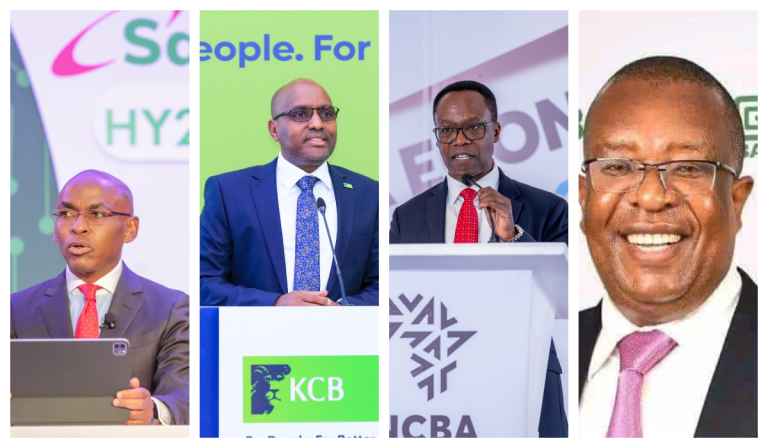
Industry data shows that in the closed 2025/26 financial year, the five highest-paid corporate leaders collectively earned Sh1.53 billion, translating to an average annual remuneration of Sh306.72 million.

Executive pay disclosures contained in the latest annual reports show that Co-operative Bank, Equity Group, KCB Group, and NCBA Group all rewarded their chief executives with substantial remuneration packages following another profitable year in the banking sector.

Safaricom Chief Executive Peter Ndegwa also featured prominently among Kenya’s highest-paid executives after receiving an enhanced compensation package.

Below is how the top five paid executives earned in the 2025/26 financial year.

  1. Gideon Muriuki – Co-operative Bank (Sh474.8 million)

Co-operative Bank Managing Director and Chief Executive Officer Gideon Muriuki emerged as Kenya’s highest-paid executive during the 2025/26 financial year after receiving a total remuneration package of Sh474.8 million.

The lender’s latest remuneration disclosures show that his earnings comprised a basic salary of Sh172.5 million and a performance bonus of Sh302.3 million.

Dr. Muriuki joined the Co-op Bank in 1996 as a Senior Corporate Manager. Three years later in 1999, he assumed the role of Director, Corporate and Institutional Banking climbing the ranks to become the bank’s Managing Director in 2001.

Under his leadership, Co-op Bank has become Kenya’s third largest bank by assets, boasting over 200 branches countrywide.

Dr. Muriuki holds a Bachelor of Science degree in Mathematics. He is also a Fellow of the Kenya Institute of Bankers and has been awarded an Honorary Doctorate in Business Management in year 2011.

He has also served as the Vice-President Africa – International Cooperative Banking Alliance (ICBA), former Chairman, Governing Council of the Africa International University and former Chairman, African Rural and Agricultural Credit Association (AFRACA).

  1. Peter Ndegwa – Safaricom (Sh324.5 million)

Safaricom Chief Executive Peter Ndegwa ranked second after earning Sh324.5 million, according to the telecommunications firm’s 2026 Annual Report.

His remuneration package included a basic salary of Sh105.4 million, performance bonuses amounting to Sh118.5 million, non-cash benefits worth Sh31.4 million, and Sh69.2 million received under the Employee Performance Share Award Plan (EPSAP).

The latest package marked an increase from the Sh294.2 million he earned in the previous financial year. His basic salary also rose from Sh98.7 million to Sh105.4 million.

Ndegwa was appointed as the Safaricom CEO in October 2024, making him the first Kenyan to assume that role.

His tenure began amid the turbulence of the COVID-19 pandemic, an existential stress test for any incoming executive.

Under his stewardship, Safaricom became the first East African company to surpass USD 3 billion in revenue.

  1. James Mwangi – Equity Group (Sh275.7 million)

Equity Group Managing Director and Chief Executive James Mwangi received Sh275.7 million, placing him among the country’s highest-paid corporate executives.

Mwangi, who became Equity CEO in 2004 is credited with democratizing financial access, leading Equity to become an integrated financial services Group operating in 6 African countries.

The lender is the biggest bank in Kenya, with a customer base of over 20.7 million and a distribution network of over 400 branches.

 He holds a Bachelor of Commerce degree and is a Certified Public Accountant.

  1. Paul Russo – KCB Group (Sh250.2 million)

KCB Group Chief Executive Paul Russo earned Sh250.2 million during the financial year, making him the fourth highest-paid executive among the institutions reviewed.

Russo has been working at KCB Bank since 2014 as KCB Group’s Head of Human Resources before his appointment to the current position in May 2022.

He has previously worked in the Human Resource department of Kenya Breweries as the Acting Compensation and Benefits Manager, before joining  Barclays Bank of Kenya (present-day Absa Bank Kenya), Barclays bank Tanzania and Barclays Africa all as a regional HR head.

He has also worked at K-Rep Bank (present-day Sidian Bank) as Chief HR officer and PricewaterhouseCoopers (PwC Kenya) as head of Human Capital.

  1. John Gachora – NCBA Group (Sh208.4 million)

NCBA Group CEO John Gachora completed the top five list with total remuneration of Sh208.4 million.

Gachora was appointed as the Group Managing Director and Group CEO of NCBA Group in 2019 following the merger between NIC Group PLC and Commercial Bank of Africa (CBA), which gave birth to the present-day NCBA Bank.

He previously served as a Managing Director at Bank of America Securities and as Managing Director, Corporate and Investment Banking at Barclays Africa prior to joining the NCBA Group.

He holds Bachelor of Science and Masters in Engineering degrees in Electrical Engineering and Computer Science from the Massachusetts Institute of Technology, USA and an MBA degree from the Wharton School, University of Pennsylvania, USA.

Also Read: Uganda Airlines orders 4 Boeing 737 Max, 4 Boeing 787 Dreamliner jets

Uganda Airlines orders 4 Boeing 737 Max, 4 Boeing 787 Dreamliner jets
0
Uganda Airlines has place an order for Boeing 737 Max and Boeing 787 Dreamliner jets. This order comes as the neighbouring airline moves to modernize its national carrier.

According to a statement by Boeing, the 737-8, which can fly 160 to 180 passengers in a two-class configuration with a range up to 3,500 nautical miles (equivalent to 6,480 km), will be well-suited for the airline’s intra-Africa routes and service to the Middle East and India.

On the other hand, the 787 Dreamliner with a range up to 8,300 nautical miles (equivalent to 15,370 km), will support the airline’s high-demand long-haul routes to the Middle East, Asia and Europe.

“This commitment with Boeing marks a defining step in our airline’s growth journey and in our broader ambition to position Entebbe as a strategic aviation hub for the region,” said Ato Girma Wake, the airline’s chief executive officer. “The aircraft will strengthen our ability to connect Uganda more efficiently to regional, continental and international markets, while supporting trade, tourism, investment and cargo development.”

Boeing Senior Vice President of Commercial Sales and Marketing Brad McMullen said the aircraft will support Uganda Airlines’ expansion plans. “These airplanes offer efficiency, range and versatility to help Uganda Airlines strengthen and expand its network,” he said.

Day hawker was nabbed aboard Uganda Airlines flight selling grasshoppers

Currently, the neighbouring airline flies to 17 destinations in 13 countries from its hub in Entebbe, Uganda. The carrier runs a fleet of seven active aircraft which consist of four Bombardier CRJ-900 regional jets, two Airbus A330-800neo widebodies for long-haul routes, and one leased Boeing 737-800.

The Airbus A330-800neo has been featuring in the airline’s route to Gatwick, London, which was launched in May 2025. This route came after the airline launched flights to Abuja, Lusaka, and Harare, which were launched in the second half of 2024.

The airline says that it is working to expand its network to Southern Africa, Europe, the Middle East, and the Far East. These new orders will mark the first ever purchases of Boeing aircraft by Uganda.

Zoho partners with KNCCI to accelerate digital transformation for Kenyan SMEs

0
Nairobi, Kenya, July 22, 2026 — Global technology company Zoho has announced a strategic partnership with the Kenya National Chamber of Commerce and Industry (KNCCI) to accelerate digital transformation, strengthen small and medium-sized enterprises (SMEs), and expand digital skills across Kenya.

The partnership was unveiled during Zoholics Kenya 2026, Zoho’s annual user conference, and forms part of the company’s broader investment in Kenya’s business ecosystem through technology enablement, digital skills development, and affordable business solutions for entrepreneurs and growing enterprises.

Premanand Velumani, Associate Director for Strategic Growth at Zoho Middle East and Africa (MEA), said the collaboration reflects Zoho’s commitment to creating meaningful local impact by working with trusted institutions to help businesses adopt digital technologies.

He noted that the partnership aligns with the company’s “transnational localism” strategy, which seeks to build self-sufficient local economic clusters while keeping them globally connected. According to Velumani, the initiative will equip Kenyan SMEs with the technology, knowledge and support required to grow sustainably.

Zoho Kenya Country Head Veerakumar Natarajan said Kenya remains one of the company’s fastest-growing markets as businesses increasingly embrace digital transformation to improve resilience and competitiveness.

He added that the rapid adoption of artificial intelligence is driving demand for unified digital platforms that enhance operational efficiency, and the partnership will help Kenyan businesses accelerate their digital transformation while strengthening the country’s SME ecosystem.

Zoho expands AI capabilities with Zia Agents, Agent Studio, and Agent Marketplace

Under the agreement, eligible KNCCI members will receive KES65,000 in Zoho Wallet Credits, which can be used to access any of Zoho’s more than 60 cloud-based business applications covering functions such as finance, customer relationship management, collaboration, human resources and operations.

KNCCI Nairobi Chairman Dr. James Mwaura welcomed the collaboration, saying it will provide chamber members with access not only to world-class business technology but also the training and support needed to successfully adopt and maximise the solutions.

He said the partnership would help Kenyan businesses embrace digital transformation and enhance their long-term competitiveness.

In addition to providing technology access, Zoho will offer onboarding support, product training and business enablement programmes to ensure members effectively implement its digital solutions. The partnership will also include workshops, knowledge-sharing sessions and member engagement initiatives aimed at building digital skills among SMEs.

The two organisations will further collaborate on joint marketing campaigns, business events and educational programmes to raise awareness of digital technologies and demonstrate their role in driving sustainable business growth.

Zoho also highlighted its strong performance in Kenya, reporting 55 per cent revenue growth, driven by rising demand for scalable, integrated business software and continued investments in local talent and strategic partnerships.

The company’s most widely used products in Kenya include Zoho One, Workplace, CRM Plus, CRM, and Books, with strong adoption across the IT services, financial services, manufacturing, insurance and telecommunications sectors.

The latest partnership reinforces Zoho’s long-term strategy of expanding its footprint across Africa by working closely with local institutions, supporting digital enablement initiatives, and helping SMEs leverage technology to improve productivity and competitiveness.

Equity Group, AMREF university partner to strengthen healthcare education and innovation across Africa

0

Equity Group Holdings and AMREF International University (AMIU) have signed a five-year Memorandum of Understanding (MoU) to strengthen healthcare education, research, innovation, leadership development and entrepreneurship as part of a shared commitment to improving access to quality healthcare across Africa.

The partnership brings together the financial expertise of Equity Bank Kenya, the social impact and development experience of Equity Group Foundation (EGF) & Equity Afya, the insurance capabilities of Equity Life Assurance Kenya (ELAK), and the health education, research and innovation leadership of AMREF International University. By leveraging their complementary strengths, the institutions will advance healthcare education, research, innovation, entrepreneurship and community health programmes to build stronger health systems and improve healthcare outcomes across the continent.

Speaking during the signing ceremony, Equity Group Managing Director and CEO and Equity Group Foundation Executive Director, Dr James Mwangi, said the partnership reflects Equity’s commitment to health systems strengthening through collaboration with institutions that possess deep sector expertise.

“Health cuts across every sector because good health drives productivity, and productivity creates prosperity. We have invested significantly in expanding access to quality, affordable healthcare, but we recognise that achieving meaningful impact requires working with specialised institutions. This partnership brings together world-class expertise, research capability and decades of experience in healthcare, strengthening our ability to build a more effective healthcare ecosystem,” said Dr Mwangi.

He added:

“This is an African partnership and reflects a new model of leadership built on collaboration. Doctors and other healthcare professionals are highly skilled practitioners, but entrepreneurship requires a different set of competencies. Together, we want to develop healthcare entrepreneurs who can establish and grow sustainable health facilities supported by innovative financing solutions.”

AfricaNenda supported by Gates Foundation partner with Equity Group

AMREF International University Vice Chancellor, Prof Joachim Osur, said the partnership addresses one of Africa’s biggest healthcare challenges by helping health professionals transform technical knowledge into sustainable businesses that respond to community needs.

“The missing link has been transforming knowledge into monetised products through entrepreneurship. Many qualified healthcare professionals struggle to fully utilise their expertise because they rely solely on formal employment. Through this partnership, we will equip them with the entrepreneurial skills needed to build sustainable healthcare businesses while responding to the healthcare needs of our communities,” said Prof Osur.

“Nearly 80 per cent of Africans seek healthcare at the primary healthcare level. If we transform primary healthcare, we will transform healthcare across the continent while promoting greater equity in access to health services. This partnership gives us an opportunity to achieve that together,” he added.

Under the partnership, AMREF International University will provide expertise in health education, research, curriculum development, capacity building and healthcare innovation, alongside opportunities for internships, mentorship, scientific collaboration and professional training. Equity Bank Kenya will support healthcare infrastructure financing and experiential learning opportunities, while Equity Group Foundation will collaborate on health entrepreneurship, curriculum development, community health, climate and health initiatives, environmental conservation and humanitarian research. Equity Life Assurance Kenya will complement these efforts by promoting insurance literacy, expanding access to insurance solutions and providing technical risk management support.

The five-year collaboration is expected to strengthen healthcare leadership, accelerate innovation, foster health entrepreneurship and expand access to quality healthcare by combining Equity Group’s integrated ecosystem with AMREF International University’s expertise in health education, research and community health across Africa.

Farmers to gather in Nairobi for East Africa’s largest livestock genetics expo

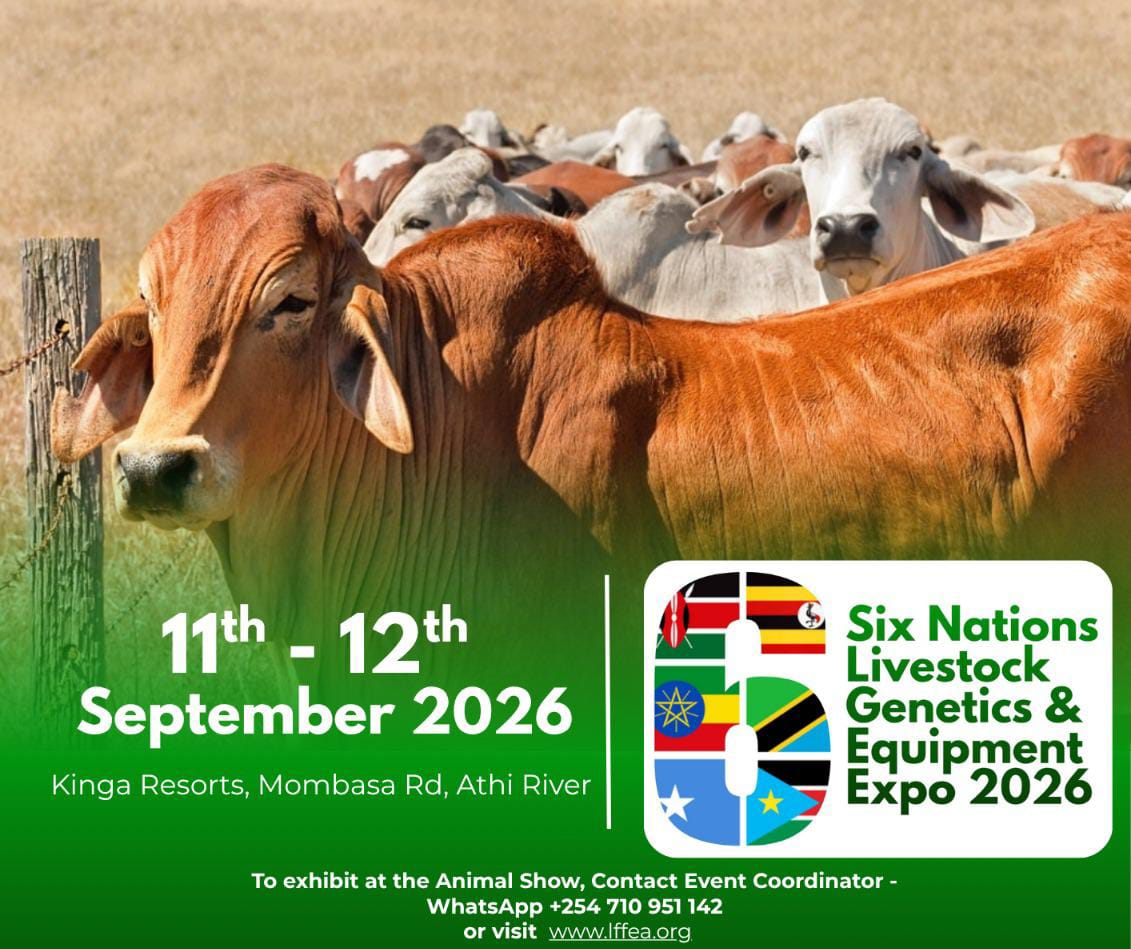
Livestock farmers, breeders and agribusiness players from six East African countries are set to convene in Nairobi for one of the region’s largest livestock exhibitions, aimed at advancing modern animal production, trade and regional collaboration.

Dubbed Six Nations Livestock Genetics & Equipment Tech Expo, the two-day expo is scheduled to take place from 11th to 12th September 2026 at Kinga Resort along Mombasa Road, Athi River.

The event, currently in its second edition, will bring together participants from Kenya, Tanzania, Uganda, Somalia, South Sudan and Ethiopia.

The exhibition will showcase elite imported and locally bred livestock genetics, modern livestock equipment and emerging technologies that are transforming the livestock value chain.

Farmers to gather in Nairobi for East Africa's largest livestock genetics expo

Demonstrations will cover artificial insemination and embryo transfer technologies, vaccination programmes, feedlot management, total mixed ration (TMR) feeding systems, animal nutrition, fodder and pasture management, digital livestock technologies, animal identification and traceability systems.

Other activities will include discussions on animal health, breeding, and livestock policy, as well as mentorship programmes for young farmers and recognition of women making significant contributions to the livestock industry.

Farmers to gather in Nairobi for East Africa's largest livestock genetics expo

The exhibition comes as Kenya accelerates the transition from traditional pastoralism to commercially driven livestock production.

Growing urbanisation, rising incomes and increasing demand for livestock products are some of the factors encouraging farmers to commercialise production.

The shift is being supported by government initiatives, including a Sh5 billion programme aimed at helping pastoralists form business groups and improve access to markets, while positioning the country as a regional livestock trade hub serving Africa and Middle Eastern markets.

Kenya’s livestock industry has long been one of the country’s most important agricultural pillars, supporting millions of livelihoods, contributing significantly to food security and serving as a key driver of rural economies.

According to the Association of Kenya Feed Manufacturers (AKEFEMA) Chairman Joseph Karuri, the sector contributes about 3 percent of the country’s Gross Domestic Product (GDP), 40 percent of agricultural GDP and approximately 22 percent of the national food system while supporting millions of livelihoods.

Story behind the Six Nations Livestock Genetics & Equipment Expo

The Six Nations Livestock Genetics & Equipment  Expo was established to address persistent market and modern breeding technology gaps in the livestock sector.

According to Henry Kioko, a livestock importer and the event coordinator, while many local breeders possessed high-quality animals with proven pedigrees, they had limited opportunities to connect with buyers beyond their immediate communities.

The realization led to the establishment of a platform that would not only expand market access but also introduce farmers to the latest advances in livestock breeding and farm mechanisation.

Farmers to gather in Nairobi for East Africa's largest livestock genetics expo

The recent restrictions on importing livestock genetics from South Africa over foot-and-mouth disease concerns have further cemented the event’s objective.

Now entering its second edition, the Six Nations Livestock Genetics & Equipment Expo has evolved into a leading forum for agricultural innovation in East Africa.

Participants will have an opportunity to explore resilient and high-performing livestock genetics from regional breeders, while learning about breeding strategies that can strengthen herd quality without relying solely on imported material.

The exhibition will also feature demonstrations of modern livestock equipment, including automated feeding systems and other technologies designed to improve efficiency and reduce production costs.

Its inaugural edition last year created a regional marketplace where breeders from across East Africa showcased premium livestock and improved breeds to buyers and investors from beyond their traditional markets.

“It is no longer just a trade show; it is a bustling community where ideas are exchanged, deals are sealed, and the future of regional livestock farming is written,’’ Mr. Kioko says.

Farmers to gather in Nairobi for East Africa's largest livestock genetics expo

Also Read: Livestock expert calls on farmers to invest in Dorper farming as demand for mutton soars


Co-op Bank named Kenya’s Best Retail and Digital Bank at Euromoney Awards

0

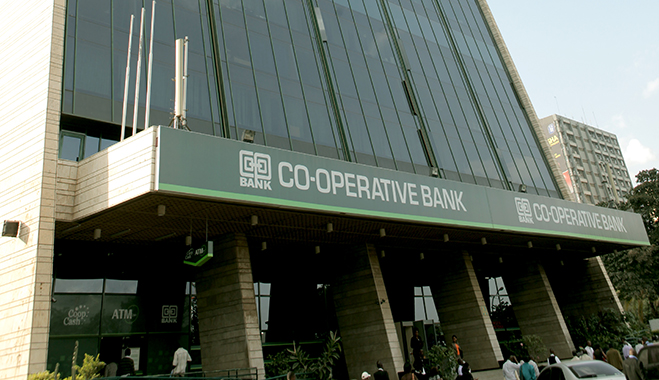
The Co-operative Bank of Kenya (Co-op Bank) has been named Kenya’s Best Retail Bank and Kenya’s Best Digital Bank at the prestigious Euromoney Awards for Excellence 2026, cementing its position as one of the country’s leading financial institutions.

The lender received the awards during a ceremony held on Thursday, July 16, at The Peninsula in London.

The dual recognition highlights the lender’s continued investment in customer-focused banking services and digital transformation, which have strengthened access to financial services for millions of Kenyans.

Speaking after receiving the awards, the bank said the accolades reflect its commitment to delivering seamless customer experiences while expanding its digital capabilities alongside its traditional banking network.

“We are proud to be recognised by Euromoney as Kenya’s Best Retail Bank and Kenya’s Best Digital Bank. This dual recognition affirms our commitment to delivering exceptional customer experiences, expanding access to financial services and driving digital innovation,” the bank said.

Co-operative Bank currently serves more than 9.8 million account holders through a network of 223 branches, over 16,000 banking agents and a range of digital banking platforms, enabling customers to access financial services across the country.

The lender said it has continued to blend relationship banking with technology-driven solutions to enhance convenience, efficiency and financial inclusion.

The bank attributed the achievement to the support of its customers, employees, partners and other stakeholders, noting that the awards reflect a shared commitment to excellence.

“These awards belong to our customers, colleagues, partners and stakeholders who continue to support our journey. Together, we are moving from Good to Great, guided by innovation, inclusion and customer-centricity as we fulfil our purpose of transforming lives,” the bank said.

Founded in 1992, the Euromoney Awards for Excellence are regarded as among the banking industry’s most respected global accolades, recognising outstanding performance, innovation and customer impact across banks, bankers and fintech firms.

The latest recognition adds to a growing list of international awards earned by Co-operative Bank in recent years.

These include the SME Bank of the Year in Africa at the African Banker Awards, Best Commercial Bank of the Year – Kenya at the International Banker Africa and North Africa Banking Awards, as well as the SME Financier of the Year, Africa (Gold) and Product Innovation of the Year, Africa honours at the Global SME Finance Awards 2025.

Also Read: Features of Co-op Bank’s premium account for executives and business leaders

How My OneApp is transforming everyday digital transactions

0

Imagine having to jump from one mobile app to another just to complete everyday tasks such as sending money, buying data bundles, checking your airtime balance or accessing customer support.

It is a routine many smartphone users have grown accustomed to over the years. But as digital banking and mobile connectivity continue to evolve, the focus is shifting from juggling multiple applications to accessing everything from a single platform.

Safaricom is leading this shift with My OneApp, a unified platform that combines the capabilities of the M-PESA App and the mySafaricom app into a single digital experience.

Instead of maintaining two separate applications, customers can now access M-PESA financial services alongside Safaricom connectivity services, including airtime, voice minutes, SMS, data bundles, Bonga rewards, M-Shwari, and ZiiDi, all from one application.

The integrated platform is designed to provide a smoother and more personalised experience, for customers seeking Safaricom services.

At its core, My OneApp is designed to make everyday digital transactions easier. Customers can send and receive money, purchase airtime and bundles, check balances, access statements, manage subscriptions and explore additional digital services without leaving the application.

The platform also extends beyond traditional mobile money by integrating home fibre management, customer care tools and a growing ecosystem of third-party mini apps covering sectors such as investments, credit, transport and entertainment.

Users can also customise the application’s homepage by selecting frequently used services under Quick Actions, making commonly accessed features easier to reach.

A global search function further simplifies navigation by enabling customers to quickly locate services across the platform.

Security takes centre stage

As digital transactions continue to grow, security has become a major concern for mobile users.

To ensure customers are protected, My OneApp requires users to insert the registered SIM card in the device before the application can function.

The additional layer of verification is intended to reduce fraud and strengthen customer protection.

The app also includes a dedicated Security Centre where customers can report suspected fraud, retrieve their PUK numbers, manage subscriptions and monitor their lines.

AI-powered support and smarter payments

Beyond traditional mobile banking services, My OneApp introduces new digital capabilities aimed at improving customer convenience.

Users can access Zuri, Safaricom’s AI-powered virtual assistant, for customer support, while Scan-to-Pay allows merchants and customers to complete payments by scanning QR codes.

The platform also incorporates AI Pay and an in-app chat feature, reflecting the growing use of artificial intelligence to simplify financial transactions and customer engagement.

Features available on My OneApp

Among the services customers can access through the platform are:

  • M-PESA transactions, balances, statements and Pochi Wallet.
  • Airtime purchases, voice bundles, SMS and data bundles.
  • Home Fibre account management.
  • Bonga rewards, M-Shwari and ZiiDi services.
  • Quick Care services, including Security Centre, fraud reporting, PUK retrieval and line management.
  • Scan-to-Pay, AI-powered services and Zuri virtual assistant.
  • Personalised Quick Actions for faster access to frequently used services.
  • Mini Apps offering investment, credit, transport and entertainment services.
Who can use My OneApp?

My OneApp is available to all registered Safaricom customers using compatible Android, iOS or Huawei smartphones that support 4G connectivity and above.

Customers wishing to access M-PESA services through the platform must also be registered M-PESA users.

Safaricom customers living outside Kenya can also download or update the application while abroad by activating roaming services and ensuring their Safaricom SIM card is inserted as the primary SIM in their device.

How to download the My OneApp

To download or Update to the most current version:

  • Open Play Store for Android, or APP Store for iOS
  • Search for My OneApp
  • Select Download or Update
  • Proceed with log in
  • Enter your M-PESA PIN
  • You will receive a One Time Password (OTP) which will auto populate in the app
  • Set up Biometrics
  • The first-time of successful activation, customer is presented with a brief Tutorial, enlightening them on the main APP features and navigation.

App Sign up Tips

  • Ensure Safaricom SIM card is present in the device, and it is set as the default SIM
  • Ensure mobile data is enabled (sign up will not work on Wi-Fi)

Also Read: Safaricom tightens grip on Kenya’s fixed broadband market

Nelson Muguku family selling Watefront Karen Mall for Sh9 billion

The Nelson Muguku family is selling the iconic Waterfront Karen Mall in a deal that is estimated to be worth as much as Sh9 billion.

The mega transaction has been confirmed by the property manager Ken Obimbo. Mr. Obimbo, however, has not revealed the actual amount that the property shall be sold for or who the buyer is.

“We have been in the market and we believe that we have a serious buyer on the table. There are some covenants that the buyer needs to meet to confirm the transaction is ongoing,” Obimbo told local media on the Nelson Muguku family intended sale of their prime property.

If the property is offloaded at Sh9 billion, it will have appreciated by Sh6 billion from the Sh3 billion valuation that it was given when it was launched in 2018 with the anchor tenant being South Africa’s retail giant, Game. The anchor tenant later exited the premise and was replaced by Naivas.

The 200,000 square feet property occupies 13 acres of land. The Watefront Karen Mall was built by Chinese contractor, CJRE East Africa, which is a subsidiary of the China Railway Group Company. The Waterfront Karen has over 1,000 parking bays to use within both open and basement parking, accessible from either Lang’ata Road or Karen Road.

This is not the first time that the Nelson Muguku family is putting the property on sale. In April 2021, an advert for the property leaked in the media.

“The Waterfront Karen Mall is the only 50-acre bulk of land at the centre of Karen and its prestigious environs. The property features over 30 acres of undeveloped land; a goldmine that can be converted into an ultra-modern mixed use development featuring high-end residential, commercial and recreational facilities – creating immense value for an investor. Karen is home to some of the most exclusive and high-profile residences in the country and continues to attract the wealthiest in society,” a sales brochure on the property was quoted by a local daily.

However, the Nelson Muguku family came out to deny that it was selling the property. In a statement, the mall’s then managing director David Muguku hsd said that they were not planning to sell the property, even though he had failed to make the same disclosure when the media had first reached out to him over the leaked sales brochure.

READ MORE: Preacher Pius Muiru’s Sh960 million property faces auction over defaulted loan

“We would like to dispel this information and let the public, our tenants, and clients know that the information is false and does not represent the position of the management. The information should therefore be disregarded,” he had said.

The Nelson Muguku family is widely renowned because of its founder, Mr. Muguku who became a billionaire from selling chickens. The Mugukus were some of the largest shareholders at Equity Bank. They however dropped from the top list of shareholders in 2016 after selling shares worth an estimated Sh. 4 billion.

Mr. Muguku died in 2010 at the age of 78. He had built a business and investment empire from his poultry farming business that was based in Kikuyu, Kiambu County. At the time of his death, Muguku’s estate was estimated to have been worth some Sh10 billion.

At the time of his death, he held a stake of 6.08 percent in Equity Group. This meant that he was among the lender’s top shareholders. If his family had not sold off his Equity shares after his death, Muguku’s stake in Equity would today be worth am estimated Sh21 billion. This is in addition to tens of millions that the stake would have paid out to the family in dividends. The late billionaire also owned property in key Nairobi Central Business District’s areas including along Mfangano Street and along Moi Avenue.

Building a Greener Future: How ZEN Carbon is Reinventing Construction Through Sustainable Materials

0

Construction: Africa is experiencing one of the fastest rates of urbanisation in the world. As cities expand and demand for housing and infrastructure continues to rise, so does the environmental impact of construction. Traditional building materials such as cement are among the world’s largest contributors to carbon emissions, while agricultural and industrial waste often ends up in landfills or is openly burned, creating additional environmental challenges.

For ZEN Carbon, these two issues are deeply connected and solving them requires rethinking how we build.

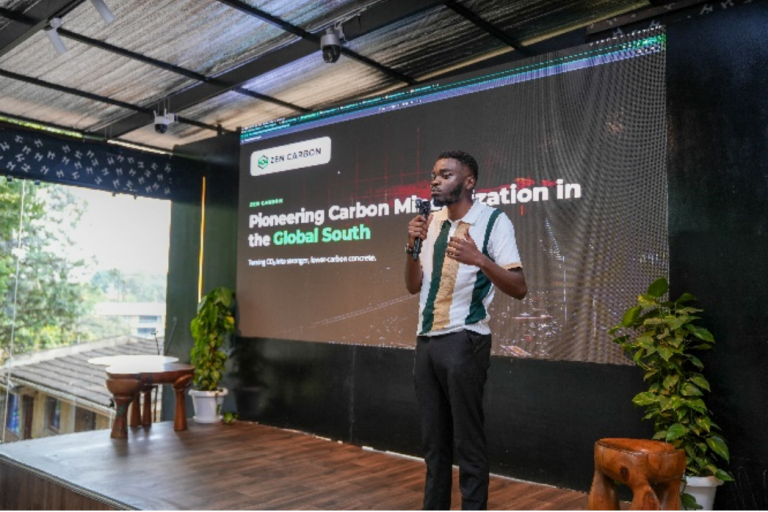
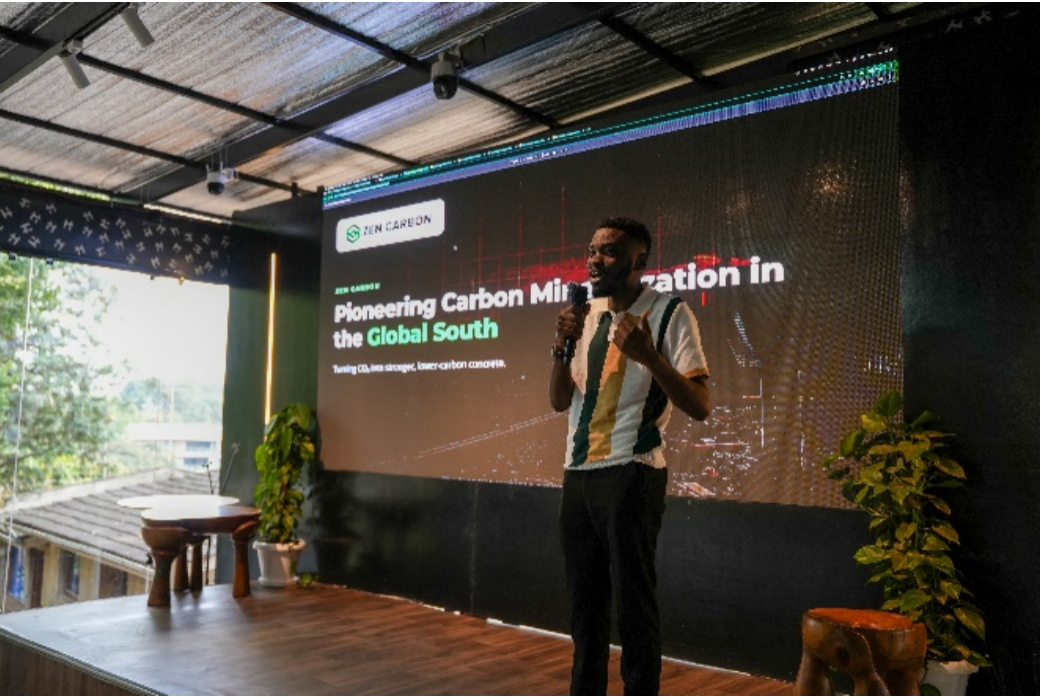
The Kenyan startup is developing innovative, low-carbon construction materials made from locally available waste streams, providing the construction industry with sustainable alternatives that reduce emissions while supporting a circular economy. Its forward-thinking approach earned ZEN Carbon a place among the Top 10 finalists of the GEC+ Africa Kenya Regional Pitch Competition 2026, recognising its potential to reshape the future of sustainable construction across Africa.

Rethinking the Materials That Build Our Cities

The construction industry faces increasing pressure to reduce its environmental footprint without compromising quality, durability, or affordability.

ZEN Carbon believes that many of the raw materials needed for sustainable construction already exist—they’re simply being overlooked.

Be wary of fake roof materials

By converting agricultural and industrial by-products into environmentally friendly construction materials, the company is reducing waste while creating products that can help lower the carbon footprint of buildings. This approach not only diverts waste from the environment but also reduces dependence on resource-intensive conventional materials.

The result is a solution that supports both environmental conservation and the growing demand for greener infrastructure.

Sustainability Meets Commercial Opportunity

ZEN Carbon is building more than environmentally friendly products, it is developing a business model aligned with the future of sustainable construction.

As governments, developers, and businesses increasingly adopt green building standards, demand for innovative low-carbon materials continues to grow. ZEN Carbon is positioning itself to meet this demand by supplying sustainable building solutions that help construction projects achieve both environmental and commercial goals.

The startup’s focus on local manufacturing also strengthens domestic value chains, creating opportunities for suppliers while reducing reliance on imported materials.

Building a Greener Future: How ZEN Carbon is Reinventing Construction Through Sustainable Materials

Innovation with Long-Term Impact

Although still in its growth phase, ZEN Carbon has demonstrated a clear commitment to combining research, innovation, and sustainability.

The startup continues to refine its products through testing, customer engagement, and collaboration with industry stakeholders, ensuring its materials meet the performance standards required by the construction sector.

Its selection among the Top 10 finalists reflects not only the strength of its technology but also the growing importance of sustainable innovation within Africa’s rapidly expanding construction industry.

How I used my Dubai househelp salary to build Sh450k house for my dad

Building the Cities of Tomorrow

ZEN Carbon’s long-term vision extends beyond developing alternative building materials.

The company aims to contribute to a construction sector where sustainability is built into every stage of development, from material sourcing and manufacturing to infrastructure delivery and environmental stewardship.

By creating commercially viable low-carbon alternatives, ZEN Carbon hopes to support greener cities, strengthen local industries, and demonstrate that climate-conscious innovation can also drive economic growth.

Its recognition at the GEC+ Africa Kenya Regional Pitch Competition 2026, organised by Uzuzi Hub in partnership with GEN Kenya, GEC+ Africa, and NCBA, highlights the important role startups are playing in developing practical solutions to Africa’s environmental and infrastructure challenges.

Why This Startup Matters

Africa’s urban growth presents both an opportunity and a responsibility. By transforming waste into sustainable construction materials, ZEN Carbon is helping reduce emissions, promote circular manufacturing, and build more environmentally responsible cities for future generations.

Empowering Smallholder Farmers Through Innovation: How Agriflex is Transforming Agricultural Value Chains

0

Agriflex: Agriculture remains one of Africa’s most important economic sectors, employing millions of people and contributing significantly to food security. Yet many smallholder farmers continue to face familiar challenges—limited access to markets, unpredictable prices, post-harvest losses, and a lack of reliable information to help them make informed business decisions.

For Agriflex, these are not just agricultural challenges, they are opportunities for innovation.

The Kenyan AgriTech startup is developing solutions that strengthen agricultural value chains by connecting farmers with the tools, information, and market opportunities they need to build more profitable and sustainable farming businesses. Its innovative approach earned Agriflex a place among the Top 10 finalists of the GEC+ Africa Kenya Regional Pitch Competition 2026, recognising its potential to improve livelihoods while strengthening Africa’s agricultural economy.

Helping Farmers Move Beyond Production

For many farmers, producing quality crops is only part of the journey. Selling those products at fair prices, accessing reliable buyers, and reducing losses after harvest often prove to be even greater challenges.

Agriflex is addressing these gaps by creating a platform that supports farmers throughout the agricultural value chain. From improving access to market information to connecting producers with buyers and strengthening supply chain efficiency, the startup is helping farmers make better business decisions while increasing the value of what they produce.

By focusing on practical, technology-enabled solutions, Agriflex is helping transform farming from a subsistence activity into a more sustainable and profitable enterprise.

Kitui farmers making up to Sh4,000 daily from watermelon farming

Innovation That Creates Shared Value

What makes Agriflex unique is its holistic approach to agriculture.

Rather than solving a single problem, the startup works across multiple points in the value chain, bringing together farmers, buyers, agribusinesses, and other ecosystem partners. This integrated model improves transparency, strengthens market linkages, and creates greater opportunities for collaboration across the agricultural sector.

As demand for efficient and traceable food systems continues to grow, solutions like Agriflex are becoming increasingly important in building resilient agricultural economies.

Building a More Connected Agricultural Ecosystem

Agriflex continues to refine its platform through collaboration with farmers and industry stakeholders, ensuring its solutions respond to real challenges faced in the field.

Its recognition among the Top 10 finalists reflects both the strength of its business model and the growing demand for innovations that improve agricultural productivity while supporting rural economic development.

By leveraging technology to simplify market access and strengthen agricultural supply chains, the company is contributing to a more inclusive and efficient farming ecosystem.

Empowering Smallholder Farmers Through Innovation: How Agriflex is Transforming Agricultural Value Chains

Looking to the Future

Agriflex’s vision extends beyond improving individual farm businesses.

The company aims to build an interconnected agricultural ecosystem where farmers have access to the information, markets, and partnerships they need to thrive. As it expands its reach, Agriflex hopes to improve food security, increase farmer incomes, and support sustainable agricultural development across Kenya and beyond.

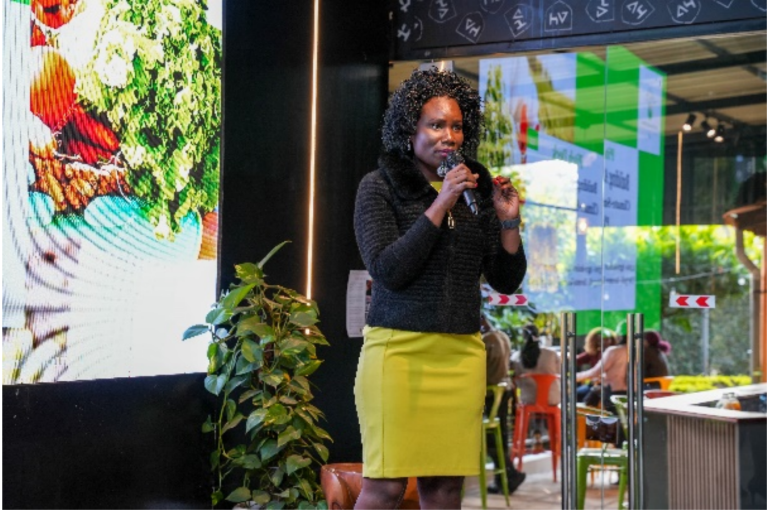
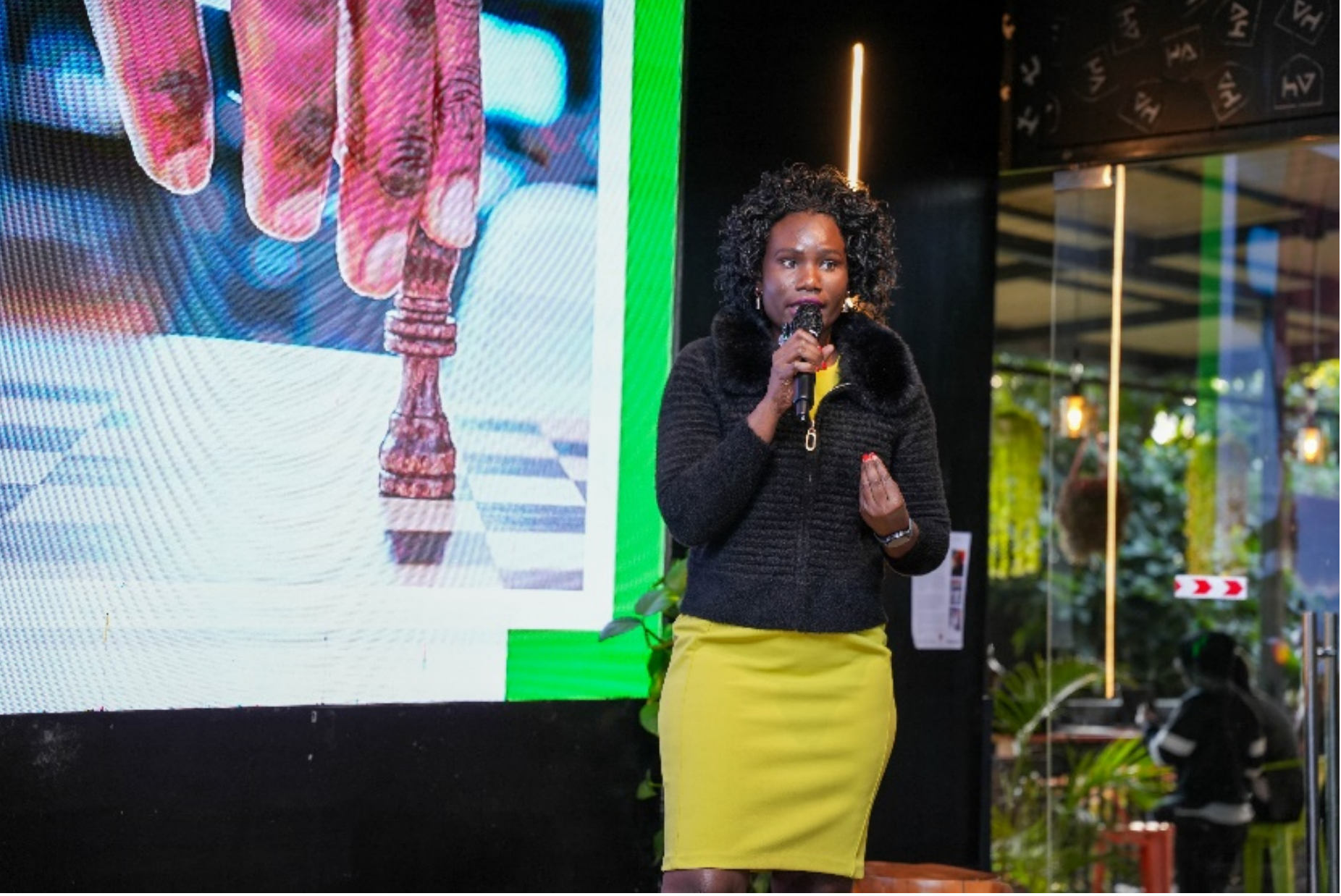
Its selection as one of the Top 10 finalists of the GEC+ Africa Kenya Regional Pitch Competition 2026, organised by Uzuzi Hub in partnership with GEN Kenya, GEC+ Africa, and NCBA, highlights the important role technology can play in unlocking the full potential of Africa’s agricultural sector.

Why This Startup Matters

Smallholder farmers are the backbone of Africa’s food systems. By improving market access, strengthening agricultural value chains, and equipping farmers with practical digital tools, Agriflex is helping build a more productive, profitable, and resilient future for agriculture.