

Home Blog Page 4

Equity Group leads Kenyan banks in forbes’ Top Performing Banks 2026 Ranking

0

Equity Group has emerged as the highest-ranked Kenyan lender in Forbes’ inaugural World’s Top Performing Banks 2026 ranking, placing 71st globally among 500 banks recognised across 89 countries.

The recognition places Equity ahead of its Kenyan peers in a global ranking that assessed banks across four weighted dimensions: profitability at 30%, growth and earnings quality at 20%, capital and funding resilience at 25%, and asset quality and efficiency at 25%.

The ranking, developed by Forbes in partnership with market research firm Statista, marks a shift from customer-perception-led bank rankings to a performance-based assessment using objective financial data. Forbes said the ranking was based on data obtained through leading providers, including S&P Capital IQ, desk research and submissions from banks via Forbes.com.

Equity Group was ranked in Tier Five, which covers lower mid-sized banks with total assets between USD 10 billion and USD 20 billion. Other Kenyan banks listed included KCB Group, which ranked 79th in Tier Five, Co-operative Bank at 120th in Tier Six, and Stanbic Holdings at 138th in Tier Six.

Equity’s ranking comes on the back of a strong half-year performance in 2026, with the Group reporting a 32% year-on-year increase in Profit After Tax to KSh45.5 billion, from KSh34.6 billion, while Profit Before Tax rose 39% to KSh57.8 billion. Total income grew 25% to KSh124.9 billion, supported by a 17% increase in net interest income and a 36% rise in non-funded income to KSh55.6 billion.

Equity Bank unveils loan for farmers seeking funds for farm development

Equity also continued to expand its balance sheet, which grew 20% to KSh2.16 trillion, driven by a 21% rise in customer deposits to KSh1.59 trillion. The Group’s asset quality and efficiency also improved during the period. Non-performing loans declined to 9.5% from 13.7%, while NPL coverage improved to 70% from 68%. The cost-to-income ratio improved to 48.6% from 51.7%, reflecting productivity gains, shared services and continued migration of customer activity to digital channels.

The Group’s regional diversification also continues to strengthen its performance profile. Regional subsidiaries now contribute 42% of Group banking profitability, 47% of revenue, 51% of deposits, 54% of loans and 52% of banking assets.

Forbes’ ranking comes at a time when the global banking sector continues to grow. Forbes cited McKinsey & Company data showing that the sector’s net income rose 7% between 2024 and 2025 to USD 1.3 trillion, underlining the scale of the global benchmark in which Equity has been recognised.

The inclusion of four Kenyan lenders in Forbes’ inaugural World’s Top Performing Banks 2026 ranking, points to the growing strength and visibility of Kenya’s banking sector within the global financial landscape. This reinforces the sector’s competitiveness, resilience and ability to meet international performance benchmarks, demonstrating that Kenyan institutions are not only competing locally, but increasingly standing out on the global stage
Laikipia woman earns millions from 600 hives, exports honey to global markets

0

Beekeeping is gaining ground as an alternative livelihood in Kenya’s arid and semi-arid lands (ASALs), where unpredictable rainfall, prolonged droughts and pasture shortages continue to threaten livestock farming.

Unlike livestock, bees require relatively little land and water, while the trees and shrubs common in dry areas provide forage.

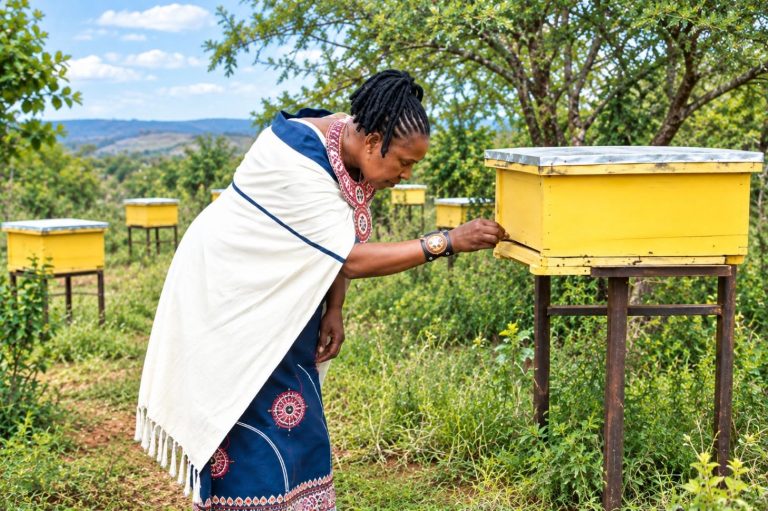
In Laikipia North, Rosemary Mosiany has built a thriving honey enterprise from just five beehives.

Her journey into the venture began in a community where livestock was the main source of livelihood and beekeeping was largely viewed as unsuitable for women.

For years, drought had exposed the vulnerability of that model. When pasture disappeared and livestock died, families were left with few options. Rosemary instead looked at the acacia trees that dotted the dry landscape and saw an opportunity.

She began beekeeping in 2018 with five hives and limited knowledge of apiculture. Her entry into beekeeping was supported by the Namelok Women’s Group, a 200-member association that embraced the enterprise as part of efforts to cope with climate change.

Training provided through the Food and Agriculture Organization (FAO) helped transform the women’s approach to beekeeping. Members were taught improved honey harvesting, processing, value addition and marketing techniques. They also received 40 modern beehives.

After seeing the Potential, Rosemary, with the support of her husband Piranto Ole Mosiany, continued to expand her enterprise and by 2022 she had 80 hives. Today, she manages 618 hives spread across Ilmotiok, Loshaiki, Musul, Soit Oitashe and Karrum villages in Laikipia County.

Her apiaries produce between eight and 12 kilogrammes of honey per hive during a harvest, with three harvests possible in a good year.

According to her, previously, raw honey fetched about Sh300 to Sh350 per kilogramme. With better processing, branding and knowledge of different honey varieties, Rosemary now sells a kilogramme for Sh1,500 and half a kilo for Sh750.

During peak season, she earns more than Sh2 million in a season and supplies markets beyond Kenya, including the United States, Türkiye and the United Arab Emirates.

Her business has since expanded beyond honey production.

Rosemary runs a shop in Nanyuki, where she sells honey and related products. On a good month, the business generates between Sh80,000 and Sh100,000. She also makes beekeeping equipment and markets beeswax and propolis.

She has increasingly turned her experience into a source of knowledge for other women, training groups interested in apiculture and encouraging them to view beekeeping as a viable business.

Digital marketing has also widened her reach, while certification and procurement training under UN Women programmes has strengthened her ability to pursue institutional and government markets.

She views beekeeping as part of environmental conservation. Rather than cutting acacia trees for charcoal, she argues that the same trees can support multiple beehives and generate income.

“I have been able to buy one acre of land where I intend to build to build my home and put up a modern workshop for making beekeeping equipment and a honey refinery. Proceeds from the business have also helped me take care of my family, including paying school fees,’’ she says as quoted by Nation.

Looking ahead, Rosemary plans to increase her apiaries to 3,000 hives, building on a business whose demand already frequently outstrips supply.

Also Read: Nyeri farmer turns rejected avocado into oil selling at Sh800 a bottle

CBK clears Michael Mutiga as new Stanbic Bank Kenya CEO

0

Stanbic Bank Kenya has formally appointed Michael Mutiga as its new chief executive officer after receiving approval from the Central Bank of Kenya (CBK).

The lender announced the appointment on Tuesday, saying Mr. Mutiga will take charge of the bank as it advances its strategic priorities and seeks to deepen relationships with customers.

“We are pleased to announce the appointment of Michael Mutiga as Chief Executive, Stanbic Bank Kenya, following approval from the Central Bank of Kenya,” the bank said in a statement.

Mr. Mutiga brings more than two decades of experience spanning banking, telecommunications and digital financial services, with a career focused on strategy, business growth and transformation.

Stanbic Bank said his diverse experience would strengthen its leadership as the lender works to deliver sustainable value to customers and other stakeholders.

“We look forward to his leadership as we continue creating long-term value for our clients, people and stakeholders,” the bank said.

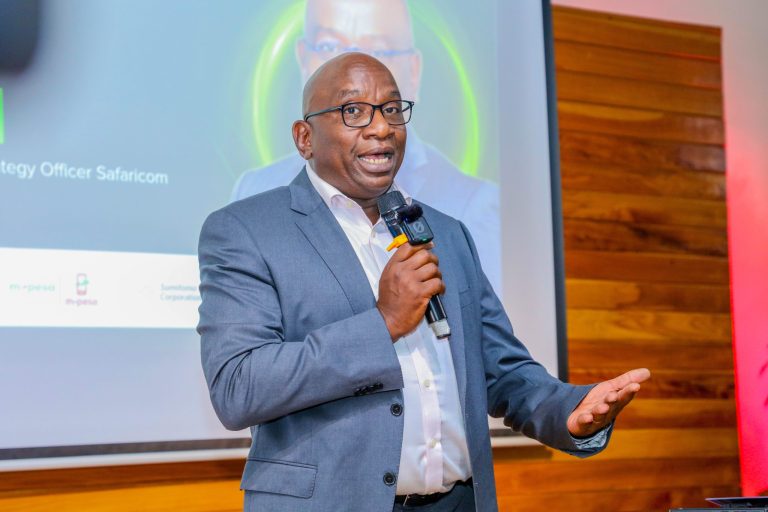
The appointment marks Mr. Mutiga’s return to mainstream banking after about four years at Safaricom Plc, where he served as Chief Business Development and Strategy Officer.

At Safaricom, he was involved in developing and executing strategy as well as driving business growth initiatives, adding experience in one of the country’s leading telecommunications and digital financial services businesses.

Before joining Safaricom, Mr. Mutiga spent about 15 years at Citibank, where he held senior positions at both local and regional levels. He rose to become Managing Director and Head of Corporate Finance for Sub-Saharan Africa, based in Johannesburg.

Before Citibank, he worked at Barclays, where he served as Regional Coverage Head for Investment Banking in East Africa.

His career in financial services has earned him several industry accolades, including five Corporate Banker of the Year awards, underscoring his track record in the sector.

Mr. Mutiga holds a Master of Laws degree (LLM) from Temple University and a Bachelor of Laws degree (LLB, Honours) from the University of Nairobi.

Also Read: Muhoho Kenyatta shares insights on building a sustainable business

Benjamin Cheruiyot: How to grow wealth with Sh30,000 salary

0

A financial advisor has shared how Kenyans earning a net salary of Sh30,000 a month can begin building wealth, arguing that financial independence is possible even on a modest income if saving and investing are started early.

Benjamin Cheruiyot, a financial advisor at Abojani Investment, says the journey may be slower at the beginning, but the discipline developed on a lower income can become an advantage as earnings increase.

“A Sh30,000 earner actually has one advantage — you are forced to learn discipline early,” Mr Cheruiyot says.

He argues that a higher-income earner may have more room to spend on lifestyle expenses before taking investments seriously, while someone earning Sh30,000 can develop saving habits much earlier.

For such an earner, however, he cautions against setting an unrealistically high savings target that makes day-to-day living difficult.

Assuming monthly expenses of Sh12,000 for rent, Sh8,000 for food and Sh5,000 for transport, a Sh30,000 salary leaves Sh5,000. Rather than attempting to save the entire balance, Mr Cheruiyot recommends putting aside Sh3,000 a month and retaining the remaining Sh2,000 for other expenses and unexpected needs.

At Sh3,000 a month, the saver would accumulate Sh36,000 in contributions over the first year. Assuming the money is invested in a money market fund (MMF) earning a net annual return of nine percent and returns are reinvested, the balance would grow to about Sh37,664 after one year, Sh78,876 after two years, Sh123,968 after three years, Sh173,306 after four years and Sh227,290 after five years.

While Sh227,000 may not appear substantial, Mr Cheruiyot says the more important achievement is the financial foundation it creates.

“The wealth part is not building wealth on a Sh30,000 salary. You build the machine that will build wealth when the salary grows,” he says.

By the fifth year, the accumulated savings could provide an emergency fund equivalent to about seven months of the earner’s salary. This can reduce the need to rely on expensive short-term mobile loans when emergencies arise.

The savings can also become capital for investments beyond an MMF.

Mr Cheruiyot points to shares listed on the Nairobi Securities Exchange (NSE) as one possible avenue. For example, Sh227,000 would, at a share price of roughly Sh95, be enough to buy about 2,400 shares of KCB Group.

Based on KCB’s FY2025 dividend of Sh7 per share, 2,400 shares would generate about Sh16,800 in annual dividends, before any applicable taxes, assuming the dividend is maintained at that level.

The shares could also gain or lose value depending on market movements. Mr Cheruiyot notes that KCB’s share price had moved from about Sh80 to Sh104 in recent months, illustrating how capital gains can add to dividend income when a share price rises.

As the investor’s capital grows, the range of available investments can widen. Mr Cheruiyot cites infrastructure bonds (IFBs), multi-asset funds and other investment products as options that can be considered as an individual’s financial position improves.

The central lesson, he says, is to focus less on becoming wealthy immediately and more on establishing habits and capital that can support wealth creation later.

Also Read: CBK reopens Sh60 billion Treasury bond sale

PSC announces 1,000 paid internship opportunities: How to apply

0

The Public Service Commission (PSC) has opened applications for 1,000 paid internship positions under the Ministry of Education’s Digital Literacy Programme (DLP) Cohort 5.

The programme, being implemented through the State Department for Basic Education, targets recent graduates seeking practical experience in information and communication technology (ICT) and digital education.

In a notice published in the Tuesday, September 15, 2026 edition of the MyGov newspaper, the PSC said successful applicants would be posted to schools at the sub-county level.

The interns will help strengthen the use of technology in education by supporting e-learning, virtual learning and other digital platforms used in schools.

“The Ministry of Education, State Department for Basic Education has declared 1,000 internship vacancies under the Digital Literacy Programme (DLP) Cohort 5. Successful candidates will be appointed and deployed to schools at Sub-county level, where, in addition to acquiring practical skills and knowledge, the interns will play a critical role in supporting virtual learning and other related digital platforms,” PSC stated.

Who is eligible?

Applicants must have graduated in 2022 or later from a recognised institution and hold one of the following qualifications: a Bachelor’s degree in Education with an ICT specialisation, a Bachelor’s degree in ICT, a Diploma in ICT or a Diploma in ICT Integration in Education.

The commission said candidates should have knowledge of networking and infrastructure, application development, information security and project management.

They will also be expected to demonstrate competence in applying ICT to education, particularly in e-learning and digital content development.

Skills in research and innovation that can contribute to the implementation of the Digital Literacy Programme will also be considered.

Successful applicants will be required to work full-time and should be prepared to serve in any Sub-County Education Office. Those who have previously participated in a similar internship programme are not eligible to apply.

The 12-month placement will provide interns with hands-on experience while allowing them to contribute directly to the government’s efforts to expand digital learning in schools.

Among their duties will be supporting the development of e-learning materials based on school schemes of work and assisting in training primary school teachers to use digital learning devices.

The internship will run for one year and will not be extended.

Unlike unpaid work-experience programmes, the positions come with a government-funded stipend. The State Department for Basic Education will pay the interns at a rate determined by the Government.

Upon successful completion of the programme, participants will receive certificates issued by the State Department for Basic Education.

How to apply

Qualified applicants are required to submit their applications online through the Public Service Commission’s recruitment portal.

The commission has directed applicants to use its official website and jobs portal to access the application process.

The deadline for submitting applications is October 5, 2026.

Also Read: Making Payday and PAYE payments easier for businesses

Making Payday and PAYE payments easier for businesses

0

On payday, employees expect their salaries to arrive accurately and on time. When PAYE is due, businesses have to meet a statutory obligation within a defined deadline. In between, there are suppliers to pay, bills to settle, transfers to make and accounts to reconcile.

The challenge is not necessarily knowing what needs to be paid. It is having a payment process that can keep up when several obligations come due at the same time.

For businesses relying on manual processes, large employee lists, multiple approval stages or fragmented records, routine payment days can quickly become a source of pressure. A missing file, delayed approval or uncertainty about available funds can turn what should be a straightforward transaction into a last-minute scramble.

A more structured digital workflow can help businesses plan and execute payments with greater visibility and control.

Making payday less of a pressure day

Payroll is one of the most time-sensitive responsibilities for any business. Employees are counting on their salaries, while finance teams have to ensure that payment information is accurate, funds are available and the necessary approvals are completed before the deadline.

Equity Bank’s Ordinary Account simplifies banking experience for customers

For businesses with large workforces, processing salaries individually can add unnecessary administrative work. A bulk-payment process allows finance teams to upload salary payment files and process multiple payments through a single workflow.

With Equity Online for Business, businesses can also manage other payments, including vendors, bills and taxes, within the same platform. Beneficiary management, transaction scheduling and payment notifications can further help teams organise recurring payment activities.

Before pressing send, a finance team needs to know whether sufficient funds are available, which account should be used and who needs to approve the transaction.

Staying ahead of PAYE deadlines

The same need for preparation applies when PAYE and other statutory payments are due.

A reminder may be all that initially signals an approaching deadline. But as the date draws closer, finance teams may need to confirm balances, retrieve payment information, obtain approvals and ensure the transaction is properly recorded for reconciliation.

When these activities are spread across different systems or handled manually, a routine statutory payment can consume more time than necessary.

A connected payment workflow can bring these steps closer together. Authorised users can initiate PAYE, bill and other statutory payments, make bulk tax payments, schedule transactions in advance and access statements and transaction histories for reconciliation.

For businesses managing multiple accounts, visibility of available balances can also support better liquidity management by helping finance teams identify where funds are available and where they may be needed.

The objective is not simply to make a payment. It is to give the people responsible for making it the information and controls they need before the deadline arrives.

Building payment processes that are ready for deadlines

Effective payment management also depends on knowing who can initiate, approve and manage transactions.

Equity Online for Business supports different user roles and transaction permissions, allowing businesses to structure payment workflows around their internal approval processes. Transaction approvals require a digital security token and are supported by multi-factor authentication and data encryption.

Corporate Administrators can also manage user access, including disabling accounts when employees leave an organisation.

These controls become particularly important when several people are involved in preparing and approving payments. Instead of relying entirely on manual follow-ups, businesses can establish a more defined process for moving transactions from initiation to approval and completion.

The platform also provides email, SMS and in-app transaction notifications, alongside payment records and downloadable statements.

Payday and PAYE will always come with deadlines. But the pressure surrounding those deadlines can be reduced when businesses have better visibility of their cash, clearer approval processes and a more organised way of executing payments.

For businesses looking to bring salary, tax and other recurring payments into a more connected workflow, Equity Online for Business provides bulk payments, scheduling, account visibility, transaction tracking and approval controls in one platform.

Businesses can explore Equity Online for Business via https://equitygroupholdings.com/ke/pay-send-money/sme-small-business/payment-services/equity-online-for-business/ to explore the platform, request a demo, call 0763 000 000, or visit an Equity branch to get ready for the next payday.

Kenya, Tanzania urged to strengthen joint Mara River management to boost tourism and economy

0

Kenya and Tanzania have been urged to step up joint management of the Mara River as environmental degradation threatens water supplies, farming, tourism, livestock production and businesses that depend on the shared river system.

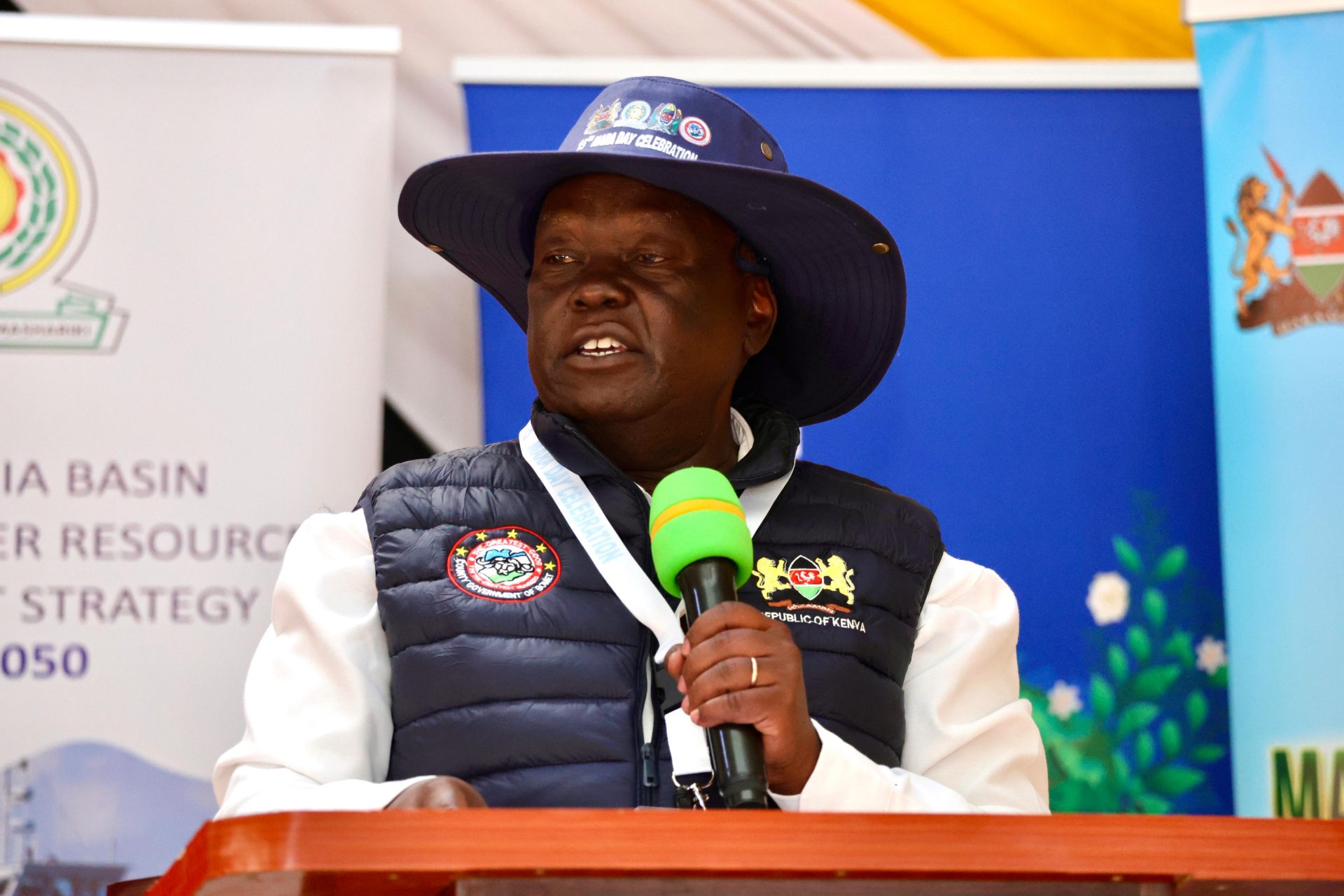
The call emerged during celebrations marking the 15th anniversary of Mara Day, where government officials, communities, conservation organisations, researchers, businesses and other stakeholders gathered to discuss the future of one of East Africa’s most important transboundary ecosystems.

The 2026 celebrations are being held under the theme “Mara River, Diverse Lives: Keep It Thriving – Mto Mara, Uhai wa Viumbe, Tuuutunze.”

While the Mara is widely recognised for supporting wildlife and the world-famous Mara-Serengeti ecosystem, speakers said its economic importance extends much further.

Kenya, Tanzania urged to strengthen joint Mara River management to boost tourism and economy

The river supports farming, livestock, households, tourism enterprises and other businesses across Kenya and Tanzania, meaning deterioration of its water quality or quantity could have consequences far beyond conservation.

WWF-Kenya Manager Kevin Gichangi told participants that the river should be understood as one interconnected economic and ecological system.

Activities taking place in forests and farms upstream influence water quantity and quality downstream, meaning decisions affecting agriculture, settlements, livestock, industry and water use cannot be addressed separately.

Stakeholders identified deforestation in the Upper Mara, agricultural expansion, chemical pollution, degradation of wetlands and riparian areas, population growth and increasing water abstraction as some of the most significant pressures facing the river.

What does the future of marketing African tourism to Europe look like?

Unplanned growth of urban centres is also emerging as a concern, with participants warning that inadequate sewage and wastewater infrastructure could result in increased pollution of rivers as towns expand.
The pressure is particularly significant for communities and enterprises downstream, where participants reported declining flows and increasingly contaminated water.

Water Resources Authority Deputy Director for Regional Coordination Dr Joash Oruta called for stronger Water Allocation Plans that balance competing demands between households, agriculture, livestock, industries and ecosystems.

He said planning must anticipate growing populations, economic expansion and climate change instead of responding only after water shortages become critical.

At community level, participants warned that conservation efforts will struggle to succeed unless they also generate economic opportunities.

Joseph Koech highlighted beekeeping, bamboo production and other nature-based enterprises as examples of businesses that could provide incomes while encouraging communities to protect forests and water sources.

Stakeholders also proposed strengthening Payment for Ecosystem Services, which could enable communities protecting important catchment areas to benefit financially from the services those ecosystems provide to users downstream.

Kenya, Tanzania urged to strengthen joint Mara River management to boost tourism and economy

The approach could see conservation increasingly viewed as an economic partnership between those protecting natural resources and those benefiting from them.

Bomet Deputy Governor Dr Shadrak Rotich said conservation measures must ultimately improve people’s lives, stressing that communities should remain at the centre of decisions affecting rivers, forests and farms.

He also challenged organisations participating in Mara Day to move beyond meetings and translate commitments into measurable action.
Meanwhile, representatives from Kenya and Tanzania called for stronger coordination of policies governing the shared ecosystem.

Differences in environmental, water and land-management frameworks between countries — and even between neighbouring counties — were identified as barriers to integrated management.

As the Mara Day celebrations mark 15 years of transboundary cooperation, stakeholders said the next phase must demonstrate that protecting the river is compatible with economic growth.

For farmers, tourism operators, livestock keepers, businesses and communities throughout the basin, the argument is increasingly straightforward: a thriving economy in the Mara landscape requires a thriving river.j

Co-op Bank launches ELA, a tailored banking solution for women

0

Nairobi, Kenya – 14.09.2026Co-op Bank has introduced ELA, short for Everyday Life Amplified, a banking solution made specifically for women and built around the concept of Her Economy: the recognition that a woman’s financial life rarely sits in one lane, but moves continuously across business, career, family and personal ambition.

The proposition responds to a gap that is well documented in Kenya’s financial sector. Women account for 48 per cent of Kenya’s MSME borrowers, nearly matching men, yet hold just 26 per cent of the roughly KES 613 billion in outstanding MSME credit. For every KES 1,000 extended to male-owned enterprises, women-owned businesses receive only KES 354, a gap the Kenya Bankers Association describes as structural rather than a reflection of business performance.

At a national level, the International Finance Corporation estimates that women in Kenya face a credit gap of USD 1.3 billion. The gap persists even as overall financial access has improved: mobile money has narrowed Kenya’s formal financial inclusion gender gap to just 1.6 per cent, yet only 46.5 per cent of women hold formal banking products such as loans and accounts, compared with 58.9 per cent of men. Reach and participation are no longer the barrier; access to capital on fair terms still is.

Speaking on the launch, Samuel Birech, Director, Retail and Business Banking at Co-op Bank, said: “For years, women have carried an outsized share of Kenya’s small business activity while receiving a fraction of the credit. That’s not a gap we can talk our way out of, it’s one we have to lend our way out of. We looked closely at those numbers before we built ELA, and they shaped almost every decision in this product, from how we price it to how we assess a loan application. ELA is Co-op Bank putting real capital behind that commitment, and we intend to be judged by how quickly that capital reaches the women who need it.”

Co-op Bank targets young Kenyans with 100pc home financing facility

ELA gives women in business access to unsecured working capital of up to KES 10 million, repayable over 24 months, or up to KES 20 million on a secured basis over the same period. Businesses that are wholly owned or majority-led by women qualify for a 0.5 per cent interest discount. Women in formal employment can apply for personal loans against their KYC documentation and three months’ payslips. The product also carries a three-month repayment moratorium for customers on maternity leave, alongside business and financial training and networking access through Co-op Bank’s women banking network..

Rachael Murage, Head of Women Banking at Co-op Bank, added: “We didn’t want another product that asks a woman to fit her life around a loan application. Walk into any branch, tell us what you’re building, whether that’s a business, a career move, or simply getting through a season of change, and we’ll show you where ELA fits. That’s a different conversation than the one women are used to having with a bank, and it’s one our teams have been trained specifically to have. We’re not just extending credit, we’re making room for how women actually work.”

ELA is now available through the Co-op Bank branch network. Interested customers are encouraged to visit their nearest branch with the relevant documentation to find out more and join ELA.

Meta, This Is Digital launch AI academy in Kenya to advance Africa’s digital economy

0

Meta has officially partnered with leading African Al accelerator This is Digital to launch the Al Academy Kenya, a flagship capacity-building program designed to equip Kenyan students, developers, startups, small business owners, and career professionals with practical, future-ready artificial intelligence skills.

The program will be officially launched on September 11th, 2026, providing a high-profile platform to showcase Meta’s commitment to advancing Africa’s digital economy. The initiative combines hands-on developer training, startup acceleration, and immersive Al Masterclasses to nurture the next generation of local Al talent. The program will be divided into two sections:

1. Al Pitchathon where we are calling Kenyan startups or developers who are building innovative solutions with Meta’s Al technologies to pitch their solutions live in Nairobi, Kenya and compete for equity-free funding and an invitation to pitch at Meta’s Al Summit in Istanbul, Turkiyë in November 2026.

2. Al Masterclass then kicks off for 8 weeks where the curriculum will cover Al fundamentals, prompt engineering, Al for research and knowledge work, Ai for documents, reporting and communication, Al for productivity and much more.

The landmark partnership pairs Meta’s Al tools with This Is Digital’s deep expertise in workforce enablement and Al transformation. Founded on International Al Appreciation Day 2025, This Is Digital has already trained over 800 Al Champions. across 10+ countries, demystifying Al and delivering tailored consultancy and masterclasses for individuals and enterprises.

“The next wave of Al innovation in Kenya will come from local builders solving local problems,” said Mercy Ndegwa, Public Policy Director, East Africa at Meta. “That is why we are working with This Is Digital to put practical training and open models in the hands of Kenyan developers, students and small business owners, so that what gets built here is designed for this market by the people who understand it best.”

Data firm Sama to lay off 1,108 Nairobi employees after Meta deal ends

“Our mission has always been to ensure everyone across Africa gets a seat at the Al table,” said Gregory Wanjama, CEO of This Is Digital. “Partnering with Meta allows us to scale our impact, empowering Kenyan professionals, startups, and students with actionable skills to drive real-world productivity, innovation, and economic growth.”

Grace Murugi, Chief Al & Digital Strategist at This Is Digital, added, “By translating complex Al concepts into accessible applications and emphasizing ethical, responsible leadership, this academy will enable Kenya’s ecosystem to create homegrown intellectual property that competes globally.”

Applications for the Al Pitchathon are open. The deadline for the Al Pitchathon is. 30th September 2026 and it will take place on October 15, 2026. The Al Masterclass applications are open. The deadline for the Al Masterclass is 31st October 2026 and it kicks off on November 3rd 2026. Interested applicants for both the Al Pitchathon and Masterclass can learn more and register at https://aiacademykenyalaunch.splashthat.com/the Al

About This Is Digital This Is Digital is an Al & Digital Accelerator empowering businesses and individuals across Africa with practical Al skills, bespoke strategies, and ROI-driven workflows. Through expert-led consultancy and its signature Al Academy, This is Digital bridges the digital knowledge divide to foster an inclusive, Al-powered future. For more information, visit www.thisisdigital.ai.

KMA President Dr Matende mourns pioneer cardiologist Dr David Silverstein

0

The Kenya Medical Association (KMA) has mourned the death of Dr David Silverstein, a pioneering cardiologist whose medical career was closely linked to the development of modern heart care in Kenya.

In a statement dated September 13, 2026, KMA described Dr Silverstein as a prolific physician whose service had a significant impact on Kenya’s healthcare landscape.

Dr David Silverstein’s contribution to Kenya’s healthcare

Dr Silverstein began playing a significant role in Kenya’s medical sector in the 1970s, working across both the public and private healthcare sectors.

One of his major contributions was helping establish the country’s first cardiac catheterization laboratory at Kenyatta National Hospital. According to the Kenya Medical Association, the facility helped usher in an era of modern heart care in Kenya.

His career therefore became closely intertwined with the development of Kenya’s medical profession and the country’s broader healthcare history.

Bundi Karau: Man who topped 2002 KCSE now a doctor with 4 degrees, Phd

He helped train generations of Kenyan doctors

Beyond his work as a cardiologist, Dr Silverstein contributed to medical education and professional development.

The Kenya Medical Association said he helped teach some of the earliest generations of doctors trained after Kenya’s independence.

He also held a strong belief that doctors should be leaders, a philosophy reflected in his many years of service at The Nairobi Hospital.

Dr Silverstein served as Daniel arap Moi’s personal physician

Dr Silverstein also had a long association with Kenya’s political leadership.

He served as personal physician to Kenya’s second President, the late Daniel arap Moi, for more than 40 years, until Moi’s death.

His medical expertise also earned him the trust of other prominent figures, including the late Charles Njonjo and former South African President Nelson Mandela. However, the KMA said people who knew him confirmed that he showed the same devotion to every patient he treated.

Amakove: Why I’m selling fish in kibanda despite being a doctor, Alliance alumna

His life and career documented in a memoir

Dr David Silverstein documented his extraordinary experience in Kenya in his 2023 memoir, Heartbeat: An American Cardiologist in Kenya.

The memoir provides an account of his medical career and experiences in the country, where he spent decades contributing to the development of healthcare.

Kenya Medical Association pays tribute

The Kenya Medical Association said Dr Silverstein’s death represents a significant loss to Kenya’s medical fraternity and the nation.

The association noted that his lifetime of knowledge and experience cannot easily be replaced, while highlighting the doctors he influenced, the patients he treated and the example of service he demonstrated throughout his career.

KMA President Dr Ibrahim Matende conveyed condolences to Dr Silverstein’s family, friends and those who knew him on behalf of the association’s leadership and membership.

A lasting legacy in Kenyan medicine

Dr David Silverstein’s career spanned several decades of significant change in Kenya’s healthcare sector. From helping establish the country’s first cardiac catheterization laboratory to teaching early generations of post-independence doctors, his work left a lasting mark on Kenyan medicine.

His legacy extends beyond individual patients to the medical professionals he influenced and the institutions in which he served.

The Kenya Medical Association described his passing as a major loss while expressing gratitude for the knowledge he shared and the example of service he left behind.